



France, UK and Oman Step Up Efforts to Secure Navigation in Strait of Hormuz

The CSR Journal Magazine

France has deployed mine countermeasure assets to West Asia to support the safe resumption of maritime traffic through the Strait of Hormuz, while France and the United Kingdom have pledged to work alongside Oman to ensure secure navigation through one of the world’s most important shipping routes.

The announcement comes amid efforts to reinforce regional stability following the signing of a memorandum of understanding between the United States and Iran on June 17. French President Emmanuel Macron said the agreement marked a positive step towards easing tensions and safeguarding freedom of navigation in the strategic waterway.

France Deploys Naval Assets to Region

In a post on X, Macron said France had dispatched specialised mine countermeasure assets to the region, including two minehunters supported by additional naval and aerial capabilities.

“France has deployed mine countermeasures assets to the Middle East, including two minehunters in particular. Accompanied by two frigates and a maritime patrol aircraft, these assets are ready to contribute, alongside our partners, to the full resumption of navigation and to ensure the safety of traffic in the Strait of Hormuz,” he said.

Macron described the June 17 memorandum between Washington and Tehran as an important development for regional security.

“The signing, on June 17 last, of the memorandum of understanding between the United States and Iran constitutes an important step forward for regional stability, particularly by reaffirming freedom of navigation in the Strait of Hormuz,” he said.

Charles de Gaulle Returning to France

Macron said France was adjusting its military posture in the region following discussions with Sultan Haitham bin Tariq Al Said of Oman and in response to changing operational requirements.

“In light of this favourable development and the changing needs, following the constructive exchanges I had with the Sultan of Oman, I have decided to adapt our deployment,” he said.

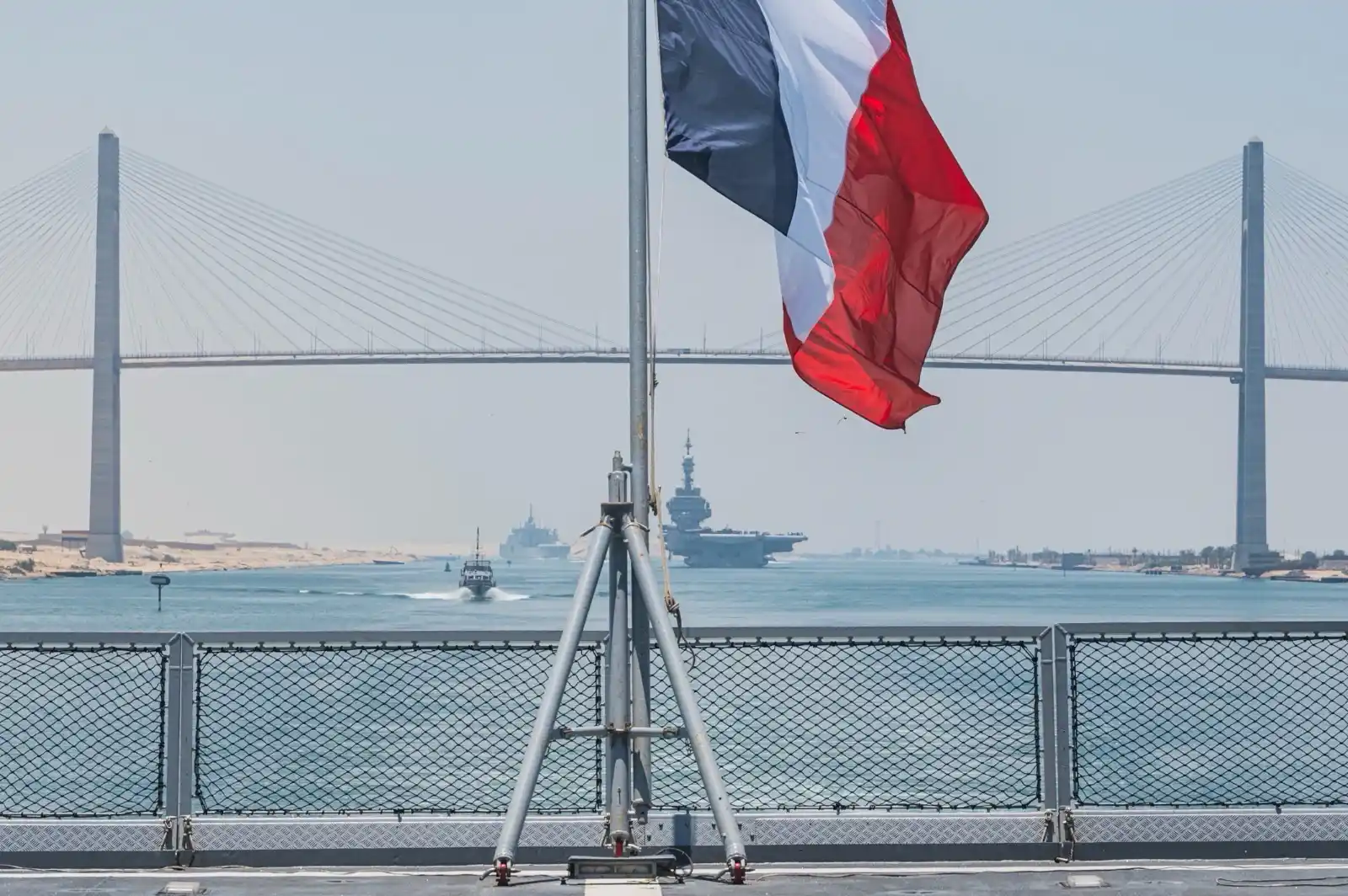
As part of the adjustment, France’s aircraft carrier, the Charles de Gaulle, will return to its home port in Toulon.

However, France will maintain its mine countermeasure assets and accompanying escort vessels in the region.

“The aircraft carrier Charles de Gaulle is thus returning to its home port in Toulon, while our mine countermeasures assets and their escort remain deployed and ready to intervene alongside our partners,” Macron added.

He said France would continue to review and adapt its deployment in accordance with developments on the ground.

“France remains fully engaged and will continue to adjust its assets based on the evolving situation and the region’s security needs,” Macron said.

UK, France and Oman Coordinate Maritime Security

In a joint statement issued on Friday, British Prime Minister Keir Starmer and Macron reaffirmed the importance of maintaining safe passage through the Strait of Hormuz.

“The Strait of Hormuz is a vital artery for the global economy. Restoring safe transit for ships of all nations through the Strait is a matter of global concern,” the statement said.

The two leaders announced that Oman had agreed to work with both countries to help secure navigation through its territorial waters.

“The Sultanate of Oman has agreed to work with the United Kingdom and France to ensure that its sovereign territorial waters are safe for navigation,” the statement noted.

Multinational Mission Remains an Option

The joint statement also indicated that London and Paris are prepared to expand their efforts if required.

“The UK and France also stand ready to deploy the wider Multinational Military Mission to support freedom of navigation in the Strait of Hormuz,” it said.

The two countries reiterated their commitment to regional stability, international law and cooperation with partners in the region.

“The United Kingdom and France reaffirm their shared commitment to regional stability, respect for the sovereignty of all States, and their willingness to maintain close cooperation with their partners in order to uphold global security, freedom of navigation and international law,” the statement added.

The Strait of Hormuz remains one of the world’s most strategically important maritime chokepoints, serving as a critical route for global oil and gas shipments and making freedom of navigation in the waterway a key international security concern.

Long or Short, get news the way you like. No ads. No redirections. Download Newspin and Stay Alert, The CSR Journal Mobile app, for fast, crisp, clean updates!

App Store –  https://apps.apple.com/in/app/newspin/id6746449540 

Google Play Store – https://play.google.com/store/apps/details?id=com.inventifweb.newspin&pcampaignid=web_share

Latest News

Popular Videos