


Trump Shifts Strategy from Military Action to Economic Sanctions Against Iran
The CSR Journal Magazine

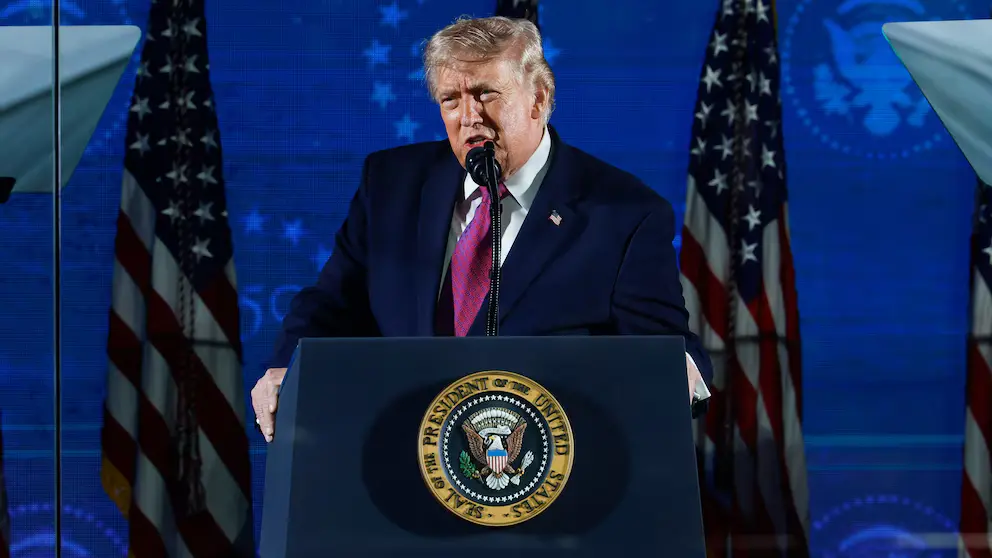
US President Donald Trump has shifted emphasis in his approach to the conflict with Iran, arguing that intensified economic pressure could achieve what months of military action have failed to accomplish. The Trump administration says Iran’s economy has been pushed close to breaking point and that further financial pressure could force Tehran to end its nuclear programme and fully reopen the Strait of Hormuz to oil and natural gas tankers.

The change in emphasis comes as diplomatic efforts have again appeared to stall and US stockpiles of key weapons have declined. Trump said on Monday that if Iran sought compensation as part of any peace agreement, Washington would also demand compensation, while maintaining that economic pressure could still produce a breakthrough.

Trump Says Iran’s Economy Is Under Severe Pressure

Speaking to reporters on Monday, Trump said Iran was increasingly vulnerable to economic pressure and dismissed concerns that Tehran could continue to withstand the measures.

“Yeah, they can make trouble, but they’re broke,” Trump said. “They have no money. You know, Iran is broke, totally broke. And, they’re not paying their soldiers. They have inflation of 300%.”

Inflation in Iran remains high, although Trump’s estimate was higher than figures administration officials have cited in briefings with reporters.

The possibility of a prolonged conflict has also raised concerns over inflation outside Iran, including in the United States. Higher petrol prices and the continuing war have become increasingly unpopular among American voters.

Strait of Hormuz Disruption Raises Global Energy Concerns

Crude oil prices rose on Monday after investors interpreted Trump’s remarks as signalling that fewer vessels could pass through the Strait of Hormuz. Prolonged disruption of the waterway could keep global supplies of petrol, jet fuel, natural gas and other energy products under pressure.

Before the war, the Strait of Hormuz carried around 20 per cent of global oil supplies. The conflict has largely shut the waterway, while attempts to restore shipping have been short-lived as Iran has used access to the strait as leverage in negotiations.

Iran has not publicly indicated that it is deterred by the prospect of additional sanctions. Iranian Foreign Ministry spokesperson Esmaeil Baqaei criticised Washington’s approach on social media.

“Whenever Washington proves itself incapable of pursuing diplomacy, it retreats into sanctions; and whenever those sanctions fail to produce results, it simply increases the dose. The real risk is that American politicians, clinging to this bad habit, will instead strangle their own remaining chances of a less humiliating exit from a crisis of their own making,” Baqaei said.

US Expands ‘Economic Fury’ Campaign

The White House has described its latest economic campaign against Iran as “Operation Economic Fury”. Trump has not specified what additional measures could be introduced, but the administration has been pursuing the campaign since April 16.

Treasury Secretary Scott Bessent has described the initiative as the “financial equivalent” of a bombing campaign. Possible measures include sanctions on countries that purchase Iranian oil or conduct business with Iranian banks.

Richard Nephew, a senior research scholar at Columbia University who helped develop Iran sanctions policy during the Obama administration, said economic sanctions could not produce results as quickly as the near-shutdown of the Strait of Hormuz.

Nephew also argued that the sanctions strategy has limited effectiveness because Trump has not clearly established the central objective of the conflict, which has variously been described in terms of Iran’s nuclear programme, the Strait of Hormuz and ballistic missiles.

“Economic pressure is a possible element in his strategy, but he’s yet to explain the purpose,” Nephew said. “Trump has systematically weakened his own hand through his inadequate use of force, inarticulate elucidation of an objective, and vacillation on negotiations.”

Sanctions Could Take Time to Affect Iran

Juan Zarate, who served as a deputy national security adviser during the George W. Bush administration, said sanctions and the continuing US naval blockade of Iranian ports provide Washington with economic leverage.

He said the United States could also put pressure on third countries that continue doing business with Iran, although such measures could take time to produce their intended effect.

“The ultimate question will be how far the United States is willing to go to constrict Iran’s oil trade and threaten third countries with severe sanctions — and whether it has the patience to test whether the economic pain will change the regime’s behavior,” Zarate said.

Trump Previously Criticised Sanctions Strategy

Trump’s increased reliance on economic pressure marks a shift in emphasis, as he has repeatedly criticised previous US administrations for relying on sanctions against Iran.

In a speech in Las Vegas last week, while defending the bombing, missile and drone campaign that began on February 28, Trump said sanctions imposed on Iran since 1979 had failed to achieve their objectives.

“It’s been 47 years, but really, it’s been 50 years because they’ve been saying 47 for three years, it’s been 50 years,” Trump said. “And no other president has done what you should have done a long time ago, because Iran cannot have a nuclear weapon, can’t have it.”

The administration is now combining economic measures with military and naval pressure in an attempt to force Tehran towards concessions.

Iran’s Economy Takes Heavy Hit

The war has severely affected Iran’s economy. The International Monetary Fund estimates that Iran’s economy will contract by 5.4 per cent, while the Iranian government has reported annual inflation of 88.6 per cent.

The US Treasury Department said average Iranian oil loadings had fallen from around 1.8 million barrels per day before the war to less than 500,000 barrels per day over the past month.

A senior US official, speaking on condition of anonymity to discuss the administration’s strategy, said American military operations had reduced Iran’s ability to produce, sell and transport oil and other energy resources.

The administration considers the Strait of Hormuz blockade and sanctions to be effective economic tools and believes additional measures could be intensified over the coming weeks and months.

Washington Bets Economic Pain Can Force Concessions

The US economy has continued to grow, although inflation remains elevated and higher borrowing costs have affected Trump’s popularity and contributed to public disapproval of the war with Iran.

Trump is effectively betting that the United States can withstand the economic consequences of the conflict more easily than Iran, which has faced years of economic hardship.

Defence Secretary Pete Hegseth said Washington’s economic strength provided another means of pressuring Tehran.

“It’s not just what the military can do – we’ve got the most powerful economy in the world as well,” Hegseth said on Monday during a joint appearance with Bessent. “And when you’ve got a motivated treasury secretary who can pull a lot of levers because he knows how to do it, you can put a lot of pressure on adversaries.”

The administration is therefore betting that economic pressure, combined with military operations, naval restrictions and sanctions, can push Iran towards concessions after months of conflict and stalled diplomatic efforts.

Long or Short, get news the way you like. No ads. No redirections. Download Newspin and Stay Alert, The CSR Journal Mobile app, for fast, crisp, clean updates!

App Store –  https://apps.apple.com/in/app/newspin/id6746449540 

Google Play Store – https://play.google.com/store/apps/details?id=com.inventifweb.newspin&pcampaignid=web_share

Latest News

Popular Videos
