




India’s Two-Track Education System Is No Accident

The CSR Journal Magazine

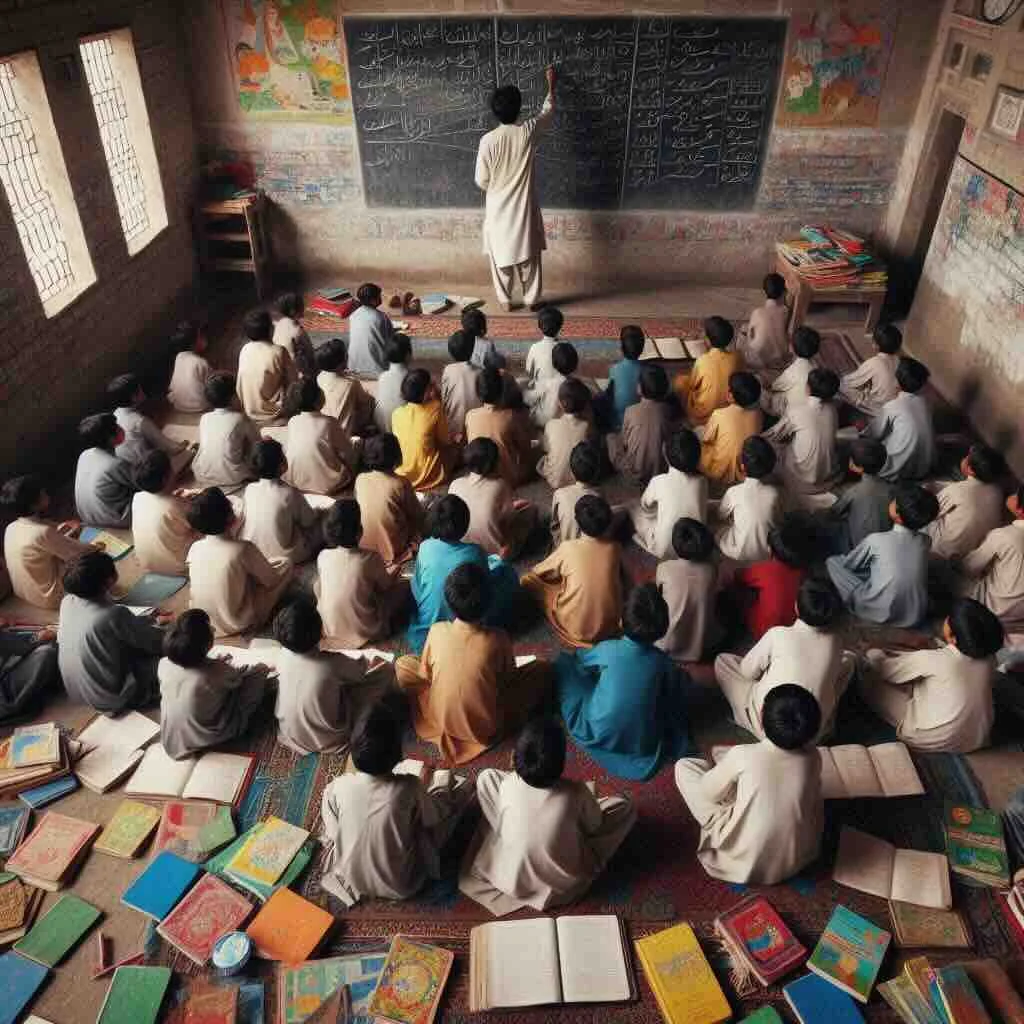
In the winter of 2023, a government primary school in a tribal block of Madhya Pradesh shut its gates for the last time. There were no protests, no headlines, no ministerial statement. A teacher locked the door, filed a compliance report, and walked away. 43 children, most of them first generation learners from Gond and Bhil households, were told to walk 6 kilometres to the next functioning school. Some made the walk for a few weeks. Most simply stopped going.

This is not an isolated story. It is the pattern of an entire decade.

Between 2019 and 2024, India lost 14,910 government schools to closure and merger, according to the Ministry of Education’s own reply to the Lok Sabha. Madhya Pradesh alone shut 6,972 schools. Odisha closed 4,589. Jammu and Kashmir, already a fragile region, lost 4,380 schools while nearly 13,000 teaching posts sat vacant. Children there now walk four to six kilometres daily just to sit in a classroom, a direct violation of the neighbourhood school principle written into the Right to Education Act itself.

Widen the lens further and the picture turns grimmer.

UDISE Plus data, the government’s own school census, shows that between 2017-18 and 2023-24, India lost 87,012 schools in total, of which 76,883 were government schools. In the most recent cycle alone, nearly 89,000 government schools shut down while roughly 42,944 new private schools opened their doors. Private school numbers rose from 3.31 lakh to 3.39 lakh in a single year. The 2024-25 UDISE data adds one more brutal detail. Government schools lost 5.9 lakh students in that year alone, while private unaided schools gained 5.8 lakh. The trade was almost one for one. A child who left a government classroom appeared, in the very same year, in a private one.

Who exactly is being pushed out deserves attention, because this is not a neutral demographic shift. Of the students who disappeared from government rolls that year, over 8 lakh belonged to Scheduled Castes, roughly 2 lakhs to Scheduled Tribes, and 3 lakhs to Other Backward Classes. These are the communities the Indian Constitution promised to lift through education. They are now the ones being quietly nudged out of the system that was built for them.

Why This Is Not an Accident?

To understand what is happening, it helps to borrow a simple idea from education theory, one that does not need a doctorate to grasp. Governments justify school closures using the language of rationalisation. Low enrollment, the argument goes, means resources are wasted keeping a half empty school running. Merge it with a bigger one nearby, save money, improve efficiency.

This sounds reasonable until you ask why enrollment fell in the first place. A government report submitted to the Lok Sabha itself lists the real reasons parents abandon government schools. Poor infrastructure, no functioning toilets, unsafe buildings. Severe teacher shortages, with over 9,500 schools in Uttar Pradesh alone running on a single teacher for thousands of students combined. Teachers pulled away from actual teaching to conduct census work, polio drives, and midday meal duties. No English medium instruction, despite rising parental demand.

In other words, the state starves a school of teachers, toilets, and basic upkeep for years, watches enrollment collapse as a predictable result, and then uses that same collapse as proof the school deserves to die. This is not efficiency. It is a manufactured justification, and once you see the pattern you cannot unsee it. Sociologists call this ‘a self-fulfilling prophecy’: starve the institution, then point to its weakness as the reason to abandon it.

Follow the Money!

None of this happens without a budget decision behind it, and the budget tells its own story without needing much interpretation.

The Bharatiya Janata Party’s 2014 election manifesto promised to raise total education spending to 6 percent of GDP, a figure first recommended by the Kothari Commission back in 1966. More than a decade later, that promise remains a jumla, an unfulfilled slogan. Economic Survey data shows combined central and state education spending fell from 3.1% of GDP in 2013-14, the final year of the previous government, to 2.7% by 2023-24. Central government spending alone tells an even starker story. It fell from 0.55% of GDP to around 0.37 to 0.4 percent, a decline that has continued almost without interruption for 15 years.

Look at it as a share of the total government budget, which is arguably the more honest measure, since it shows what a government actually chooses to prioritise when it decides how to spend its money.

Education’s share of total government expenditure fell from 4.14% in 2014-15 to about 2.5 percent by 2024-25. That is a 40% decline in political priority within a single decade. The Department of Higher Education’s share of the union budget fell from 2.52% in 2013-14 to 0.91% in 2024-25, more than halving in relative terms.

Nominal numbers look like growth on paper.

The education ministry’s allocation rose from roughly 85,010 crore rupees in 2018-19 to about 1.39 lakh crore in the 2026-27 budget. But nominal growth during a period of rising inflation and rising GDP is not the same as increased priority.

When you divide by total budget size or by GDP, the line points only one way, downward. India now spends less on education as a share of its economy than it did before this government took office, despite 11 consecutive budgets and a National Education Policy (NEP) that explicitly promises 6% of GDP on paper.

The Right That Was Never Really a Right

The Right to Education Act (RTE), passed in 2009, tried to build a bridge between the collapsing government system and the expanding private one. Section 12(1)(c) of the Act requires every private unaided school to reserve 25% of entry level seats for children from economically weaker and disadvantaged backgrounds, with the government reimbursing the school for the cost.

On paper this is a genuinely progressive idea. A poor child from a Dalit or tribal household should be able to sit in the same classroom as the son of a businessman, learn from the same teacher, and access the same social networks that private schooling in India quietly sells alongside its curriculum. In practice, the promise has collapsed almost everywhere it has been tested.

National fill rates for this 25% quota hover between 20 and 27 percent, according to a 2025 CAG report and independent research bodies. That means roughly three out of every four reserved seats sit empty every single year, not because eligible children do not exist, but because the application process is digital, complicated, and hostile to families without internet access or English literacy.

In Punjab, a state rule quietly required EWS families to first apply to a government school before they could even approach a private one under the quota, a bureaucratic trick that produced near zero admissions for over a decade before a court finally struck it down in 2025.

In January 2026, the Supreme Court itself admitted that without enforceable rules, the entire promise of Section 12(1)(c) and the constitutional guarantee under Article 21A risked becoming what the judges called a dead letter.

A single case captured the absurdity well. A father in Mumbai applied for his son’s admission in 2016. The school had vacant seats. He was rejected on a technicality about the online form. He fought the case for nearly a decade. By the time the Supreme Court finally ruled in his favour in early 2026, 648 seats at schools across that jurisdiction were still sitting vacant, waiting for children who could never navigate the system built to keep them out.

Two Nations, Two Classrooms?

Put these three threads together and a coherent picture forms.

Government schools, the institutions historically used by the poor, by Dalit and Adivasi families, by rural India, are being closed at scale under the banner of rationalisation. The public money that could fix their toilets, staff their classrooms, and keep them open is shrinking as a share of the national budget, promise after promise notwithstanding. And the legal mechanism designed to let poor children cross into the private system that is now absorbing them functions at barely a quarter of its intended capacity.

The result is not integration. It is quiet segregation dressed up in the neutral language of policy efficiency.

Elite and upper middle class children continue moving through a private school ecosystem that keeps expanding, supported indirectly by a state that starves its own public alternative. Poor children are pushed toward low-cost private schools that are barely better resourced than the government schools they replaced, or they simply drop out. The Scheduled Caste (SC) enrollment numbers from 2024-25 make clear which group is bearing the sharpest edge of that fall.

Education theorists have a name for what public schooling is meant to prevent, the reproduction of existing social hierarchy through the guise of merit. A functioning public school system is one of the few instruments a democracy has to interrupt that inheritance, to give a child born into poverty a fair shot regardless of caste or geography. When that system is allowed to shrink by 87,000 schools in 6 years, when its budget share falls by 40% in a decade, when its own legal safety valve admits three quarters of its seats every year to nobody, the interruption stops happening. The hierarchy simply continues, generation after generation, now with the state’s quiet cooperation rather than its resistance.

The child in that Madhya Pradesh village who stopped walking to school after a few weeks will likely never appear in any of these statistics again. She will not be counted as a dropout in most surveys, because surveys tend to lose track of children exactly like her.

That, more than any budget line or court order, is the real measure of what a decade of quiet withdrawal has cost the country?

Views of the author are personal and do not necessarily represent the website’s views.

Dr. Jaimine Vaishnav is a faculty of geopolitics and world economy and other liberal arts subjects, a researcher with publications in SCI and ABDC journals, and an author of 6 books specializing in informal economies, mass media, and street entrepreneurship. With over a decade of experience as an academic and options trader, he is keen on bridging the grassroots business practices with global economic thought. His work emphasizes resilience, innovation, and human action in everyday human life. He can be contacted on jaiminism@hotmail.co.in for further communication.

Long or Short, get news the way you like. No ads. No redirections. Download Newspin and Stay Alert, The CSR Journal Mobile app, for fast, crisp, clean updates!

App Store –  https://apps.apple.com/in/app/newspin/id6746449540 

Google Play Store – https://play.google.com/store/apps/details?id=com.inventifweb.newspin&pcampaignid=web_share

Latest News

Popular Videos