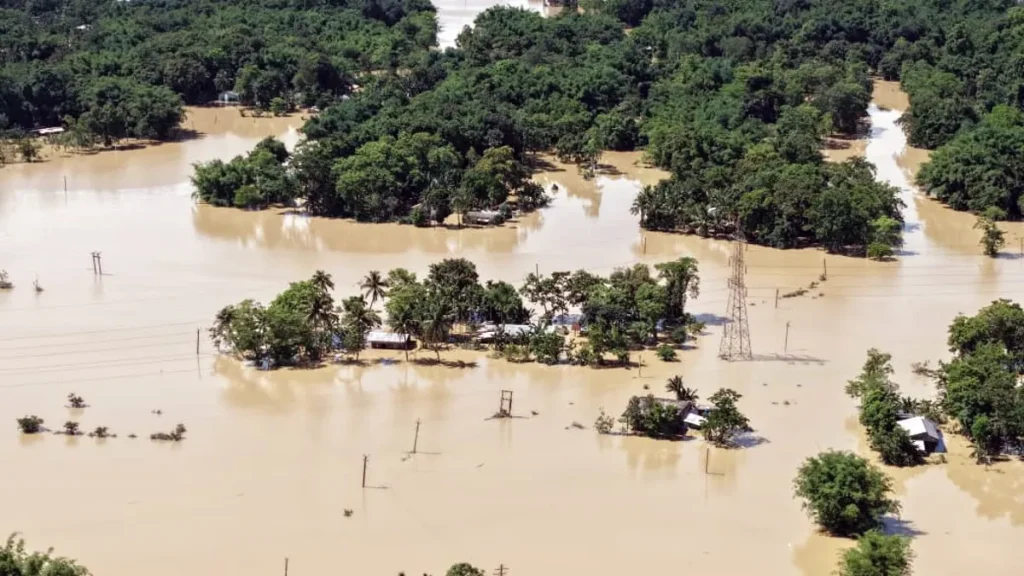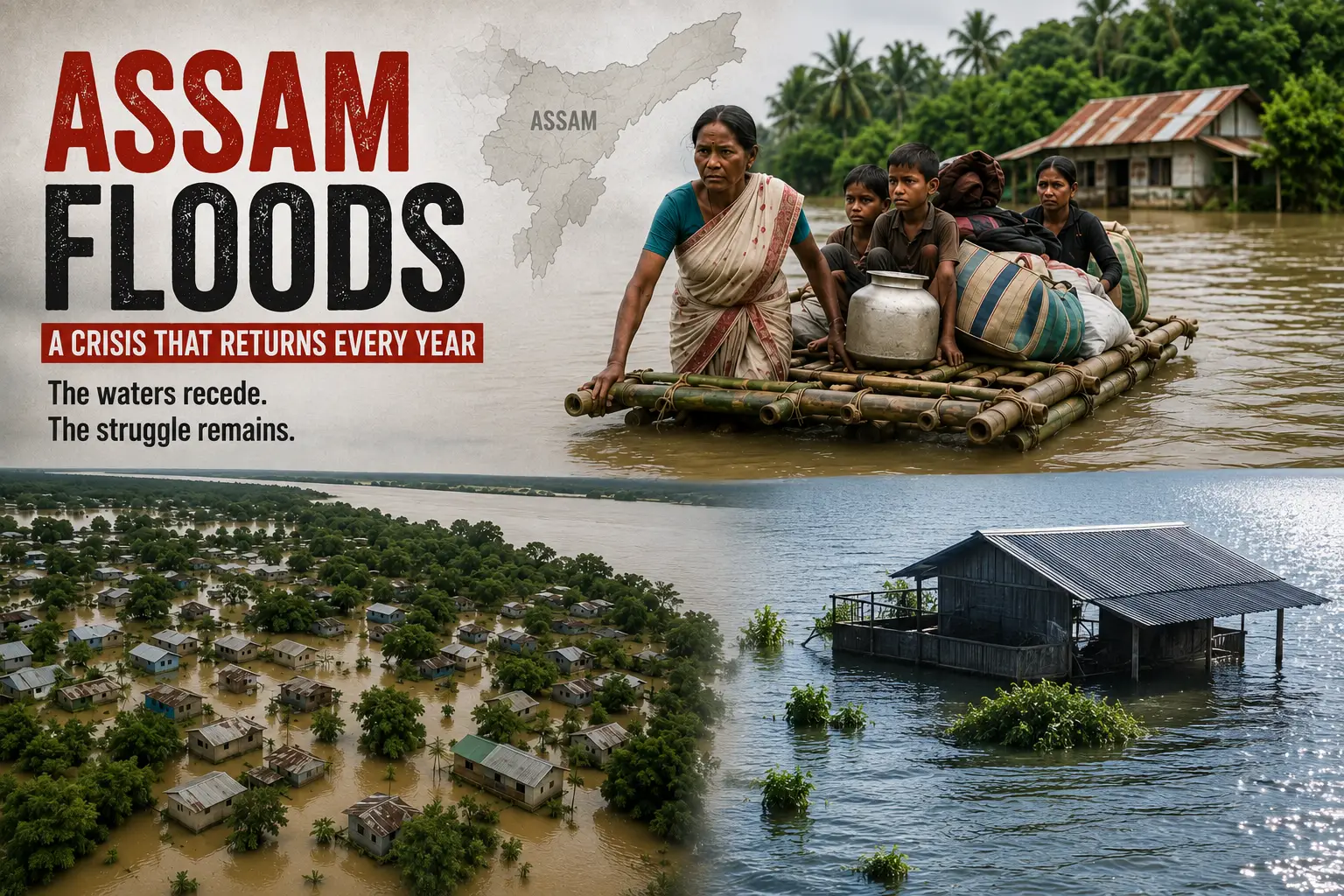

When the floodwaters rise in Assam, so does the nation’s conscience—for a few days. Television channels broadcast heartbreaking images, Politicians announce relief packages, Rescue teams work around the clock, Social media fills with prayers, hashtags and messages of solidarity. Then the cameras leave. The waters eventually recede but the people of Assam remain exactly where they have always been—standing amid destruction, trying to rebuild lives that have been shattered yet again.
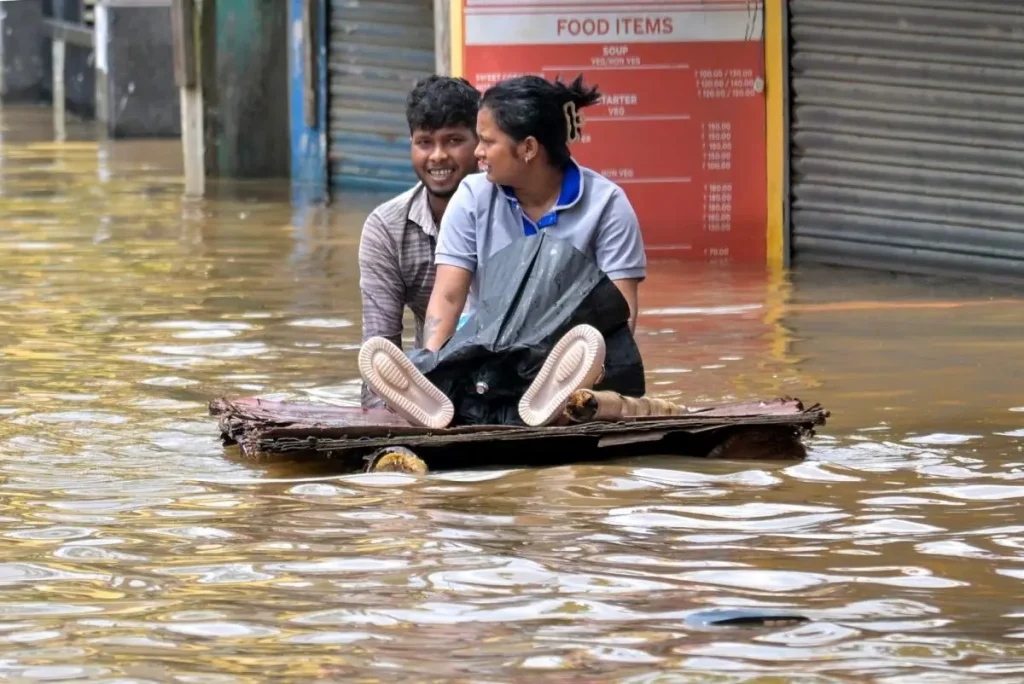
Every year, the story is the same. Families lose homes built through decades of hard work, Farmers lose crops that took months to cultivate, Children lose schools and books, Small shopkeepers lose the savings of an entire lifetime. Thousands of people are pushed into relief camps, where uncertainty replaces hope and survival becomes the only priority. The tragedy is not that floods occur, The tragedy is that India has accepted them as normal. That acceptance is unacceptable.
The Brahmaputra is one of the mightiest rivers on Earth. For centuries, it has sustained the people of Assam. It has nurtured civilisation, agriculture and trade. Yet the same river has become the source of annual devastation because nature has been allowed to collide with neglect, poor planning and administrative complacency.