


Trump Says US Has ‘Far More Munitions Than We Need’ Amid Iran War
The CSR Journal Magazine

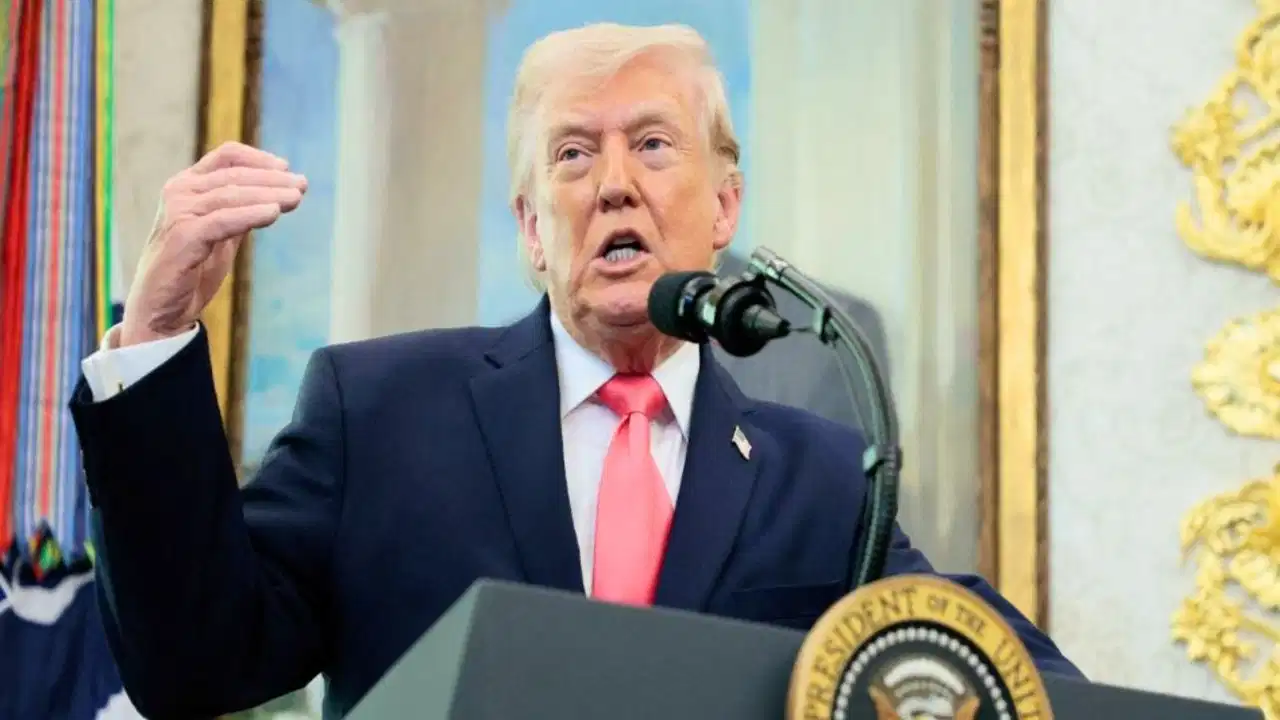
US President Donald Trump on Sunday dismissed concerns that American military stockpiles are being depleted amid the ongoing conflict with Iran, insisting that the United States has ample munitions despite reports suggesting dwindling interceptor reserves could limit future military operations.

Trump’s remarks came after reports indicated that senior military officials had warned the administration about shrinking inventories of Patriot and other air defence interceptors, raising questions over the sustainability of a prolonged military campaign against Iran.

Trump Rejects Reports of Munitions Shortages

Speaking to The Wall Street Journal, Trump rejected suggestions that US military capabilities were being constrained by falling missile stockpiles.

“We have far more munitions than anyone in the world, and far more than we need,” the President said, dismissing reports that interceptor shortages were influencing military strategy.

His comments were made in response to a New York Times report claiming that Chairman of the Joint Chiefs of Staff General Dan Caine had privately warned administration officials that interceptor reserves could be significantly depleted if the conflict with Iran escalated further.

Pentagon Balances Operations With Limited Inventories

According to officials cited by The Wall Street Journal, Admiral Brad Cooper, commander of US Central Command, believes American forces can continue operating despite constrained inventories of Patriot and other air defence interceptors.

The report said the current military strategy envisages expanding strikes against Iran, subject to Trump’s approval, with the aim of degrading Tehran’s missile-launching capabilities before it can mount large-scale attacks.

White House officials also argued that releasing updated figures on the number of Patriot and Terminal High Altitude Area Defense (THAAD) interceptors used since the conflict began would pose a national security risk.

While the administration has not disclosed official stockpile figures, analysts Mark Cancian and Chris Park of the Centre for Strategic and International Studies estimated that the US has fired at least 1,500 Patriot interceptors since the conflict began. According to their assessment, fewer than 1,000 interceptors remain in the inventory.

In an earlier report published in April, the analysts warned that “the diminished munitions stockpiles have created a near-term risk”, adding that “a war against a capable peer competitor like China will consume munitions at greater rates than in this war.”

Officials Defend US Military Readiness

White House Press Secretary Karoline Leavitt and Pentagon chief spokesperson Sean Parnell maintained that the US military has the resources required to carry out any mission ordered by the President.

The Wall Street Journal reported that concerns over interceptor supplies intensified after three Iranian ballistic missiles struck a US base in Jordan last week, killing three American service members when one missile hit a housing area.

Secretary of State Marco Rubio said most incoming missiles targeting the facility had been intercepted. However, US officials told the newspaper that Iran has been continuously adapting its tactics by altering missile flight paths, speeds and manoeuvres to evade air defence systems, forcing US forces to expend larger numbers of interceptors.

The report also noted that several Gulf allies are facing similar pressures after using substantial portions of their own air defence interceptor stockpiles during the conflict.

Reports Highlight Internal Debate Over Military Escalation

The developments follow a New York Times report that Trump had put on hold plans for a broader military offensive against Iran after defence officials warned that an expanded campaign could dangerously reduce the Pentagon’s air defence capabilities across the Middle East.

According to the report, senior military leaders and administration officials held private discussions focused on declining stocks of Patriot interceptors and other defensive systems deployed in the region. Officials also expressed concerns that prolonged military action could expose US troops, regional allies and strategic installations to retaliatory attacks while increasing economic and geopolitical risks.

The New York Times reported that General Dan Caine advised that although a wider military campaign against Iran remained operationally feasible, it would significantly strain interceptor inventories assigned to US Central Command.

Meanwhile, Iran reported no overnight US bombardment on Saturday, marking the first interruption after 13 consecutive nights of American military strikes and offering a brief pause in nearly two weeks of escalating hostilities.

Long or Short, get news the way you like. No ads. No redirections. Download Newspin and Stay Alert, The CSR Journal Mobile app, for fast, crisp, clean updates!

App Store –  https://apps.apple.com/in/app/newspin/id6746449540 

Google Play Store – https://play.google.com/store/apps/details?id=com.inventifweb.newspin&pcampaignid=web_share

Latest News

Popular Videos
