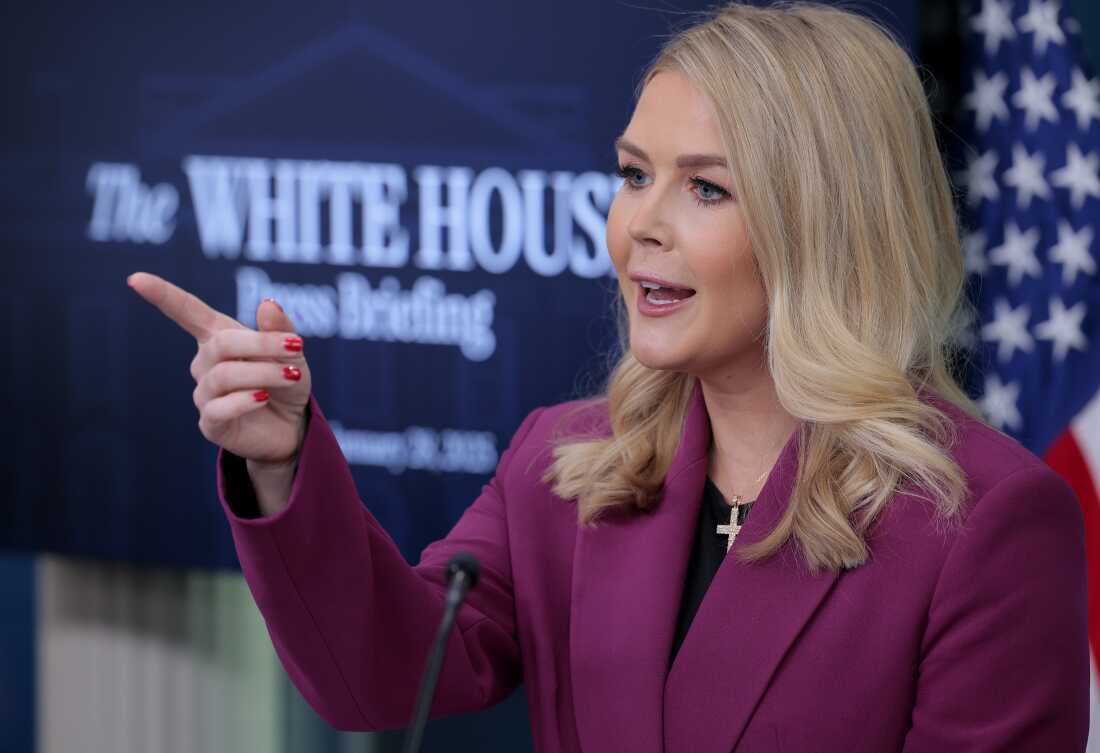
WASHINGTON, DC - JANUARY 28: White House Press Secretary Karoline Leavitt holds her first news conference in the Brady Press Briefing Room at the White House on January 28, 2025 in Washington, DC. At 27-years-old, Leavitt is the youngest White House press secretary in U.S. history. (Photo by Chip Somodevilla/Getty Images)
The White House has announced that the next round of peace negotiations between the United States and Iran is expected to take place in Pakistan. This statement was made by Press Secretary Karoline Leavitt during a media briefing on April 16. She stated that the discussions would “very likely” occur in the same location as the previous meeting.
Leavitt highlighted Pakistan’s unique role as the sole mediator in these negotiations, even as various countries have expressed interest in offering their support. “They (Pakistan) are the only mediator in this negotiation,” she asserted, underscoring the significance of Islamabad’s involvement in this diplomatic effort.
As part of the communication strategy, Leavitt emphasised that the US administration finds it crucial to streamline dialogue through Pakistani channels. She remarked, “The President feels it’s important to continue to streamline this communication through the Pakistanis, and so that’s what continues to take place.” This indicates a deliberate focus on utilising Pakistan’s position for effective communication between Washington and Tehran.
Context of Ongoing Diplomatic Efforts
The announcement comes amid heightened diplomatic initiatives to resume discussions between the US and Iran following inconclusive outcomes from the recent “Islamabad Talks.” These negotiations did not reach a consensus on several pivotal issues, particularly concerning Iran’s nuclear programme, which remains a contentious topic.
In a related development, Pakistan’s Chief of Army Staff General Asim Munir has recently visited Tehran alongside Interior Minister Mohsin Naqvi. Their visit is being interpreted as a final attempt to revive stalled discussions. The Iranian Foreign Minister, Abbas Araghchi, received the delegation and reportedly engaged with them on a fresh proposal from the US that outlines a framework for renewed negotiations.
This diplomatic activity occurs against the backdrop of a delicate two-week ceasefire in the region and escalating tensions, particularly surrounding a potential US naval blockade of the Strait of Hormuz. Such actions could have significant implications for the geopolitical climate in the area.
Recent Developments and Challenges
US President Donald Trump has conveyed that, while he is not seeking to extend the current ceasefire indefinitely, he prefers a negotiated resolution to the ongoing crisis. He hinted at the possibility of progress in the negotiations in the near future, suggesting that significant developments might unfold within a brief timeframe.
Earlier direct discussions between US Vice President JD Vance and Iranian officials took place from April 11 to 12. These extensive talks lasted for 21 hours but concluded without a consensus, primarily due to divergent viewpoints on Tehran’s nuclear programme and other significant issues defined as “red lines.” The complexities involved in these discussions illustrate the intricate balancing act required in international diplomacy.
The situation remains fluid, with both sides appearing to grapple with longstanding differences. The outcome of the upcoming negotiations in Pakistan may play a crucial role in shaping the geopolitical landscape in the region, particularly in regard to Iran’s nuclear ambitions and regional security dynamics.
Long or Short, get news the way you like. No ads. No redirections. Download Newspin and Stay Alert, The CSR Journal Mobile app, for fast, crisp, clean updates!
Concerns regarding the increasing public anger over the ongoing imprisonment of former Prime Minister Imran Khan have been voiced by a senior member of...
The United Nations has raised significant concerns regarding the security situation in Pakistan-occupied Kashmir, emphasising the need for accountability if individuals have faced harm...