


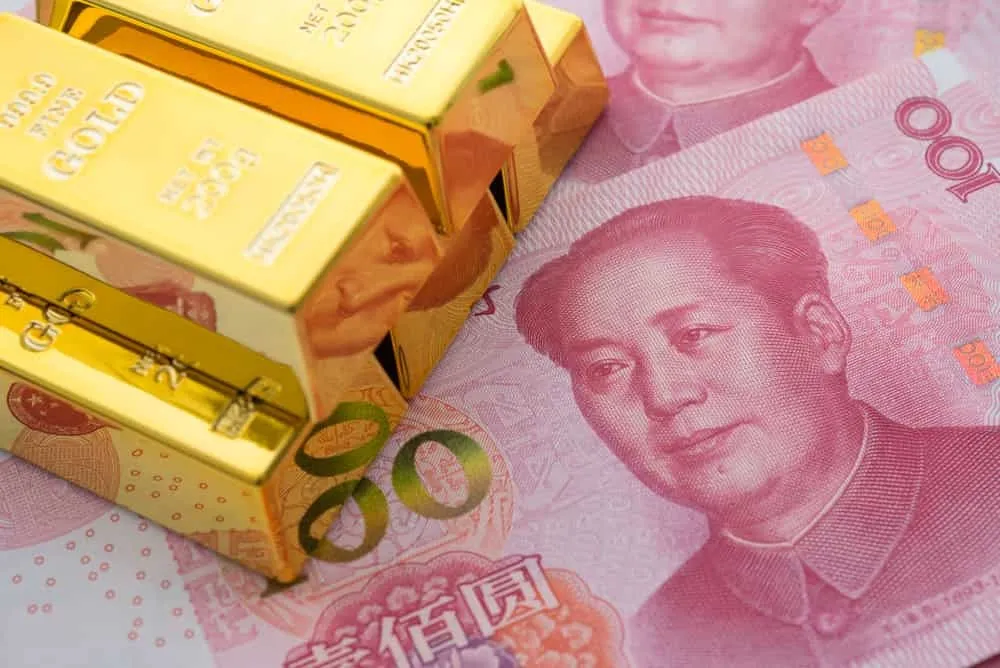


China Is Hoarding Dollars to Bury America

The CSR Journal Magazine

There is a particular kind of threat that does not announce itself. It does not rattle sabres or send diplomatic cables. It moves quietly through bond markets and central bank balance sheets, accumulating positions over years, waiting for conditions that may not arrive for a decade.

What China has been doing to the US dollar since roughly 2013 is precisely this kind of threat. It is slow, deliberate, opaque, and when you finally step back and look at the full picture, genuinely alarming.

The mechanics are deceptively simple.

China runs enormous trade surpluses with the world, particularly with the United States. Those surpluses generate dollars. Historically, China recycled those dollars back into US Treasury securities, becoming the largest foreign creditor to the American government, a position it held comfortably until Japan displaced it. At the peak, China held over $1.3 trillion in US government debt. It was, in effect, financing the very country it considered its primary strategic rival. Washington borrowed. Beijing lent. The relationship was symbiotic to the point of absurdity.

That relationship is now being deliberately, methodically unwound.

Consider what the data actually shows.

At its peak in 2013, China held approximately $1.32 trillion in US Treasury securities. By March 2024, that figure had fallen to $767.4 billion. By November 2025, according to the latest US Treasury International Capital data, holdings had dropped to their lowest level since September 2008, at roughly $618 billion. That is a reduction of over 40 percent from the peak, or more than $700 billion in US government debt quietly returned to the market over twelve years.

In the first quarter of 2024 alone, China offloaded a record $53 billion in US Treasuries and agency debt bonds in what analysts called the largest single-quarter sell-off China had ever initiated. The headline barely registered in Western financial media, which spent the same week obsessing over Federal Reserve meeting minutes and quarterly earnings calls.

Meanwhile, China’s total foreign exchange reserves tell a different story. As of January 2026, those reserves stood at $3.399 trillion, near their highest level since November 2015. China is not getting poorer in reserve terms. It is getting richer while simultaneously getting rid of dollars. That distinction matters enormously, because it tells you this is not a distress sale. It is a reallocation. China is trading paper IOUs from Washington for something else entirely.

That something else is gold.

The People’s Bank of China has purchased gold for seventeen consecutive months as of April 2026, adding five tonnes in March alone to bring official gold holdings to approximately 2,313 tonnes. In the calendar year 2025, China’s foreign exchange reserves grew by $155.5 billion, even as Treasury holdings shrank. The central bank’s gold reserves are now valued at roughly $387 billion, up from $254 billion just months prior, not merely because China bought more gold but because gold itself has appreciated dramatically amid the very global uncertainty China has been quietly stoking and hedging against simultaneously.

Here is the question that demands an honest answer: if China’s intent is purely defensive or diversification-driven, as Beijing’s official statements always claim, why does the pace of gold buying accelerate precisely during periods of peak US-China geopolitical tension?

Why does it correlate so neatly with US sanctions episodes and trade war escalations? Correlation is not causation, but at some point the pattern stops being coincidental and starts looking like a policy document.

To understand why China is doing this, you have to understand the event that crystallized an already existing fear into something approaching strategic certainty for Beijing.

In February 2022, after Russia invaded Ukraine, the United States and its allies froze approximately $300 billion in Russian central bank reserves held in Western financial institutions. The assets did not disappear. They simply became inaccessible. Russia could not use the dollars and euros it had earned through decades of energy exports to defend its currency, service its debts, or conduct international trade.

For China’s leadership, this was not a cautionary tale. It was a demonstration. What Washington did to Moscow in seventy-two hours, it could theoretically do to Beijing in the same timeframe. Every US Treasury security China holds is, from Beijing’s perspective, a hostage it has voluntarily surrendered. The 2022 sanctions regime made that vulnerability impossible to ignore.

Chinese economist Yu Yongding, an academic member of the Chinese Academy of Social Sciences and an influential government advisor, has described China’s large holdings of US Treasuries as a “grotesque misallocation of resources,” noting that their real net investment income to China has been negative for nearly two decades. He has called openly for China to reduce its exposure in an orderly manner. Pan Gongsheng, the governor of the People’s Bank of China, has publicly pointed to “the risks associated with the US dollar’s dominance,” warning that the dollar could be “weaponized in geopolitical conflicts.” These are not fringe views. They reflect official Chinese thinking, stated plainly in the language of central banking.

How OBOR Became the Dollar’s Trojan Horse

Belt and Road Initiative, known also as OBOR, is typically described in Western policy papers as a Chinese infrastructure investment program, a way to build ports, railways, and highways across Asia, Africa, and the Middle East while extending Chinese political influence. That framing is accurate but incomplete. BRI is also, and perhaps primarily, a mechanism for exporting the renminbi.

Here is the architecture. China builds infrastructure in a developing country, financing it through Chinese state banks. Those loans are denominated in renminbi. The construction contracts go to Chinese firms, which pay Chinese workers and buy Chinese materials, keeping the currency circulating in China’s orbit. The receiving country services its debt in renminbi. Trade along the new infrastructure corridor increasingly settles in renminbi. Over time, the dollar’s role in that bilateral economic relationship diminishes, then disappears.

As of August 2022, 149 countries and 32 international organizations had signed BRI cooperation agreements with China. The initiative was conceived in 2013 specifically, according to Georgetown Journal of International Affairs analysis, to “expel US dollars from the Chinese economy and limit the need for market interventions.” That is not a conspiracy theory. It is the stated scholarly interpretation of the program’s financial architecture.

China’s progress in de-dollarizing its own trade flows has been significant. According to data from Bocconi’s research network, China conducted more than 50 percent of its import and export payments in renminbi in 2024, up from essentially zero in 2010. The renminbi is now the 5th largest international reserve currency, accounting for 2.7 percent of global currency reserves and seven percent of global foreign exchange transaction volume. The CIPS system, China’s alternative to SWIFT for cross-border payments in renminbi, has been expanding steadily, offering a payment rail that operates entirely outside the reach of US sanctions.

The question this raises is uncomfortable for Western policymakers: was BRI primarily an infrastructure program with financial side effects, or was it always a financial strategy wearing infrastructure as a costume?

The answer, based on the consistency and scale of the currency-related outcomes, is probably the latter.

Teaching America a Lesson in Its Own Playbook

Washington has been weaponizing dollar dominance for decades. The ability to cut a country off from the dollar-denominated financial system, from SWIFT, from correspondent banking relationships, from dollar clearing, is the most powerful non-military coercive tool the United States possesses. Iran has lived under this reality for years. Venezuela has experienced it. Russia encountered it in its most aggressive form in 2022.

China has watched every one of these episodes with the attention of a student who intends to write the exam differently. The lesson Beijing absorbed is not that sanctions are illegitimate. The lesson is that the dollar’s dominance is the source of American coercive power, and that reducing the dollar’s dominance globally reduces America’s ability to coerce. China is not simply protecting itself from future sanctions. It is systematically dismantling the infrastructure that makes such sanctions effective, not just for itself but for every country that joins its alternative financial architecture.

This is the hard question the US Treasury Department has largely avoided asking publicly: what happens to American foreign policy leverage when a meaningful portion of global trade no longer requires dollars? Not a hypothetical future scenario. The US dollar’s share of global currency reserves has already fallen from over 70 percent in 2000 to 57.7 percent in the first quarter of 2025. That is not a rounding error. That is a structural shift occurring in real time, and it is still accelerating.

Consider another data point. Some 20 percent of global oil transactions are now conducted in currencies other than the dollar, up from near zero a decade ago. The petrodollar system, the mechanism by which oil-importing countries worldwide must first acquire dollars before purchasing energy, has been the single most powerful structural driver of global dollar demand since 1973. China imported 1.8 million barrels of oil from Saudi Arabia daily and secured a $7 billion currency swap agreement with Riyadh specifically designed to reduce dollar usage in those transactions. China sells Saudi Arabia electric vehicles, solar panels, and telecommunications equipment. Saudi Arabia receives renminbi. The dollar does not enter the picture.

The Dump That Has Not Happened Yet, and Why That Is More Frightening

Some analysts argue that China cannot dump the dollar because doing so would crash the value of its remaining dollar holdings, destroying wealth in the process. This is true as far as it goes.

A sudden, large-scale liquidation of US Treasuries by China would likely spike US yields, strengthen the dollar perversely in the short term as a safe-haven reflex, and impose significant mark-to-market losses on Beijing’s remaining holdings. A panic sell is self-defeating.

But China is not running a hedge fund optimizing for quarterly returns. It is running a civilization-state optimizing for geopolitical positioning over decades. The question is not whether China can dump dollars profitably. The question is whether China is positioning itself to be able to hurt the US financial system at a moment of its choosing, without needing to do so profitably.

And the answer to that question, based on the accumulation of evidence, is yes.

The mechanism does not require a dramatic sell-off. It requires only that when a crisis moment arrives, China has enough alternatives in place that it can refuse to roll over its remaining Treasury holdings, or can do so only selectively and conditionally. It requires that enough of global trade has already moved off the dollar that a coordinated withdrawal does not crater China’s own export markets. It requires that the gold reserves, the renminbi payment infrastructure, the BRI lending network, and the BRICS financial architecture are sufficiently developed to absorb the shock.

None of these conditions fully exist today. Several of them are closer to existing than they were five years ago.

For the United States, the erosion of dollar dominance is not simply a financial problem. It is a national security problem wearing the clothes of a bond market story. If foreign holders of US debt become less willing to purchase Treasuries at low yields, American borrowing costs rise.

With the national debt already exceeding $36 trillion and projected deficits continuing to expand, higher borrowing costs directly translate to fiscal stress. The US cannot simply print its way out of this, because the mechanism by which printed dollars maintain their value abroad is the very reserve currency status that is being contested.

Moody’s downgraded the US credit rating to Aa1 in May 2025, citing what it called runaway deficits. The timing, amid the most acute period of post-pandemic US-China financial divergence, was not coincidental in its symbolism even if unrelated in its causation.

For the developing world, the implications are genuinely double-edged. Countries trapped in dollar-denominated debt cycles, subject to IMF conditionality and US financial pressure, have a genuine interest in alternatives. China has positioned BRI and CIPS explicitly as instruments of financial sovereignty for the Global South. But Chinese lending has its own terms, its own conditionalities, and its own coercive potential. Replacing dollar dependency with renminbi dependency is not liberation. It is a change of creditor.

For Japan, Europe, and the US’s traditional allies, the situation is quietly destabilizing. Japan remains the largest foreign holder of US Treasuries and is deeply integrated into dollar-based financial systems. But even Japanese policymakers have begun hedging. European nations, having watched Washington weaponize dollar access against Russia, have quietly renewed discussions about euro-denominated settlement mechanisms for bilateral trade. The allies are not defecting. But they are building exit ramps, just in case.

So,

What happens to American fiscal capacity if the dollar loses reserve status entirely?

The United States borrows in its own currency precisely because others hold that currency as a reserve asset. Remove that demand, and the borrowing costs required to attract buyers become prohibitive.

Is China actually planning to trigger a dollar crisis, or is it merely building the option to do so? There is a meaningful difference between having a weapon and intending to use it. But having the weapon changes the negotiating dynamic regardless.

Has the United States fundamentally misunderstood the nature of Chinese financial strategy by treating it as an extension of trade policy rather than grand strategy? The obsession with tariffs and chip export controls has dominated headlines while the deeper restructuring of the global monetary system has proceeded largely uncontested.

And finally: at what point does a strategy that is patient enough to span multiple US administrations, multiple economic cycles, and multiple geopolitical confrontations stop being a strategy and start being something closer to a doctrine?

China has been reducing Treasury exposure, building gold reserves, expanding BRI lending networks, developing renminbi payment infrastructure, and cultivating BRICS financial architecture simultaneously, consistently, for over a decade. Whatever you call that, it is not improvisation.

The dollar is not dying. Not this year, probably not this decade in any catastrophic sense.

But the architecture of dollar dominance is being dismantled, one bond sale and one gold purchase at a time, by a country that has demonstrated an exceptional capacity to play a very long game.

Washington would do well to look up from the quarterly GDP figures long enough to read the board.

Views of the author are personal and do not necessarily represent the website’s views.

Dr. Jaimine Vaishnav is a faculty of geopolitics and world economy and other liberal arts subjects, a researcher with publications in SCI and ABDC journals, and an author of 6 books specializing in informal economies, mass media, and street entrepreneurship. With over a decade of experience as an academic and options trader, he is keen on bridging the grassroots business practices with global economic thought. His work emphasizes resilience, innovation, and human action in everyday human life. He can be contacted on jaiminism@hotmail.co.in for further communication.

Long or Short, get news the way you like. No ads. No redirections. Download Newspin and Stay Alert, The CSR Journal Mobile app, for fast, crisp, clean updates!

App Store – https://apps.apple.com/in/app/newspin/id6746449540

Google Play Store – https://play.google.com/store/apps/details?id=com.inventifweb.newspin&pcampaignid=web_share

Latest News

Popular Videos