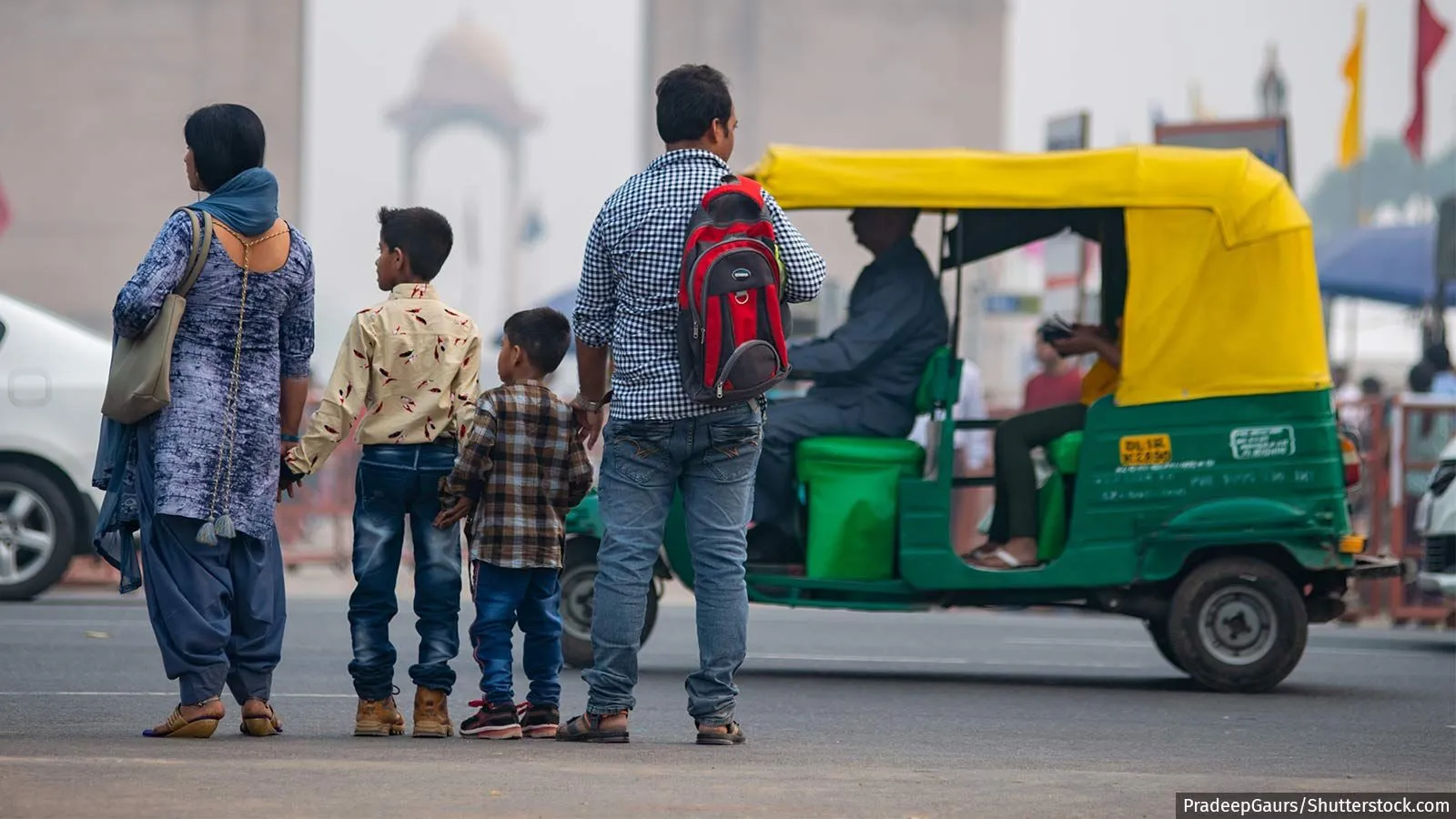
For decades, India’s middle class was called the backbone of the nation. It was the section that believed in hard work, honesty, education, and sacrifice. These were the families that woke up early, travelled in crowded trains and buses, worked overtime, paid taxes honestly, and silently carried the dream of a better future for their children.
But today, something is breaking inside India’s middle class. Despite working harder than ever before, millions of middle-class families across the country are beginning to feel poorer every single year. Salaries come into bank accounts, but disappear within days. Prices keep rising. Savings keep shrinking. Dreams are getting smaller. And for many families, survival itself has become a monthly battle.
The pain is no longer hidden. Parents who once dreamt of buying a small home now struggle to pay EMIs. Families that once enjoyed small vacations now think twice before going out for dinner. Children are being told “next year” for basic wishes because household budgets are collapsing under pressure.
The biggest tragedy is that the middle class feels completely trapped. They are not poor enough to receive government benefits. But they are no longer financially secure enough to live peacefully. They stand in the most painful space possible — earning, but constantly afraid.
Everyday life has become emotionally exhausting. School fees are rising aggressively. Medical expenses can destroy years of savings overnight. Rent and property prices have exploded in cities. Petrol, electricity bills, groceries, internet bills, insurance premiums — everything feels more expensive than ever before. Even basic necessities now force families to calculate every rupee carefully.
And while expenses rise rapidly, salaries for many people are not increasing at the same speed. Thousands of young professionals with degrees are stuck in jobs with stagnant pay and unbearable pressure. Many work 10–12 hours daily, answer office calls late into the night, and still feel financially insecure at the end of the month. The mental pressure inside homes is becoming unbearable.
What hurts the middle class even more is the growing feeling that nobody is truly listening to them. Political speeches often talk about poverty, billion-dollar investments, elections, religion, caste battles, or global achievements. But the daily emotional struggle of ordinary middle-class Indians rarely becomes the center of national discussion.
The salaried employee paying taxes honestly feels invisible. The small businessman struggling with uncertainty feels abandoned. The private sector worker fearing layoffs feels helpless.And the youth, despite education and talent, increasingly feel that stability is slipping away from their hands.
Many middle-class parents are now sacrificing their own health, happiness, and retirement security simply to keep their children’s future alive. Mothers quietly cut household expenses. Fathers silently carry financial stress without expressing it. Behind smiling family photos on social media, countless homes are fighting silent financial anxiety every single day.
The emotional damage is becoming deeper than the economic damage. People are no longer only worried about money. They are worried about dignity, stability, and hope. A generation that was taught “study hard and life will improve” is now questioning whether the system still rewards honesty and hard work fairly. This growing frustration is dangerous because when the middle class starts losing hope, the emotional stability of an entire nation begins weakening.
India cannot become truly strong if the people carrying the country on their shoulders feel constantly exhausted, financially insecure, and emotionally unheard. The middle class does not ask for luxury. It asks for breathing space. It asks for affordable education, affordable healthcare, stable jobs, lower financial pressure, and the feeling that hard work still leads to a better life.
The government, policymakers, corporate leaders, and every major stakeholder in the system must urgently start focusing on the financial stability and emotional survival of India’s middle class before the situation becomes dangerously irreversible. History has already shown what happens when a hardworking section of society is pushed into endless pressure, debt, helplessness, and hopelessness for years. Farmers across the country were once silently suffering too — until that pain exploded into a national tragedy through rising suicides and deep social despair. India cannot afford to ignore the warning signs again. If the middle class continues to feel crushed between rising costs, insecurity, and constant stress with no meaningful relief, the consequences for society, the economy, and the nation’s emotional stability could become extremely serious in the years ahead.