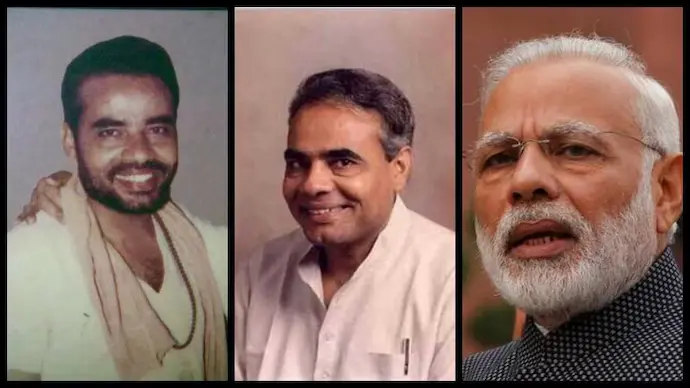
For more than a decade, Narendra Modi has remained the central figure in Indian politics. Supporters see him as a transformative leader who reshaped India’s political landscape, while critics argue that Indian politics has become excessively centered around a single personality. Regardless of one’s political position, one reality is difficult to ignore: Modi remains the most influential political force in the country today.
This is why many political observers believe that Narendra Modi is unlikely to willingly step away from the center of power unless a role of equal or greater national stature becomes available. Among the few constitutional positions that carry such stature, the office of the President of India stands out. The argument is not merely about power. It is about legacy.
Another reason some political observers believe Narendra Modi may seek to remain at the highest levels of power is the nature of his political journey itself. During his tenure, his government has taken on powerful political rivals, influential business interests, entrenched bureaucratic networks, activist groups, and several long-established centres of influence. Supporters view these actions as decisive leadership and a fight against vested interests, while critics see them as evidence of excessive centralization of power. Either way, such a confrontational political legacy creates a situation where stepping away from the apex of authority may become far more complicated than it is for an ordinary politician. Many analysts argue that leaders who have fundamentally altered the balance of power within a political system often seek to ensure that their influence remains protected even after leaving office. In this view, any future transition by Modi would likely be carefully managed to preserve both his political legacy and the authority he has accumulated over the years.
Some critics go even further and argue that if Narendra Modi were ever to move from the Prime Minister’s Office to the Rashtrapati Bhavan, he would be unlikely to accept a purely ceremonial role. They contend that a leader who has spent years consolidating authority, centralizing decision-making, and personally shaping the direction of government may seek to ensure that his influence continues long after leaving the executive office. In this interpretation, any transition to the presidency would likely be preceded by efforts—political, institutional, or strategic—to maximize the importance and influence of the office. Whether such a transformation is constitutionally or politically feasible is a separate question, but critics believe Modi would have little interest in becoming a passive occupant of the presidency. Instead, they argue, he would seek to remain the dominant force in Indian politics, exercising influence over national affairs even from outside the Prime Minister’s chair. Supporters dismiss such claims as political speculation, but the debate itself reflects the widespread perception that Modi’s political style has always been centered on leadership, control, and direct influence rather than symbolic authority.
Few leaders in modern Indian history have built such a dominant political brand around themselves. Elections, government achievements, international diplomacy, welfare schemes, and even party campaigns have often revolved around the Modi image. Leaders who reach such a level of political influence rarely walk away while they still command public attention. History across the world shows that powerful political figures generally seek to shape the next chapter of their legacy rather than disappear from public life.Many believe that Modi understands this better than anyone.
Another reason is organizational control. The ruling party’s electoral machinery, messaging strategy, and voter outreach have become deeply associated with his leadership. Replacing such a dominant figure is not a simple administrative exercise. It creates uncertainty within the party, among supporters, and even among opponents. As long as Modi remains the most effective vote mobilizer, the political incentive to keep him at the forefront remains extremely strong.
Critics often predict that anti-incumbency, economic challenges, unemployment concerns, or regional political setbacks could eventually weaken his position. However, Modi’s political career has repeatedly demonstrated an ability to survive situations that many analysts once considered serious threats. Time and again, he has shown an extraordinary capacity to convert political challenges into opportunities for political consolidation. His greatest strength may not be electoral arithmetic but narrative control.
While opponents frequently focus on individual controversies, Modi’s political messaging often operates on a larger canvas—nationalism, development, India’s global image, welfare delivery, and long-term aspirations. This broader narrative has helped him maintain relevance even during difficult political periods.
Those who believe Modi will continue as Prime Minister despite growing challenges point to another factor: the absence of a nationally dominant alternative. Elections are often not just a choice between governments but also a comparison of leadership options. As long as many voters continue to see Modi as a stronger and more decisive figure than the available alternatives, his political position remains difficult to challenge.
The possibility of a future transition to the presidency is therefore viewed by some analysts as the only path that would allow Modi to leave the Prime Minister’s Office without appearing to retreat from public life. Such a move would allow him to preserve his stature, protect his political legacy, and remain one of the most influential figures in Indian public affairs. Whether that scenario ever materializes remains uncertain.
One thing appears clear: Narendra Modi is not merely another Prime Minister in the Indian political system. He has become a political institution in his own right. Institutions do not disappear overnight. They evolve, adapt, and seek new forms of relevance.
For that reason, many believe that Modi’s exit from the center of Indian politics—whenever it comes—will likely be carefully planned, strategically managed, and designed to preserve the influence he has spent decades building. The debate is therefore not simply about when Narendra Modi will leave power. It is about what form his influence will take after he does.