


Political Parties in India Lack Understanding of Youth Concerns, Says C-Voter Gen Z Poll
The CSR Journal Magazine

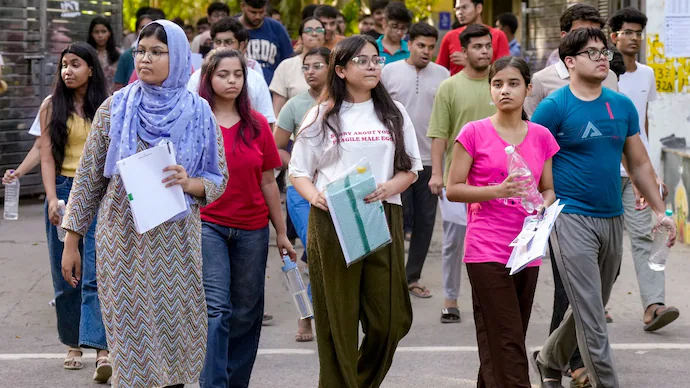
The C-Voter snap poll has revealed that nearly sixty per cent of young people in India feel that political parties do not understand their concerns. This survey, targeting individuals aged 18 to 35, shows significant dissatisfaction among Gen Z, the demographic group born between 1996 and 2010. Of the 1,270 respondents, 58.7 per cent expressed this sentiment, while only 20.7 per cent believed their issues were acknowledged. A further 20.5 per cent were neutral or chose not to respond.

Interestingly, views on this matter varied slightly according to political affiliations. Among those aligned with the BJP-led National Democratic Alliance (NDA), 54 per cent felt that political parties failed to understand the concerns of Gen Z. In contrast, around 64 per cent of participants supporting opposition parties shared this viewpoint. Approximately 58.5 per cent of respondents who identified with other political groups also indicated a similar lack of alignment between their concerns and party responses.

Top Priorities for Gen Z: Education and Employment

The survey indicates that key issues for Gen Z revolve around education, employment, and health. Following recent student protests in Delhi and other states like Punjab and Jharkhand, the significance of these matters has come to the forefront. According to the poll, a vast majority, 53 per cent, highlighted employment, education, and health as the most pressing electoral issues. Inflation was the second-largest concern at 13.1 per cent, followed by corruption at 11.9 per cent. Essential services like electricity, water, and roads were prioritised by 8.2 per cent of those surveyed.

Additional factors concerning law and order and women’s safety were cited by 4.8 per cent of respondents, while national security was rated as important by only 2.7 per cent. This illustrates a shift in focus towards tangible daily challenges faced by youth, rather than larger concepts such as national security.

The survey also sheds light on voting preferences, with 33.3 per cent of respondents identifying “issues” as the primary basis for their voting decisions. The choice of leader ranked next at 20 per cent, while only 13.9 per cent prioritised party affiliation, and a mere 7.7 per cent considered the candidate’s identity crucial in their voting choices.

Social Media’s Influence and Demand for Youth Representation

According to the poll, social media plays a significant role in shaping the political opinions of Gen Z, with nearly half of the respondents, 49.3 per cent, acknowledging its influence. When asked whom they trust most regarding life decisions, 75.1 per cent of participants indicated that they rely on parents, while only 6.9 per cent turned to friends and 6.8 per cent to social media influencers.

Furthermore, a substantial majority of respondents, 74.6 per cent, expressed support for young political candidates, indicating a desire for more youth representation in politics. The current Lok Sabha composition reveals that the average age of Members of Parliament is 56 years, with only 11 per cent being 40 years old or younger, of which only three MPs belong to the Gen Z category.

Educational qualifications of candidates also weigh heavily on the minds of young voters, with 59.5 per cent identifying this as a “very important” factor in their choice. About half of the respondents, 49.5 per cent, acknowledged nationalism as a significant criterion, while only 24.4 per cent expressed a preference for candidates from their own caste, with 48.2 per cent rejecting this idea altogether.

Long or Short, get news the way you like. No ads. No redirections. Download Newspin and Stay Alert, The CSR Journal Mobile app, for fast, crisp, clean updates!

App Store –  https://apps.apple.com/in/app/newspin/id6746449540 

Google Play Store – https://play.google.com/store/apps/details?id=com.inventifweb.newspin&pcampaignid=web_share

Latest News

Popular Videos
