


Rising Healthcare Costs Leave Most Indian Corporate Workers Underinsured: Study
The CSR Journal Magazine

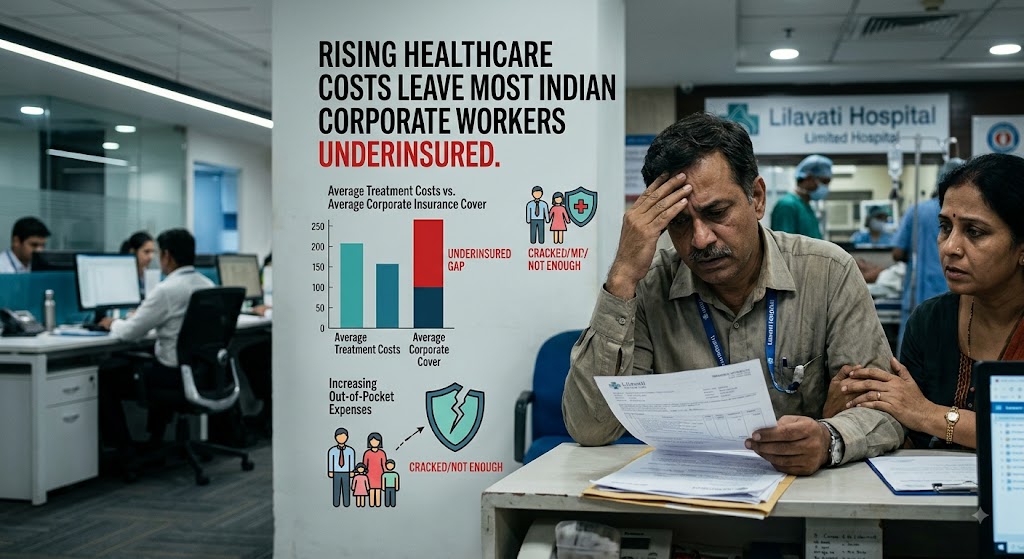
A recent study has revealed that a significant majority of corporate employees in India are increasingly worried about the financial burden of unexpected medical expenses. Conducted by Tata AIG General Insurance Company, the report titled The Corporate Health Protection Pulse 2026 indicates that 94 per cent of employees fear that an unforeseen medical bill could lead to substantial financial pressure. Despite many having employer-provided health insurance, there is a pervasive uncertainty about whether this coverage will suffice during critical times.

The rising costs associated with healthcare are making hospitalisation one of the most pressing concerns for employees. The study highlights that the financial implications of hospital treatment can severely deplete household savings, leading to heightened stress. Other prevalent health concerns include lifestyle diseases, ensuring health cover for family members, and inadequate savings for emergencies. When an individual relies primarily on a fixed monthly salary, sudden medical expenses can create a substantial financial burden, especially if insurance does not cover all aspects of care.

During job transitions, healthcare expenses have emerged as the primary financial concern for employees, overshadowing worries about income loss or EMI obligations. This revelation underscores the escalating importance of health insurance in financial planning among corporate employees.

Impact of Job Loss on Financial Stability

The study also investigated how long employees could manage financially in the event of sudden job loss. Findings demonstrated that nearly seventy per cent of respondents felt they could only sustain their expenses for six months or less without employment. Conversely, a mere 12 per cent believed they could last for over a year. This limited financial buffer raises the stakes during medical emergencies, as employees must juggle regular expenses alongside unexpected healthcare costs.

The financial landscape becomes even more complicated when employees transition between jobs and experience changes in their employer-sponsored health cover. According to the research, 88 per cent expressed a strong preference for uninterrupted health insurance coverage during job changes, highlighting a critical concern regarding continuity in medical protection. However, awareness regarding available strategies to maintain health insurance during such transitions remains low, with only 40 per cent knowledgeable about potential solutions.

Consequently, many employees struggle between understanding the necessity of ongoing health protection and the challenge of ensuring it during employment changes.

Concerns About Employer Health Insurance Coverage

The findings from the study indicate growing apprehension regarding the adequacy of employer-provided Group Medical Cover (GMC). Nearly 75 per cent of respondents noted that reliance solely on GMC may not be sufficient in the case of a medical emergency. Furthermore, 84 per cent recognised the importance of securing additional health insurance beyond the company’s coverage. Despite this awareness, a considerable portion—45 per cent—lacked any personal health insurance apart from their workplace cover, revealing a significant gap in health security.

A lack of complete understanding surrounding GMC features further compounds the problem. Just 41 per cent of respondents indicated they were fully aware of their employer-provided health insurance benefits, creating potential risks in urgent situations. Misunderstandings regarding coverage limits, exclusions, or conditions could lead to considerable financial strain when medical attention is required.

The hesitance to procure additional health insurance appears to stem from a general lack of awareness and an inclination to postpone such purchases, particularly among employees aged 28 to 34. Younger employees may not perceive immediate urgency regarding health insurance while feeling healthy and provided with company coverage. Nonetheless, unforeseen medical events can quickly create a financial burden that cannot wait.

Ultimately, the study’s results indicate that while employer-provided health insurance serves as an essential safety net, employees must thoroughly understand their coverage and whether it adequately meets their needs, especially in light of the mounting costs of healthcare in India.

Long or Short, get news the way you like. No ads. No redirections. Download Newspin and Stay Alert, The CSR Journal Mobile app, for fast, crisp, clean updates!

App Store –  https://apps.apple.com/in/app/newspin/id6746449540 

Google Play Store – https://play.google.com/store/apps/details?id=com.inventifweb.newspin&pcampaignid=web_share

Latest News

Popular Videos
