


Operation Sindoor: How Modi’s India Achieved in Days What Many Nations Have Failed to Achieve in Years

The CSR Journal Magazine

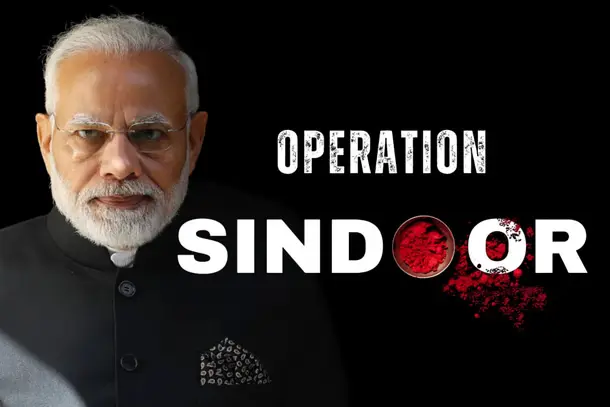
In an era defined by prolonged wars, diplomatic deadlocks, and military stalemates, Operation Sindoor stands out as a rare example of strategic clarity. While major powers remain trapped in conflicts with no clear end in sight, India demonstrated the ability to define an objective, execute it decisively, establish deterrence, and avoid being drawn into a prolonged war.

What made the operation particularly significant was not just its military execution but its speed. At a time when conflicts increasingly depend on international mediation, external pressure, and endless negotiations, India moved swiftly, achieved its stated objectives, and stepped back before escalation could spiral out of control. The pace of events surprised many global observers and reinforced the perception that India was capable of acting independently without becoming dependent on outside powers.

The contrast with ongoing global conflicts is difficult to ignore. The Russia-Ukraine war has dragged on for years, consuming enormous military, economic, and human resources while drawing in the United States, NATO, and much of Europe. Likewise, the Israel-Iran confrontation has highlighted how even powerful nations can become trapped in cycles of retaliation, uncertainty, and international diplomatic intervention. Despite vast military capabilities and external involvement, neither conflict has found a swift or decisive conclusion.

Operation Sindoor offered a different model. India entered the operation with a clearly defined objective and, according to official statements, concluded active military operations after achieving those objectives. Rather than allowing tactical success to evolve into an open-ended conflict, India projected strategic discipline, restraint, and confidence. This reflects the transformation of India’s security doctrine over the past decade. From a posture often perceived as reactive, India has increasingly emphasized deterrence, preparedness, and rapid response. Operation Sindoor reinforced the message that India possesses both the capability and the political will to act decisively when its security interests are challenged.

Equally important was the signal sent to the world. Modern warfare is no longer judged solely by military strength but by intelligence capabilities, precision, coordination, technological sophistication, and the ability to control escalation. Operation Sindoor appeared to showcase all of these elements, strengthening perceptions of India’s growing military maturity.

The impact extended far beyond the battlefield. For years, India was viewed primarily as a rising economic power. After Operation Sindoor, strategic discussions increasingly focused on India’s defence capabilities and military preparedness. India is no longer seen merely as a future economic giant but as a nation capable of protecting its interests through credible military strength.

Perhaps the most lasting effect has been on global perceptions. In international affairs, perception often matters as much as capability. Countries that demonstrate decisiveness, control, and strategic clarity command greater respect in diplomacy, security partnerships, and geopolitical negotiations. Operation Sindoor helped project India as a confident power capable of acting swiftly, achieving its objectives, and controlling the course of events.

History will ultimately judge the operation’s long-term significance. Yet one conclusion is already evident: while several major powers remain entangled in conflicts that have stretched on for years, India demonstrated a model built on limited objectives, rapid execution, strategic restraint, and a clear exit strategy. In doing so, Operation Sindoor may be remembered not merely as a military operation, but as a defining moment in India’s emergence as a serious strategic power.

Latest News

Popular Videos