




Mainstream TV Media Has Lost the Plot. The Cockroaches Have Won

The CSR Journal Magazine

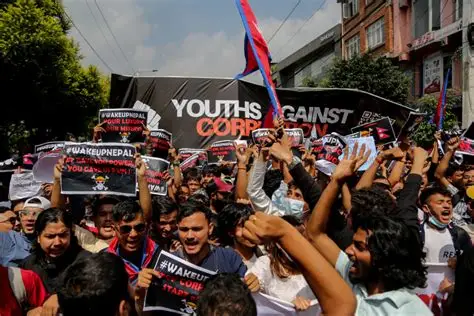
I watched something remarkable happen this June and July. Thousands of Gen Z protesters, wearing cockroach masks, gathered at Jantar Mantar in Delhi under the banner of the Cockroach Janta Party. They were angry about a leaked NEET paper, angry about a broken examination system, angrier still about a country that promises them a future and delivers unemployment instead.

And while all this was unfolding live on Instagram, X and YouTube, India’s biggest television newsrooms were doing something else entirely. India Today was busy debating whether Gen Z even wants change. Aaj Tak was going in circles on paper leaks. NDTV was covering Karnataka politics. Republic Bharat, well, nobody quite knows what Republic Bharat was doing, and frankly nobody cares anymore.

That last sentence is the whole story. Nobody cares anymore. And that is the sentence mainstream media in India needs to sit with, because it explains everything about why a satirical Instagram page called the Cockroach Janta Party, started in May 2026 by a digital strategist as a joke, ended up shaking the government more than any prime time debate has in years.

Rewind to 2011. Anna Hazare sits on a hunger strike at Ramlila Ground demanding a Lokpal bill. Television channels do not just cover it; they live inside it. Wall to wall coverage, OB vans parked for days, anchors treating the movement like a national emergency.

A former Outlook editor later admitted publicly that journalists were not reporting the story, they were manufacturing it, chasing what he bluntly called the “juice” in it.

Omar Abdullah, then chief minister of Jammu and Kashmir, said he was boycotting television because he was fed up with back to back Anna coverage. That is how big the media’s role was. Without that 24×7 saturation, India Against Corruption remains a Delhi sit-in. With it, the movement becomes a national phenomenon big enough to eventually midwife a political party.

In media studies this is called agenda setting theory, first laid out by Maxwell McCombs and Donald Shaw. Simple version: media does not tell you what to think, but it tells you what to think about. If the news decides Anna Hazare is the story of the year, he becomes the story of the year, whether or not the ground reality justifies it. IAC was, in a very real sense, built by mainstream media as much as it built mainstream media’s ratings that year.

 What is being noticed in 2026?

Now compare that to the CJP protests. Newspapers did eventually cover the June 6 rally, though many were oddly squeamish about naming the movement, calling it a “protesters’ march” instead of the Cockroach Janta Party. Television, though, largely looked away.

And here is the part that should terrify every news director in the country: the movement did not die from the neglect. It grew. By July 20, protesters were marching on Parliament, tear gas was fired, baton charges followed, and around 150 people needed hospital treatment. Sonam Wangchuk began an indefinite hunger strike at the protest site in solidarity. Verisk Maplecroft, a global risk consultancy, now ranks India as the highest risk country in the world for civil unrest, noting that average protest participation has more than doubled over the past year and that unrest has spread geographically across the country.

None of that needed a single primetime debate to happen. It happened on phones, in group chats, on reels stitched together by teenagers who have never watched a news bulletin in their life and have no plans to start.

This is the reversal of inter-media agenda setting, a theory that describes how traditional media used to set the agenda that social media would then follow. In 2011 that arrow pointed one way, from television to the street. In 2026 the arrow has flipped. Social media sets the agenda now, and television is reduced to either playing catch up or, more often, pretending nothing is happening at all.

Why the silence, and why it backfired

There is a sociological explanation for why newsrooms behaved this way, and it is not flattering. The propaganda model, developed by Edward Herman and Noam Chomsky, argues that commercial news does not simply report the world, it filters it through five pressures: ownership interests, advertising dependence, sourcing habits, flak from powerful critics, and a shared ideological frame.

Apply that filter to Indian television in 2026 and the silence on CJP makes uncomfortable sense.

A protest demanding accountability from a sitting government is not advertiser friendly content, and channels that depend on government access for interviews, leaks and studio guests have every commercial incentive to look the other way. Protesters themselves have coined a phrase for this ecosystem: Godi media, meaning lapdog media, and they chanted it directly at cameras during the July 20 march. That is not a fringe insult anymore. It is now a mainstream description of mainstream media, used by the very generation these channels are failing to reach.

Then there is a psychology angle that explains why the silence made things worse rather than better. Psychological reactance theory, developed by Jack Brehm, holds that when people feel their freedom, including their freedom to know what is happening, is being restricted, they push back harder than before.

Nepal gave the world a textbook case of this just months earlier. In September 2025, the Oli government banned 26 social media platforms including Facebook, YouTube and X, citing registration failures. Within days, hashtags like FreeTheNetNepal were trending, protesters carried banners reading “No internet, no democracy,” and what began as anger over a social media ban fused with years of rage against corruption and nepotism.

The uprising killed the government faster than it killed the ban. Prime Minister K.P. Sharma Oli resigned within a week, and the social media ban was lifted almost immediately, far too late to matter. India’s television blackout on CJP is a softer version of the same mistake. You cannot suppress a story a generation is living through and expect them to simply forget it happened. You only teach them that you are irrelevant to their reality.

There is also a simpler, older idea at work here, one the French sociologist Emile Durkheim wrote about a century ago: collective effervescence, the surge of shared energy and identity people feel when they gather physically for a cause bigger than themselves. Cockroach masks, placards, chants, all of it builds a kind of tribal solidarity that television commentary cannot manufacture and, crucially, cannot kill by ignoring it.

The crowd does not need CNN or NDTV to validate that it exists. It films itself, and that is now proof enough.

When TV finally showed up, it showed up to blame the victims

The most damning moment came after July 20, when television could no longer ignore the story because the tear gas and lathicharge were too visible to bury. Channels went live, showed the violence as it happened, and then, within hours, pivoted primetime debates to blaming students for the clashes and hunting for hidden “toolkits” and foreign conspiracies, on the very channels that had broadcast the police crackdown themselves.

Newspapers, to their partial credit, covered the story in more depth, though many still flinched from naming the movement directly. As one veteran television journalist admitted candidly on a media podcast recently, young people’s distrust is not decided by what a channel airs tomorrow, it is the accumulated weight of a decade of behaviour, and even an honest turnaround now would take years to undo.

This is where spiral of silence theory, from the German scholar Elisabeth Noelle Neumann, gets turned completely upside down. The theory says people stay quiet about opinions they believe are unpopular, for fear of social isolation. Godi media spent a decade assuming the nation’s real opinion matched the government friendly consensus it broadcast every night, and that anyone dissenting was a fringe minority that would eventually shut up.

Gen Z simply refused to play along. They built their own public sphere on Instagram and YouTube, one where anger at unemployment, exam scams and unaccountable ministers was not fringe at all, it was the loudest voice in the room. Mainstream media did not detect this shift because it had stopped listening to anyone outside its own studio.

 A regional pattern, not an Indian accident

Widen the lens and this is not unique to India. Sri Lanka’s Aragalaya uprising in 2022, Bangladesh’s student led revolt in 2024, and Nepal’s Gen Z uprising in 2025 all toppled governments through the same combustible mix: economic mismanagement, entrenched corruption, and a generation that organises through phones rather than parties. Ladakh saw its own Gen Z linked unrest in September 2025 turn fatal, with four protesters killed demanding statehood, a story that barely dented the national television conversation either.

Across the region, the pattern is identical. Where mainstream media stays embedded with power, independent creators, diaspora journalists and citizen footage fill the vacuum, and they fill it faster and with more credibility than any anchor screaming over six panelists ever could.

 It is time mainstream media grew a spine!

Here is my honest assessment, and I will not soften it. Indian mainstream television has spent a decade optimising for access over accountability, for studio spectacle over street reality, and for advertiser comfort over democratic duty. It assumed this trade off was free. The events of June and July 2026 prove it was not. An entire generation now gets its news, its outrage and its political education from platforms these channels do not control and increasingly cannot even monitor. That should not be treated as a technology problem. It is a credibility problem, entirely self-inflicted.

The fix is not complicated, even if it is uncomfortable. Report protests as they happen, not as government spokespersons would prefer they be remembered. Name movements honestly instead of hiding behind euphemisms like “protesters’ march.” Stop hunting for toolkits and conspiracies the moment young citizens embarrass the establishment. Cover unemployment, paper leaks and institutional failure with the same hunger currently reserved for celebrity gossip and cross border sabre rattling. Democracy runs on an informed citizenry and a press willing to hold power to account, not a press auditioning for proximity to it.

The cockroaches, as the protesters call themselves with deliberate irony, borrowed from an insult a senior judge once threw at unemployed young Indians, have already worked out that they do not need permission from a news channel to matter. Mainstream media should ask itself an uncomfortable question: If an entire generation can organise a national movement, force a government onto the back foot and dominate the news cycle without television’s help, what exactly is television for anymore?

There is a final irony worth sitting with. For decades, Indian television justified its most theatrical excesses, the shouting matches, the manufactured outrage, the endless breaking news banners, by claiming it was defending democracy from apathy. Gen Z has now demonstrated the opposite. Apathy was never the threat. A press too comfortable with power to notice its own irrelevance was.

Democracy in India is currently being defended, however messily, by teenagers in cockroach masks, a hunger striking educationist, and a scattered army of independent creators filming on their phones, not by a single primetime panel. Political scientists studying democratic backsliding will tell you that a ‘free press’ is meant to function as one of the last accountability mechanisms standing when institutions fail.

When that press instead spends a decade functioning as a mechanism for institutional cover, citizens do not simply give up. Resource mobilisation theory, a foundational idea in the sociology of social movements, argues that protest movements succeed not merely because grievances exist, grievances always exist, but because a movement finds the tools, networks and organisers to convert anger into action. Gen Z found its tools sitting in everyone’s pocket. Mainstream media had every tool imaginable, studios, correspondents, satellite trucks, decades of institutional trust, and chose not to use them.

So no, this is not a plea for sympathy toward television news. It is a demand. Indian mainstream media needs to liberate itself, from advertisers who fund silence, from governments who reward access with softness, and from its own decade long habit of mistaking proximity to power for relevance to the public.

Until it does, expect more cockroaches, more masks, more hunger strikes, and more headlines being written first on a phone screen in Jantar Mantar rather than in a Delhi newsroom. The people are angry, they want accountability, and they are done waiting for permission from a news channel to say so.

Views of the author are personal and do not necessarily represent the website’s views.

Dr. Jaimine Vaishnav is a faculty of geopolitics and world economy and other liberal arts subjects, a researcher with publications in SCI and ABDC journals, and an author of 6 books specializing in informal economies, mass media, and street entrepreneurship. With over a decade of experience as an academic and options trader, he is keen on bridging the grassroots business practices with global economic thought. His work emphasizes resilience, innovation, and human action in everyday human life. He can be contacted on jaiminism@hotmail.co.in for further communication.

Long or Short, get news the way you like. No ads. No redirections. Download Newspin and Stay Alert, The CSR Journal Mobile app, for fast, crisp, clean updates!

App Store –  https://apps.apple.com/in/app/newspin/id6746449540 

Google Play Store – https://play.google.com/store/apps/details?id=com.inventifweb.newspin&pcampaignid=web_share

Latest News

Popular Videos