


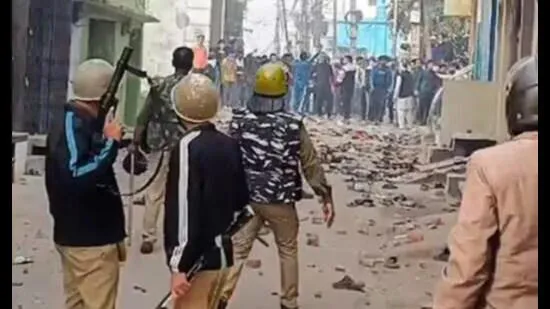

The Judicial Commission’s report regarding the violence that occurred in Sambhal on November 24, 2024, has been presented to the Uttar Pradesh Assembly. The investigation concluded that the violence was not an impulsive outbreak but rather a “pre-planned conspiracy.” The report highlights that the gunfire causing deaths during the incident did not originate from police firearms. Furthermore, it noted that rioters attempted to seize weapons from law enforcement personnel amidst the turmoil.
The commission was established to scrutinise the unrest that transpired during a court-mandated survey at the Shahi Jama Masjid, an ASI-protected monument. This investigation follows a petition by senior advocate Vishnu Shanker Jain, which aimed to ascertain whether the mosque had originally been a temple. The chaos resulted in four fatalities and numerous injuries among the police force, necessitating a thorough examination of the events leading to the incident.
Key Findings of the Report
The commission indicated that the violence appeared to be orchestrated with the intent to hinder the survey, thereby consolidating control over the mosque. Distorted information was reportedly communicated to the Muslim community in the lead-up to the violence, which contributed to the heightened tensions. The report praised the district administration and police for their composed and effective response given the circumstances surrounding the unrest.
The investigation has raised concerns regarding the involvement of various local political figures, including Samajwadi Party MP Zia-ur-Rehman Barq and local MLA Iqbal Mahmood’s son, Suhail Iqbal. Key members of the Jama Masjid management committee, such as President Zafar Ali and Secretary Mashhood Ali Farooqui, have also been implicated. The report asserts that testimonies indicate a coordinated effort amongst these leaders to rally the community against the survey.
Rhetoric and Community Response
<h4Moreover, the commission noted that misleading information was disseminated regarding the nature of the survey, inciting fears of a Hindu takeover of the mosque. This culminated in further incitement by local leaders suggesting that the survey was a threat to the mosque’s existence, a narrative accelerated by Barq who pointed to historical grievances regarding other religious sites.