


IIT Indore Researchers Develop Non-Invasive Method for Early Oral Cancer Detection
The CSR Journal Magazine

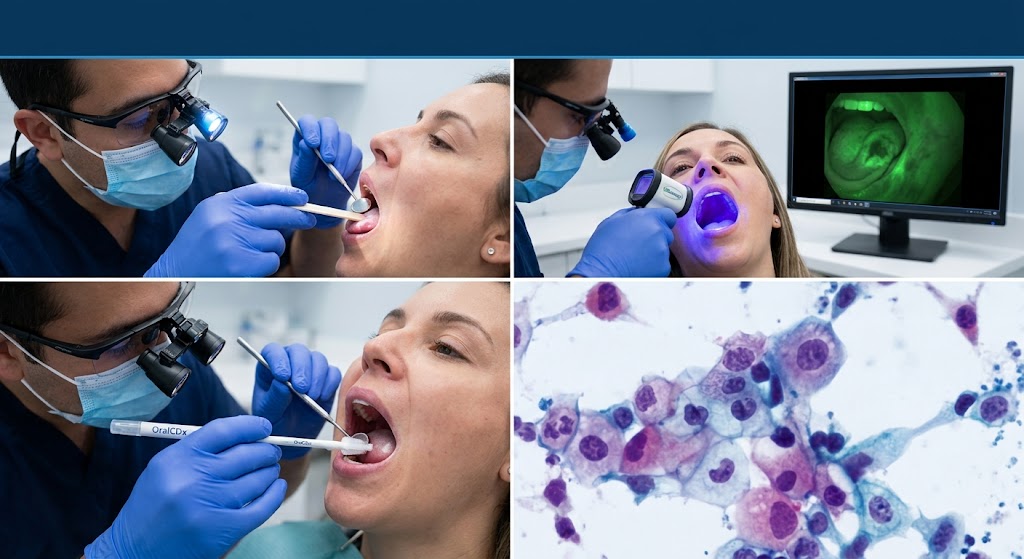
A team of researchers from IIT Indore has created a non-invasive technique aimed at early identification of oral cancer by using two basic samples: saliva and a swab from the mouth’s inner lining. This groundbreaking approach could revolutionise cancer screening, offering quick, cost-effective, and user-friendly tools that can be employed on-site. The method holds particular promise for rural and remote areas where access to specialised cancer diagnostics is often limited. The findings of this research have been published in the British Journal of Cancer, and a patent application for the technology is currently in progress.

Transforming Cancer Diagnosis: From Biopsies to Swabbing

Currently, the standard method for diagnosing oral cancer involves biopsy, whereby a tissue sample is extracted from a suspicious area for laboratory analysis. Although biopsies are vital for diagnosis, the process is invasive and often painful. Repeating biopsies can also pose logistical challenges. The IIT Indore team asserts that their new technique can offer a non-invasive means of detecting warning signs prior to the disease becoming clinically apparent.

The study concentrated on two significant conditions: oral squamous cell carcinoma, which is the most prevalent form of oral cancer, and oral submucous fibrosis. The latter often affects individuals who consume areca nut, gutkha, or tobacco and can advance to a cancerous state if left untreated.

Through the analysis of samples from individuals classified as healthy, those diagnosed with oral submucous fibrosis, and patients with oral cancer, the researchers employed advanced liquid chromatography – mass spectrometry techniques to identify molecular changes. Notably, some of these changes were observable even before the disease’s symptoms became visible.

Combining Data for a Comprehensive Understanding

The saliva and oral swab samples provided distinct types of information, with saliva reflecting chemical signals from ongoing processes in the mouth, while the soft swab harvested cells and proteins directly from the tissue. By integrating data from both sources, the researchers could create a comprehensive overview of the gradual transitions from healthy tissue to precancerous conditions and, ultimately, to cancer.

Professor Hem Chandra Jha, who led the research, stated, “Oral cancer leaves molecular footprints in saliva and on the oral mucosal surface before it becomes clinically obvious.” He further emphasised the intention to develop practical tools based on these non-invasive signals for earlier detection and improved monitoring of high-risk oral lesions.

The primary benefits of this approach lie in its non-invasive nature, affordability, speed, and suitability for point-of-care applications. Nonetheless, the technology is not intended to replace traditional diagnostic methods at this stage. The team plans to validate its conclusions through extensive trials involving larger and more diverse patient populations before creating targeted tests for routine clinical use.

Significance of Early Detection in India

Early detection is a key factor in effective cancer treatment; however, access to screening and specialised diagnostics remains inconsistent across various regions. A test that solely requires saliva or a simple oral swab could facilitate preliminary screenings beyond major healthcare facilities, provided further research substantiates these initial findings. Currently, the efforts from IIT Indore signify a preliminary stride towards identifying molecular clues within easily collectible samples as opposed to the invasive tissue biopsies traditionally used, thereby assisting in pinpointing individuals requiring further medical assessment.

Long or Short, get news the way you like. No ads. No redirections. Download Newspin and Stay Alert, The CSR Journal Mobile app, for fast, crisp, clean updates!

App Store –  https://apps.apple.com/in/app/newspin/id6746449540 

Google Play Store – https://play.google.com/store/apps/details?id=com.inventifweb.newspin&pcampaignid=web_share

Latest News

Popular Videos
