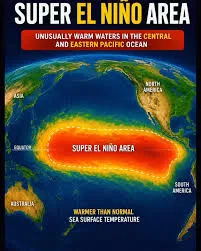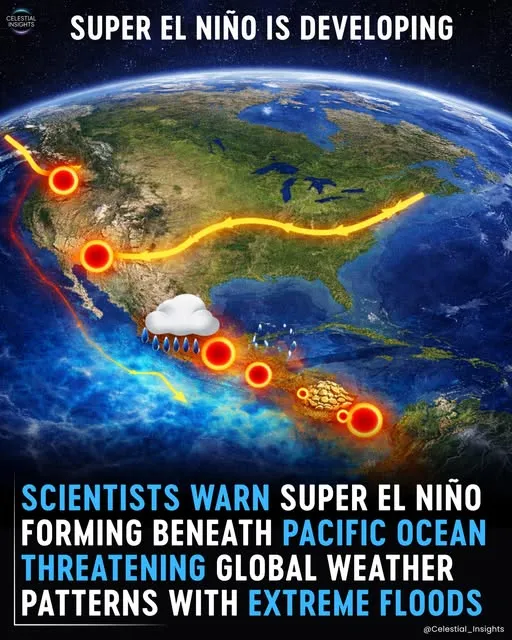

The Pacific Ocean is experiencing profound shifts, confirming the onset of El Nino, as reported by the European Centre for Medium-Range Weather Forecasts (ECMWF). This development has gained global attention from climate scientists closely monitoring the situation. The tropical Pacific has officially exceeded the critical temperature threshold that indicates the onset of this significant climate event.
The European Space Agency has played an essential role in this observation. Collaborating with meteorological organisations worldwide, it has utilised its advanced satellite network to monitor sea surface temperatures and atmospheric conditions. The high-resolution data provided has been crucial for verifying the noteworthy warming trends in the Pacific region.
The implications of this climatic pattern extend beyond localised weather, impacting global atmospheric behaviour. As meteorologists and disaster management agencies take note, the potential consequences on weather systems are substantial and warrant further scrutiny.
Understanding El Nino’s Mechanism
To grasp the significance of El Nino, it is vital to recognise the Pacific Ocean’s role in regulating the Earth’s climate. Generally, trade winds flow steadily from east to west, pushing warm surface waters towards Asia and Australia. This movement creates a void in which cooler, nutrient-rich water rises from the depths of the ocean, especially near the coast of South America, a process scientists call upwelling.
El Nino, a term translating to “little boy” in Spanish, signifies a substantial interruption in this cycle. During an El Nino event, these trade winds may weaken or reverse entirely, resulting in warm water that typically remains in the western Pacific moving back towards the Americas. This alteration in heat distribution affects global rainfall patterns and temperature distributions, acting as a significant climatic adjustment.
The consequences of this redistributed heat can be far-reaching, influencing weather patterns across various regions and setting the stage for potential climate instability.