


Total Solar Eclipse Occurs Over Parts of Europe on August 12
The CSR Journal Magazine

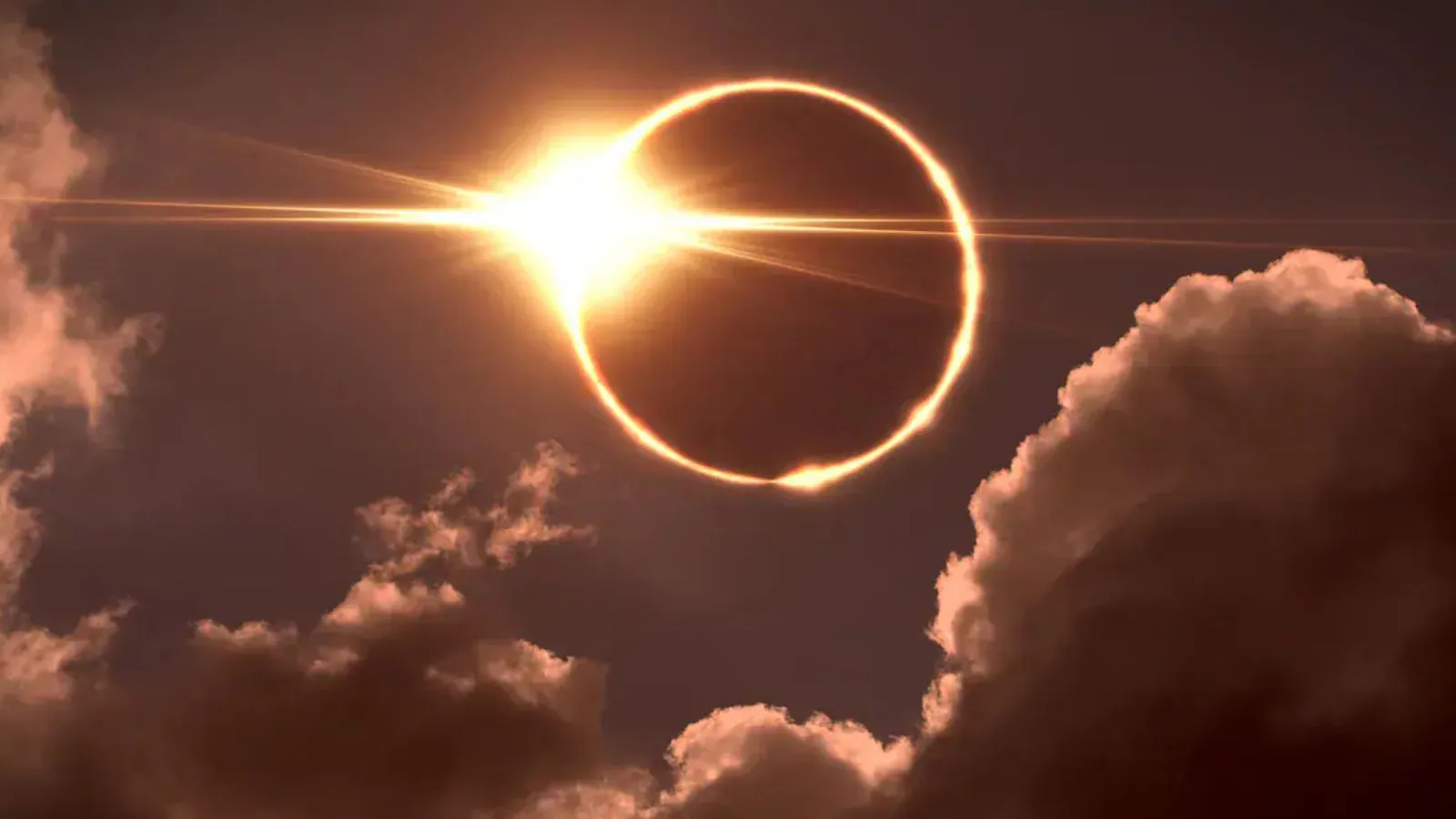
A total solar eclipse darkened skies in several regions of the Northern Hemisphere on August 12, providing a rare opportunity to witness this significant astronomical event. The eclipse unfolded as the Moon aligned directly between the Earth and the Sun, casting a narrow shadow that spanned across Greenland, Iceland, northern Russia, Spain, and a small portion of Portugal. Observers situated within this trajectory experienced totality, while a larger area encompassing Europe, northwestern Africa, and parts of northeastern North America witnessed a partial eclipse.

The event commenced with partial phases at 15:34 GMT and concluded globally by 19:58 GMT, covering thousands of miles. At the peak of totality, observers near the centre of the eclipse track experienced a complete darkness that lasted for up to two minutes and 18 seconds. In western Europe and Spain, the eclipse coincided with sunset, creating the intriguing phenomenon of a “sunset eclipse” as the Sun, partially obscured, dipped below the horizon.

Significance of the Eclipse for Europe

This eclipse held special importance for Europe, marking the first occasion in nearly thirty years that central and western mainland Europe could witness a total solar eclipse. The event revived memories of the widely viewed eclipse of 1999, which had not been experienced since. For millions, this spectacle offered a chance to observe one of nature’s most dramatic phenomena, drawing in numerous skywatchers, photographers, and scientists to optimal viewing locations.

India, however, did not partake in this celestial show, as the event took place during nighttime in the country, making it inaccessible to observers. Consequently, the eclipse remained a phenomenon exclusive to certain regions, highlighting the geographical limitations of such astronomical events.

Despite being of limited duration, the significance of the total solar eclipse extended beyond visual wonder. Scientists utilised the occurrence as a valuable opportunity to delve into solar studies. During totality, the Moon completely obstructed the Sun’s bright surface, allowing for the visibility of the faint outer atmosphere termed the corona, typically obscured by the Sun’s intense light. Consequently, total solar eclipses represent crucial moments for researchers to investigate the corona’s structure and behaviour.

Scientific Observations and Future Research

Though the period of total darkness only lasted minutes, the scientific data collected during this eclipse is anticipated to contribute significantly to ongoing research into solar activity and its ramifications on Earth. The information gained during the total solar eclipse can enhance understanding of solar phenomena, which play a critical role in influencing space weather and its implications for the planet.

The August 12 event was the only total solar eclipse of the year, marking it as one of the most anticipated celestial events of 2026. This uniqueness further increased both public interest and scientific scrutiny, as experts and enthusiasts alike focused on the implications of such an occurrence. As research continues into the effects of solar activity on Earth’s environment, these observations will prove invaluable for both current and future studies.

Long or Short, get news the way you like. No ads. No redirections. Download Newspin and Stay Alert, The CSR Journal Mobile app, for fast, crisp, clean updates!

App Store –  https://apps.apple.com/in/app/newspin/id6746449540 

Google Play Store – https://play.google.com/store/apps/details?id=com.inventifweb.newspin&pcampaignid=web_share

Latest News

Popular Videos
