


Supreme Court Directs Review of Cartoons in NCERT Textbooks
The CSR Journal Magazine

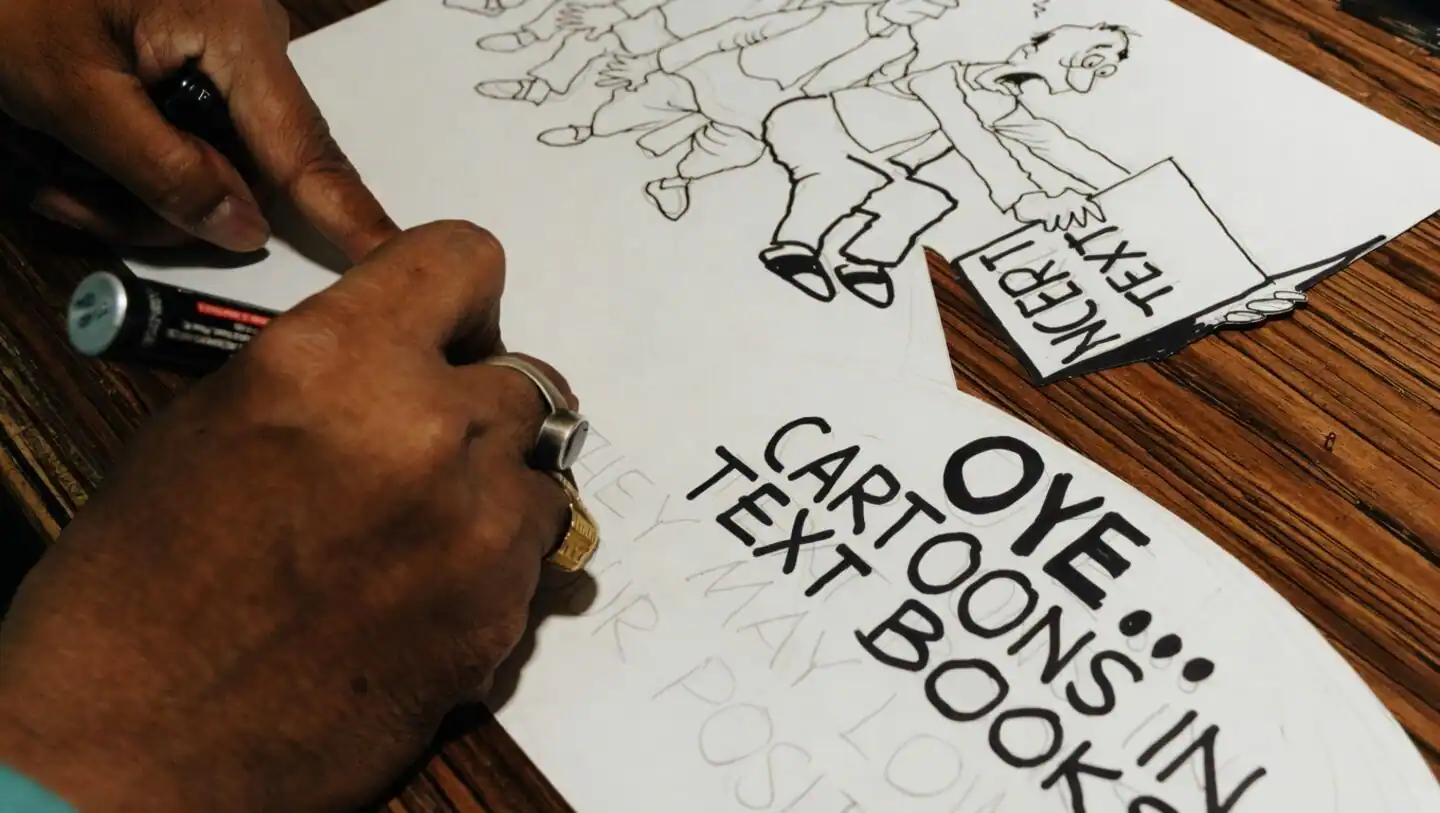
The Supreme Court has initiated a review of the National Council for Educational Research and Training (NCERT) textbooks, determining that they may not be suitable for containing cartoons. This decision was made during a suo motu hearing led by a three-judge bench chaired by Chief Justice Surya Kant. The Solicitor General, Tushar Mehta, raised concerns about the presence of cartoons within these textbooks, emphasizing the potential effects on children who are said to be at an “impressionable age.”

Solicitor General Highlights Concerns Over Educational Content

During the court proceedings, the Solicitor General argued that while cartoons can serve as a valuable tool for expression, their incorporation into school syllabi might raise ethical issues. His contention was primarily that textbooks should focus on educational integrity and impart lessons in a manner that is constructive for young learners. The bench took these arguments into account, agreeing to appoint a committee to further explore the issue, with retired Supreme Court Justice Indu Malhotra at the helm.

Previously, the court had indicated that the value of satire should not be assessed through overly sensitive lenses, but rather by individuals capable of appreciating its nuances. In a significant ruling from 2020, the court noted that satire possesses a unique capacity to communicate complex ideas effectively, which other forms may not achieve as efficiently. It also addressed the need to maintain freedom of expression as a vital aspect of public discourse.

This development is part of an ongoing judicial examination linked to prior controversies surrounding specific textbook contents, particularly a chapter discussing judicial corruption in a Class 8 Social Science book.

Controversy Regarding Judicial Content in Textbooks

The Supreme Court also revisited earlier remarks regarding three academic professionals—Professor Michel Danino, Suparna Diwakar, and Alok Prasanna Kumar—who had previously faced scrutiny over their contributions to the chapter on judicial corruption. It amended a ruling from March 11, which previously directed educational bodies to refrain from collaborating with these authors. The court deemed it appropriate to reverse this directive in light of clarifications provided by the scholars.

The initial controversy erupted in February and focused on the NCERT textbook titled Exploring Society: India and Beyond, particularly a section addressing judicial corruption. The Supreme Court’s intervention followed criticism that the chapter compromised the dignity of the judiciary. In response to the judicial inquiry, NCERT characterised the inclusion of the contentious material as an “inadvertent error of judgment” and plans were set forth to revise it.

In the wake of these proceedings, NCERT took steps to withdraw the problematic textbook from circulation and publicly apologised for the issues it contained. The education authority further committed to ensuring that the experts associated with the contentious chapter would not be involved in future curriculum development, aligning with earlier court instructions.

Long or Short, get news the way you like. No ads. No redirections. Download Newspin and Stay Alert, The CSR Journal Mobile app, for fast, crisp, clean updates!

App Store –  https://apps.apple.com/in/app/newspin/id6746449540 

Google Play Store – https://play.google.com/store/apps/details?id=com.inventifweb.newspin&pcampaignid=web_share

Latest News

Popular Videos
