


Space Dominance First: How Modern Warfare Now Begins in Orbit Before Ground, Air, or Naval Strikes

The CSR Journal Magazine

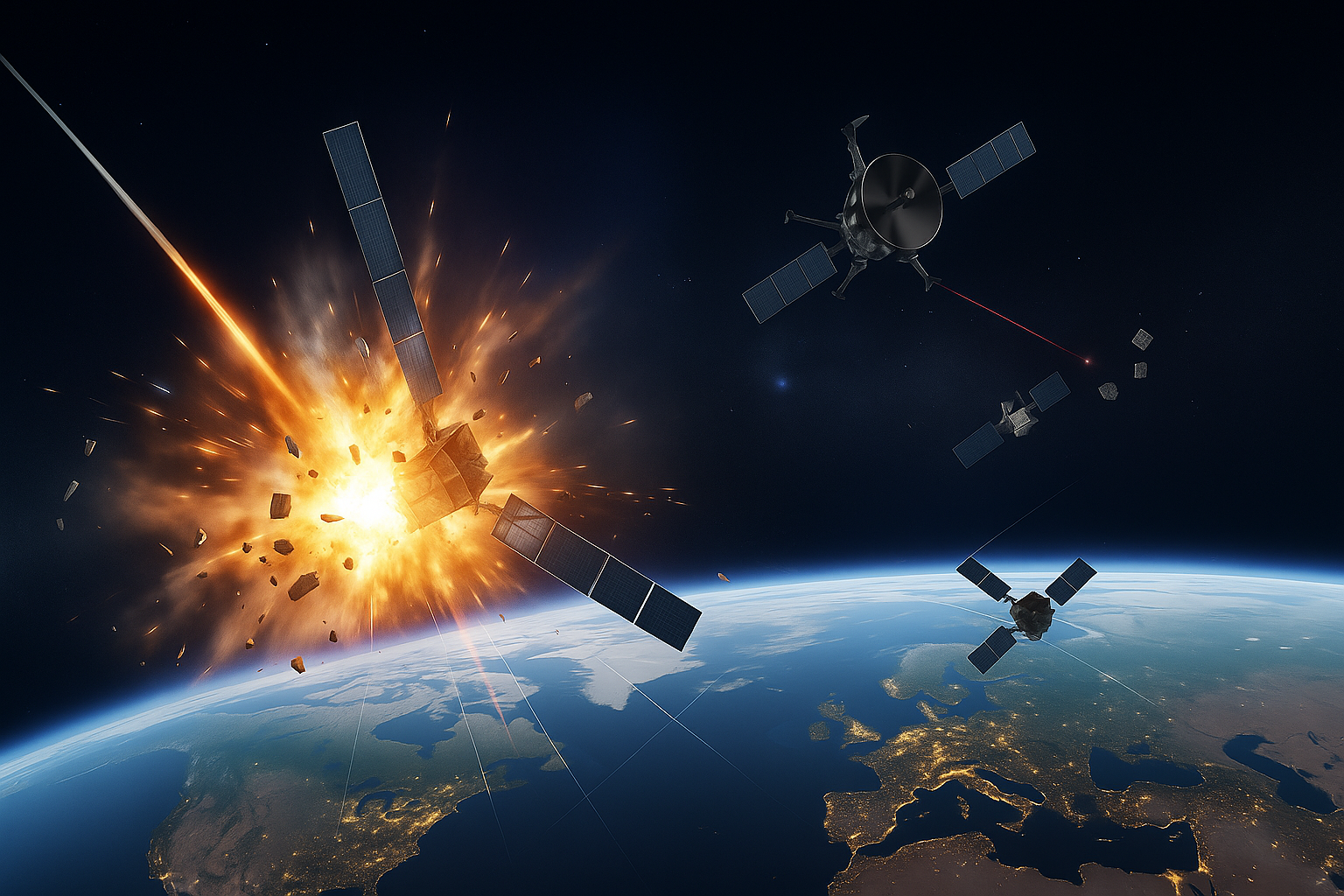
The current military landscape in the Middle East illustrates a reality that strategic planners have anticipated but seldom witnessed in such clarity. Recent military actions, notably the United States’ operations against Iran, have highlighted the pivotal role of space capabilities in achieving military objectives.

Capabilities such as satellite-based intelligence, surveillance, and communications have evolved from auxiliary instruments to primary tools in shaping battlefields. This shift represents a significant evolution in the perception of space as a theatre of conflict.

This transformation has been incremental, taking place over several years as space capabilities transitioned from peripheral to central elements in national security and deterrent strategies.

Impact of Recent Conflicts on Space Strategy

The ongoing conflict triggered by Russia’s invasion of Ukraine serves as a large-scale case study of space’s impact on warfare. Prior to the invasion, commercial satellite imagery effectively revealed Russian troop movements, minimising the element of surprise.

As the conflict unfolded, aspects such as satellite communications, space situational awareness (SSA), and Earth-observation systems became integral to operational choices, enhancing all facets from intelligence gathering to battlefield management.

When the Russian forces launched a cyberattack that compromised essential communication channels for the Ukrainian government, the quick deployment of Starlink terminals was crucial in reinstating connectivity, allowing Ukraine to maintain operational communication.

Emerging Trends in Space Utilisation

India’s recent Operation Sindoor has brought renewed focus on the role of space domain awareness in monitoring conflicts and information warfare, reshaping public understanding of how space-derived data can offer early warnings regarding security developments.

Signals from space often precede visible indicators on the ground. Recent reports indicated that Maxar Technologies began receiving requests for high-resolution satellite imagery of Pahalgam in June 2024, after a partnership with a Pakistani geospatial firm linked to US indictments.

These events underscore how satellite tasking and data flows can illuminate strategic interests in particular regions months before geopolitical tensions surface on Earth, revealing that the pre-conflict role of space cannot be overlooked.

Requests for satellite imagery, sensor priorities, and orbital behaviours are increasingly reflective of emerging strategic intents. Similar to terrestrial military exercises, activity in orbit will likely serve as a signalling mechanism within international relations.

Strategic Implications for Future Conflicts

The significance of space in modern military operations is profound. Enhanced visibility from space translates into positional advantages on the ground. In an age dominated by data, those who accurately observe and interpret space-related activity wield considerable power.

Space’s unique status among military domains facilitates the functioning of all other domains concurrently, interlinking navigation, communications, intelligence, surveillance, and reconnaissance.

Inadequate space capabilities can severely impede operations across all other domains, while robust capabilities foster strategic advantages that can reverberate throughout the battlefield.

As nations historically invested in air, maritime, and land forces, the balance of power in future conflicts will likely hinge less on the quantity of these assets and more on the strategic utilisation of capabilities within the orbital sphere.

In this evolving context, the modern space race is frequently misunderstood as being centred on launch capabilities or satellite quantities. In truth, the crucial advantage lies in situational awareness, emphasising the foundational importance of space situational awareness in safeguarding national security.

In summary, the lessons emerging from recent conflicts in Ukraine and the Middle East indicate that space is increasingly pivotal in shaping strategic advantages before crises arise. Nations that swiftly develop resilient and sovereign space capabilities will likely hold decisive advantages, as the knowledge derived from orbit increasingly dictates power dynamics in contemporary conflicts.

Long or Short, get news the way you like. No ads. No redirections. Download Newspin and Stay Alert, The CSR Journal Mobile app, for fast, crisp, clean updates!

App Store –  https://apps.apple.com/in/app/newspin/id6746449540 

Google Play Store – https://play.google.com/store/apps/details?id=com.inventifweb.newspin&pcampaignid=web_share

Latest News

Popular Videos