


Abhijeet Dipke Criticises Police Action Against Students in Jharkhand
The CSR Journal Magazine

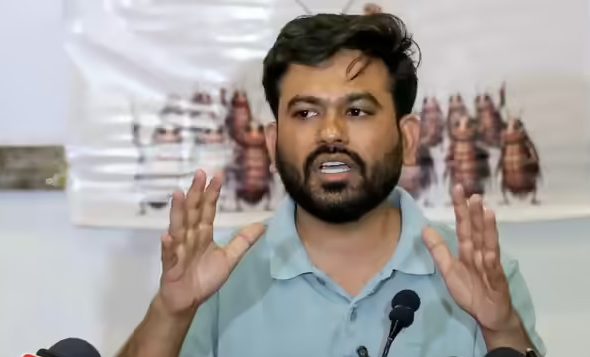
Abhijeet Dipke, founder of the Cockroach Janata Party (CJP), has publicly condemned the police response to student protests in Jharkhand. His comments followed violent clashes that occurred during a march by aspirants from the Jharkhand Staff Selection Commission (JSSC) and Jharkhand Public Service Commission (JPSC) in Ranchi. Dipke compared this incident to a recent police crackdown at Delhi’s Jantar Mantar and raised concerns regarding the use of force against young demonstrators.

During the protests on August 10, 2026, police reportedly employed tear gas and batons as crowd control measures against the student activists. Dipke highlighted a troubling trend where such tactics appear to be disproportionately directed at students rather than at larger political demonstrations.

He voiced his confusion as to why similar measures are not employed during protests led by political parties, questioning the systemic use of force against student groups. His remarks underscored concerns about the state’s approach toward non-political agitations and raised issues surrounding the rights of young protesters.

Concerns for Injured Student Leader

Dipke expressed particular concern regarding student leader Devendra Mahato, who was allegedly injured during the protest. Mahato has reportedly been on a hunger strike for nine days to advocate for the students’ rights and future. Following the clash with police, Mahato was taken to the hospital, where his condition allegedly remains serious.

In his conversation with Mahato, Dipke noted that the police violence against him occurred even while he was physically weakened due to his hunger strike. The attack on Mahato raised alarms about the treatment of student leaders and sparked calls for accountability from law enforcement.

The CJP founder insisted that student protests should not be perceived through a political lens. He stated that the students are rallying for their rights and seek reforms in the recruitment process rather than political gains. According to Dipke, such actions against students are unwarranted, emphasising that the young activists deserve better treatment and respect for their cause.

Context of the Protests and Political Reactions

The protests in Jharkhand emerged due to allegations surrounding irregularities in the JSSC-CGL examinations. The students are demanding the cancellation of the examinations, a comprehensive inquiry by the Central Bureau of Investigation (CBI), and reforms in the recruitment process to address their grievances effectively.

On the same day as the student protests, the Jharkhand unit of the Bharatiya Janata Party (BJP) conducted a statewide bandh in reaction to the police’s use of force during the demonstration. This additional layer of political activity underscores the broader implications of the protests, intertwining student demands with political responses in the state.

As the situation unfolds, both the state and central administrations are facing increasing pressure to address the students’ concerns. The protesters have claimed their demands have not been adequately acknowledged by the government, prompting calls for a serious dialogue regarding the issues raised.

Long or Short, get news the way you like. No ads. No redirections. Download Newspin and Stay Alert, The CSR Journal Mobile app, for fast, crisp, clean updates!

App Store –  https://apps.apple.com/in/app/newspin/id6746449540 

Google Play Store – https://play.google.com/store/apps/details?id=com.inventifweb.newspin&pcampaignid=web_share

Latest News

Popular Videos
