


Uttar Pradesh Emerges As Rooftop Solar Leader, Lucknow Tops National Rankings
The CSR Journal Magazine

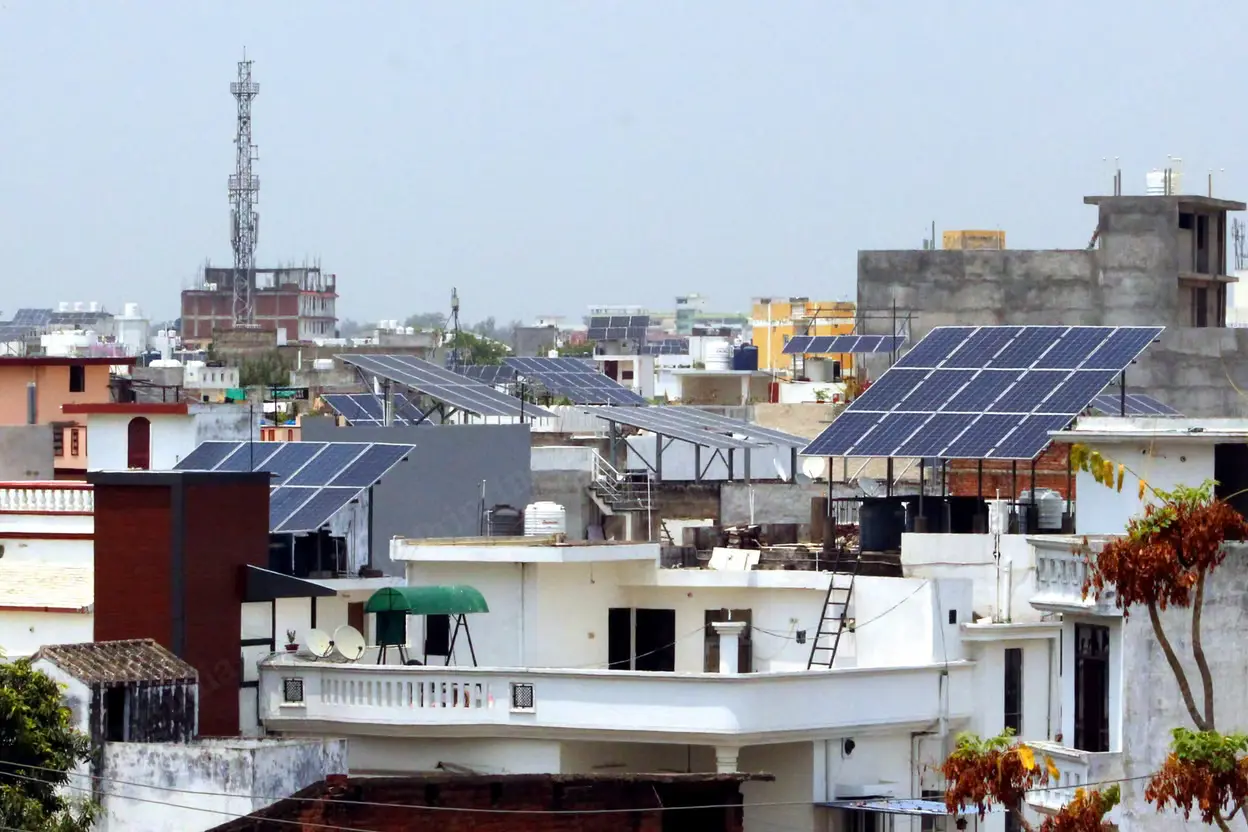
Uttar Pradesh has emerged as one of India’s fastest-growing rooftop solar markets, with Lucknow overtaking Surat to become the country’s leading city for rooftop solar installations. The milestone follows an aggressive push by the state government to expand renewable energy adoption through subsidies, streamlined implementation and public awareness campaigns.

According to the state government, Lucknow had installed more than 1.02 lakh rooftop solar systems by mid-2026. Uttar Pradesh now accounts for over 20 per cent of India’s monthly rooftop solar installations, making it one of the country’s leading contributors to the clean energy transition.

Subsidies And Outreach Drive Rapid Growth

Officials attributed the growth to the implementation of the Centre’s PM Surya Ghar Muft Bijli Yojana, along with an additional state subsidy of up to Rs 30,000.

Together, these incentives have significantly reduced the upfront cost of rooftop solar installations, allowing many households to recover their investment within three to four years through lower electricity bills.

The state also adopted a decentralised implementation model supported by centralised monitoring.

District officials actively encouraged households receiving mandatory smart meters to install rooftop solar systems, while more than 700 Resident Welfare Associations (RWAs) participated in awareness campaigns.

School students were also involved in outreach efforts to promote discussions on solar energy within families.

Lucknow Introduced Additional Incentives

The Lucknow Municipal Corporation further encouraged adoption by offering a 10 per cent rebate on property tax for homeowners installing rooftop solar systems.

Another factor contributing to the expansion has been the growth of the vendor ecosystem.

According to officials, the number of empanelled solar vendors increased from around 600 to nearly 6,000 through training programmes, seminars and continuous monitoring.

These vendors played a key role in raising awareness and facilitating installations across residential areas.

Lower Costs Improve Financial Viability

Government subsidies now cover a significant share of the cost of a standard 3-kilowatt rooftop solar system.

In addition, concessional bank loans carrying interest rates of around 6 per cent have reduced the payback period to approximately three to four years.

Officials said rooftop solar systems are expected to remain operational for nearly 25 years, making them a long-term investment for households.

Challenges Remain Despite Rapid Expansion

Despite the strong growth, rooftop solar adoption among commercial establishments continues to lag behind the residential sector.

Industry stakeholders said differences in compensation mechanisms for surplus electricity have made commercial installations comparatively less attractive.

Regional disparities also persist, with several districts, particularly in eastern Uttar Pradesh, reporting significantly lower adoption because of weaker vendor networks and lower levels of urbanisation.

Even so, Uttar Pradesh’s rapid expansion of rooftop solar installations is increasingly being viewed as a model for accelerating renewable energy adoption through financial incentives, administrative coordination and local implementation.

Long or Short, get news the way you like. No ads. No redirections. Download Newspin and Stay Alert, The CSR Journal Mobile app, for fast, crisp, clean updates!

App Store –  https://apps.apple.com/in/app/newspin/id6746449540 

Google Play Store – https://play.google.com/store/apps/details?id=com.inventifweb.newspin&pcampaignid=web_share

Latest News

Popular Videos
