


Investigation Launched After Trump’s Helicopter Comes too Close to Passenger Aircraft
The CSR Journal Magazine

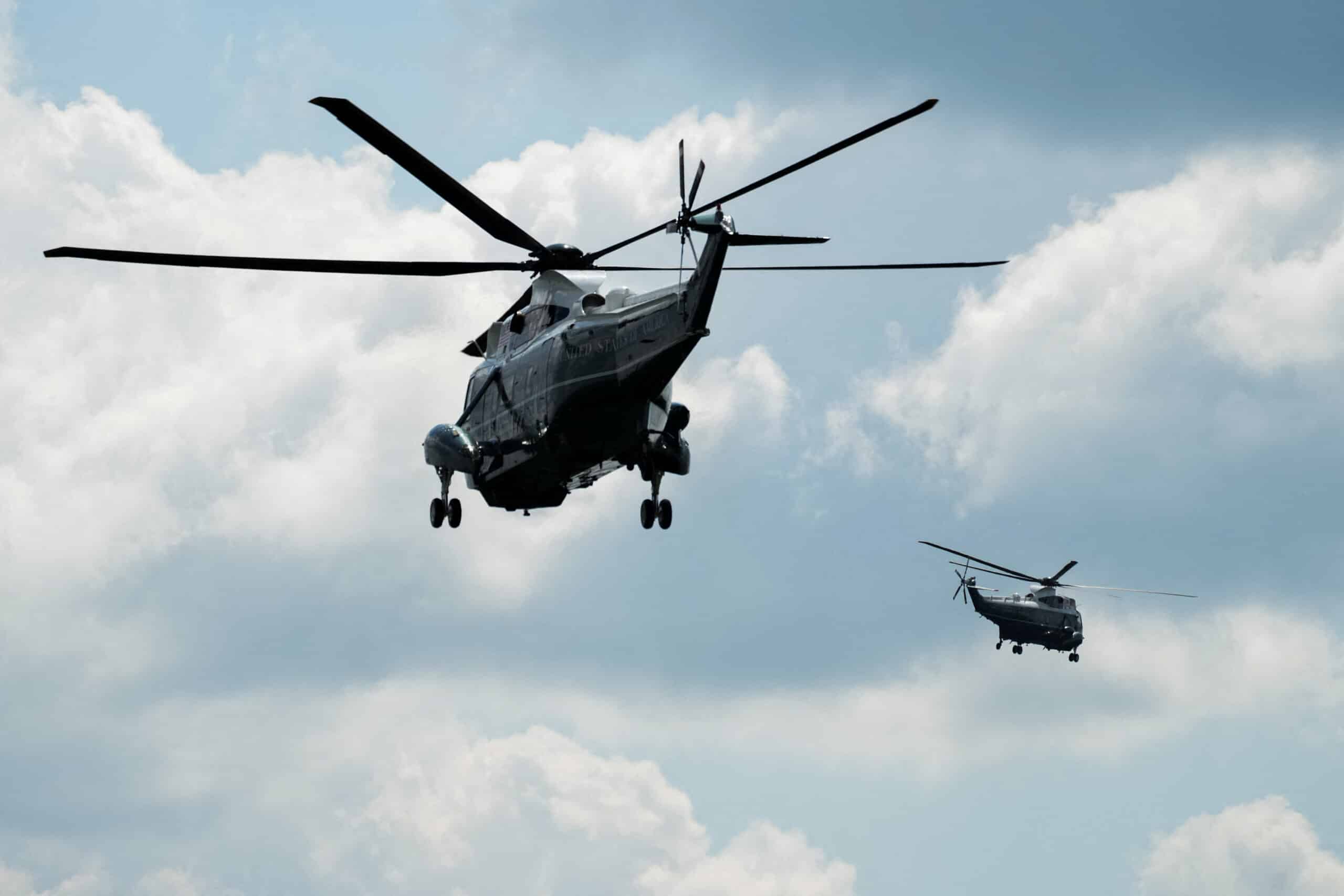
The military helicopter, Marine One, which transports US President Donald Trump, reportedly came dangerously close to a commercial passenger plane departing from Ronald Reagan Washington National Airport. This incident has led to investigations by the Federal Aviation Administration (FAA) and the National Transportation Safety Board (NTSB). The FAA confirmed that a “momentary loss of separation” occurred between Marine One and an Envoy Air jet bound for Pensacola, Florida, on Tuesday afternoon. However, both aircraft quickly moved apart, ensuring the President was not in any danger.

Details of the Incident

The flight landed safely, although another aircraft had to be rerouted as a precautionary measure. A preliminary safety review suggested that effective communication between air traffic controllers, the commercial pilot, and the Marine One pilot had been maintained during the incident. The FAA stated that normal operations resumed shortly after the two aircraft separated.

Reports have emerged detailing the timeline of events. At approximately 2:30 pm local time, Marine One was transporting President Trump from the White House to Joint Base Andrews prior to his scheduled travel to Los Angeles for a Republican fundraiser. During this time, communication issues reportedly delayed air traffic controllers from clearing adjacent traffic. Consequently, the helicopter was said to have come within less than a mile of the Envoy Air jet during takeoff.

Witness accounts from air traffic control audio indicated that the Marine One crew made multiple attempts to alert controllers of their impending departure. Despite these efforts, communications appeared to be misunderstood, as one pilot recounted, “Tower, do you copy. Marine One, three minutes to lift.” Subsequent responses from controllers confirmed misunderstandings, with one noting that the initial transmission was “broken and unreadable.” This lack of clarity ultimately contributed to the improper coordination of both flights.

Regulatory Context and Response

This incident has reignited discussions regarding flight safety protocols in Washington’s heavily regulated airspace. Following a fatal mid-air collision in January 2025 that resulted in the death of all 67 individuals on board a military helicopter and a passenger jet near the same airport, the FAA had tightened operational restrictions around Reagan National Airport. These regulations include limiting mixed helicopter and commercial jet traffic and implementing a range of additional safety measures.

It has been reported that typical procedures involve pausing commercial departures during Marine One flights to ensure safety, as the helicopter operates just a few miles from the airport. The US Marine Corps, however, commented that the flight of Marine One was routine and asserted that the controllers did not impose any delays or require changes to the helicopter’s flight path.

In response to queries, White House spokesperson Kush Desai affirmed that Marine One flights are conducted by highly skilled aviators and reiterated that at no point was the President at risk. The FAA announced it would continue to examine the circumstances surrounding this incident and would implement any necessary corrective measures. Concurrently, the NTSB has opened a separate inquiry into the event.

Long or Short, get news the way you like. No ads. No redirections. Download Newspin and Stay Alert, The CSR Journal Mobile app, for fast, crisp, clean updates!

App Store –  https://apps.apple.com/in/app/newspin/id6746449540 

Google Play Store – https://play.google.com/store/apps/details?id=com.inventifweb.newspin&pcampaignid=web_share

Latest News

Popular Videos
