


Prashant Kishor’s Bankipur Triumph Triggers Alarm in RJD Over Potential Erosion of Core Muslim Support

The CSR Journal Magazine

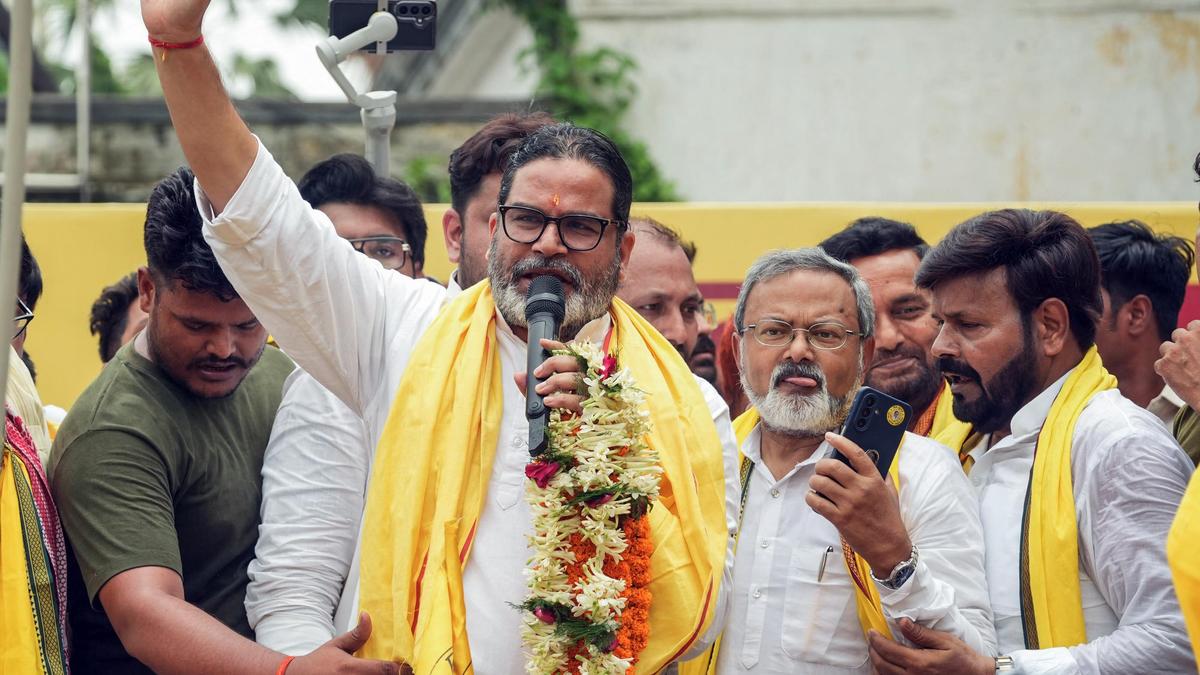
The recent by-election in Bankipur has ignited a political debate surrounding Prashant Kishor’s unexpected win. On July 30, 2026, Kishor, the founder of Jan Suraaj, defeated Bharatiya Janata Party (BJP) candidate Neeraj Kumar by a margin of 19,324 votes. This victory ended the BJP’s long-standing dominance in the constituency, a seat it had held for over three decades.

Kishor’s win not only reflects a significant political upset in Bihar but also raises broader questions regarding the potential shift in Muslim voter allegiance, traditionally a stronghold for the Rashtriya Janata Dal (RJD). Despite the importance of this inquiry, there is no official data available to discern any changes in voting patterns, given that the Election Commission does not disclose religion-wise voting statistics.

Community Voting Patterns and Electoral Significance

Local reports suggest that Kishor showed a strong performance in these booths, prompting speculation that he garnered support from some segments of the Muslim community. Although such trends do not conclusively reflect a community-wide voting pattern, they nonetheless contribute to an ongoing political discourse.

The implications of this discussion are noteworthy, given that Muslim voters have historically been among the RJD’s most committed supporters. For over thirty years, they, alongside Yadavs, have comprised the party’s influential MY (Muslim-Yadav) social coalition. According to the 2023 caste survey, Muslims account for around 18 per cent of Bihar’s population, while Yadavs represent approximately 14 per cent. Collectively, they form one of the state’s significant electoral groups.

The Future of Bihar’s Political Landscape

Bihar’s political dynamics have been historically anchored in the notion that many Muslim voters favour the opposition candidate perceived to have the best chance of defeating the BJP. This pattern has consistently benefitted the RJD. However, the emergence of Jan Suraaj as a competing political entity is prompting questions about whether this long-standing voting strategy is undergoing a transformation.

Discussion around this potential shift has gained traction following the 2025 Bihar Assembly election, where Jan Suraaj made a notable impact, although it did not secure any seats. The Bankipur bypoll marks the party’s most significant electoral achievement to date, especially as it emerged victorious in a constituency that had been under BJP control for decades.

This by-election recorded a voter turnout of around 34 per cent, which is notably lower than that of typical Assembly elections. For RJD leader Tejashwi Yadav, the outcome holds particular importance, even if limited to this one constituency. Historically, the RJD’s electoral strength has relied heavily on the MY coalition, and should Jan Suraaj begin to attract any portion of Muslim voters in closely contested regions, it could result in a more competitive political environment.

While it is premature to label the Bankipur result as a signal of a statewide political shift, it has undeniably altered the conversation around Bihar’s electoral framework. The narrative now extends beyond Kishor’s victory over the BJP, also encompassing the challenge Jan Suraaj may pose to the RJD’s traditional support base. This critical question is likely to remain a key focus in Bihar politics until the next Assembly elections in 2030.

Long or Short, get news the way you like. No ads. No redirections. Download Newspin and Stay Alert, The CSR Journal Mobile app, for fast, crisp, clean updates!

App Store –  https://apps.apple.com/in/app/newspin/id6746449540 

Google Play Store – https://play.google.com/store/apps/details?id=com.inventifweb.newspin&pcampaignid=web_share

Latest News

Popular Videos