


Tourist Inflow to Dehradun and Mussoorie Remains High Despite ‘No Vehicle Day’ Initiative
The CSR Journal Magazine

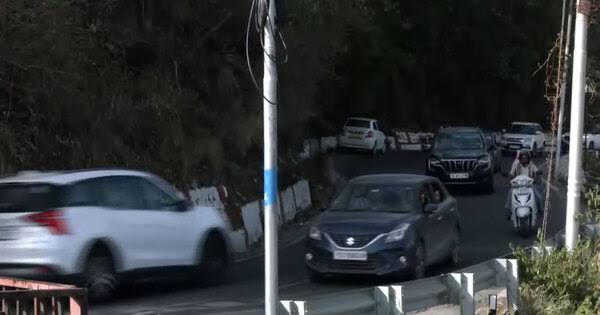
The tourist inflow to Dehradun and Mussoorie continues robustly, unaffected by Prime Minister Narendra Modi’s recent appeals for petrol and diesel conservation. The capital city of Dehradun and the hill station Mussoorie, commonly known as the Queen of the Hills, have seen large numbers of visitors, as indicated by the latest data.

On May 12, a total of 14,218 vehicles reportedly entered Dehradun by midnight, showing significant traffic during the weekend rush. By 8 PM on the preceding Friday, 12,019 vehicles had already crossed through the Asharodi check post, which serves as the primary entry point to the city. This influx of vehicles presents a contrasting scenario to the objectives set by the state’s government.

Government’s ‘No Vehicle Day’ Initiative Launched

In a bid to address energy conservation, the Uttarakhand government has declared that every Saturday will officially be observed as a ‘No Vehicle Day’. This initiative aims to promote the use of public transport, bicycles, and other alternative commuting modes. Government ministers and officials are encouraged to follow these guidelines, although many tourists and vehicle owners do not adhere to them.

On May 12, Banshidhar Tiwari, Director General of Information, instructed his department’s personnel to utilise public transport or other sustainable means on Saturdays. He emphasised that individual actions could lead to significant improvements in fuel conservation and environmental protection when taken collectively.

This decision was made following a Cabinet meeting led by Chief Minister Pushkar Singh Dhami earlier in the week. The initiative forms part of broader efforts in response to global events affecting fuel supply, including the ongoing Russia-Ukraine conflict.

Long-term Reforms and Electric Vehicle Policy Introduced

Along with the ‘No Vehicle Day’ initiative, the Uttarakhand government is implementing several short-term and long-term reforms targeted at reducing the carbon footprint and enhancing fuel efficiency. These reforms include encouraging work-from-home practices and promoting the use of public transport in both urban and rural areas.

Moreover, the government is planning to reduce the fleet of official vehicles and is working towards establishing a comprehensive electric vehicle (EV) infrastructure within the state. These measures are part of a broader vision to address the economic challenges that have arisen due to the pressures on fuel supply chains.

The state is set to introduce an effective EV policy that will require 50 per cent of all new government vehicle purchases to be electric. This requirement is expected to accelerate the transition towards sustainable transportation and reduce the dependency on fossil fuels.

Long or Short, get news the way you like. No ads. No redirections. Download Newspin and Stay Alert, The CSR Journal Mobile app, for fast, crisp, clean updates!

App Store –  https://apps.apple.com/in/app/newspin/id6746449540 

Google Play Store – https://play.google.com/store/apps/details?id=com.inventifweb.newspin&pcampaignid=web_share

Latest News

Popular Videos
