


Jeff Bezos Calls for Ending Income Tax on Low-Income Americans Amid Cost-of-Living Pressure
The CSR Journal Magazine

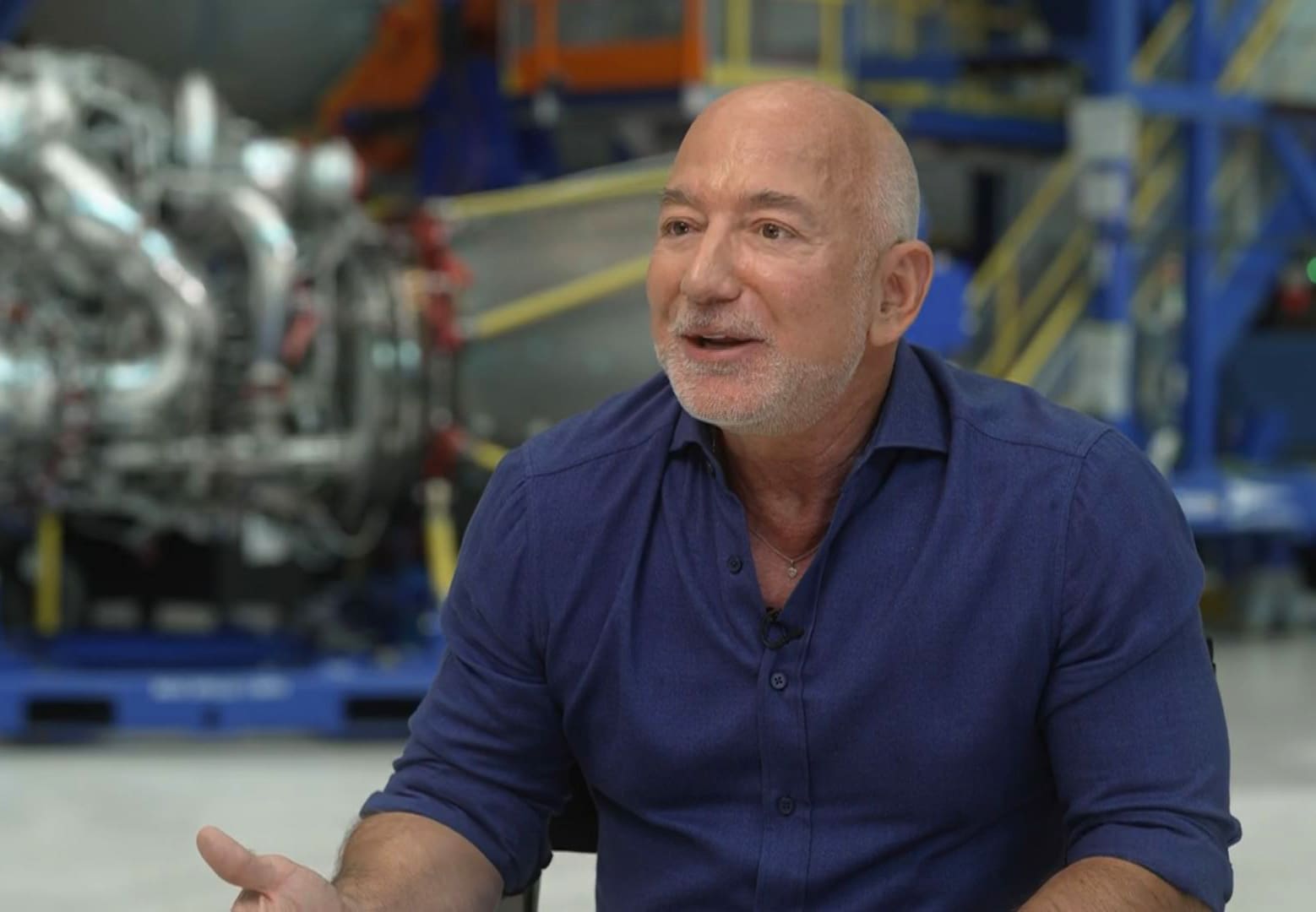
Jeff Bezos has stated that individuals from lower-income brackets should not be obligated to pay income tax. During an interview on CNBC’s Squawk Box from Merritt Island, Florida, he argued that the tax contributions from lower earners are minimal in comparison to the overall government revenue yet have a significant impact on households facing financial difficulties amid rising living costs. According to Bezos, the top 1 per cent of earners contribute approximately 40 per cent of total tax revenue, whereas the bottom half account for only 3 per cent.

In his view, this percentage is unjustifiably high for those struggling financially, suggesting it should be reduced to zero. To illustrate his perspective, Bezos provided the example of a healthcare worker in Queens earning $75,000 annually, stating, “We shouldn’t be asking this nurse in Queens to send money to Washington. They should be sending her an apology.”

Discussion on Wealth and Philanthropy

The conversation expanded beyond tax reform as Bezos addressed broader themes regarding wealth, philanthropy, and the responsibilities of corporations. He asserted that the most effective way for billionaires to contribute to society is not solely through charitable donations but by establishing companies that generate significant economic value. Bezos claimed that if he succeeds in his business endeavours, the societal benefits from his for-profit ventures will surpass the impact of his charitable activities.

Bezos highlighted Amazon as a prime example of how business can create jobs, develop infrastructure, lower prices, and enhance convenience for millions. His remarks received approval from fellow entrepreneur Elon Musk, who commended Bezos publicly on social media, noting, “Bravo Jeff Bezos!”

This endorsement is notable considering Musk’s recent involvement in a legal dispute concerning OpenAI, where he has accused its leaders of compromising the organisation’s original altruistic mission for profit. In that context, Musk’s agreement with Bezos signifies an unexpected point of convergence between two prominent figures in the technology sector.

AI’s Impact on Employment and Economy

Amidst the dialogue on economic value, Bezos also addressed concerns regarding artificial intelligence (AI) and its potential to supplant software engineering roles. He strongly refuted the notion that AI would eliminate jobs for software engineers. Rather, he characterised AI as a transformative productivity tool that enhances human capabilities instead of replacing them. Bezos likened the transition to a situation where a manual labourer, initially using a shovel, could be equipped with a bulldozer.

Bezos predicted that AI will significantly boost productivity across various sectors of the economy. He believes this capability will enable workers to achieve greater outputs with reduced effort. Consequently, businesses may benefit from decreased costs, allowing them to offer more affordable products and services.

In one of his more ambitious assertions, Bezos suggested that if government regulations do not overly hinder AI innovation, it could lead to lower prices for essential goods. He indicated that the efficiencies gained from AI technology could potentially bring about deflation in certain industries, allowing for price reductions over time rather than continuous inflation. He emphasised, “Your food will get cheaper,” reflecting growing optimism among tech leaders about the cost-reducing potential of AI across various industries.

Long or Short, get news the way you like. No ads. No redirections. Download Newspin and Stay Alert, The CSR Journal Mobile app, for fast, crisp, clean updates!

App Store –  https://apps.apple.com/in/app/newspin/id6746449540 

Google Play Store – https://play.google.com/store/apps/details?id=com.inventifweb.newspin&pcampaignid=web_share

Latest News

Popular Videos
