


Iranian Attacks Prompt Shipping Firms To Avoid US-Guided Hormuz Transit Route
The CSR Journal Magazine

Shipping companies are increasingly avoiding a US military-guided transit route through the Strait of Hormuz after a series of Iranian attacks on commercial vessels heightened security concerns, according to maritime security and shipping industry sources.

The Strait of Hormuz, a key route for global oil and liquefied natural gas (LNG) shipments, has become the centre of rising tensions between the United States and Iran, fuelling concerns over potential disruptions to global energy supplies.

Commercial Ships Move Away From Traditional Transit Routes

For decades, vessels navigated the Strait of Hormuz using internationally recognised shipping lanes established by the United Nations’ maritime agency in 1968.

However, since tensions between Iran and the United States escalated on February 28, Iranian forces have reportedly mined parts of the traditional shipping route, forcing commercial vessels to use alternative corridors closer to the Iranian or Omani coastlines.

According to reports, attacks on commercial vessels have intensified in recent weeks.

Iran’s Islamic Revolutionary Guard Corps (IRGC) on Tuesday claimed responsibility for attacks on two Emirati oil supertankers.

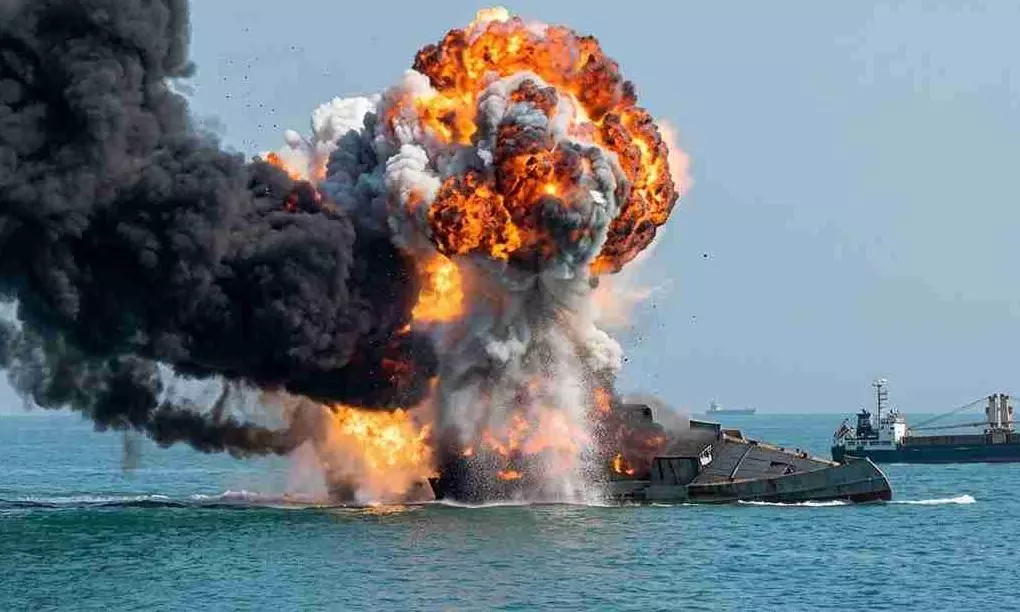
Since July 7, at least five commercial vessels, including three crude oil supertankers, one LNG carrier and one container ship, have reportedly come under attack in Omani waters, where the US-guided transit operation has primarily been conducted.

Shipping Companies Reconsider Voyages

Shipping executives said many operators are reviewing or suspending voyages through the Strait of Hormuz because of growing risks to ships and their crews.

“The US doesn’t seem to have any control over the situation,” one shipping industry source said, adding that the company had decided not to send vessels through the strait because of concerns over crew safety.

US Escort Operation Faces Fresh Challenges

Earlier reports said the US military had launched a coordinated escort operation using helicopters, aerial drones and maritime drones to guide commercial tankers through the Strait of Hormuz.

The operation enabled the movement of tens of millions of barrels of crude oil and helped limit disruptions to global energy markets.

However, industry experts said the recent attacks have weakened confidence in the effectiveness of the US-guided transit operation.

US Says Strait Remains Open

Despite the deteriorating security situation, the White House said the Strait of Hormuz remains open to commercial shipping.

White House spokesperson Olivia Wales accused Iran of targeting civilian vessels and said the United States was acting to safeguard freedom of navigation.

A US defence official said more than 100 vessels had coordinated directly with the US military to transit the strait over the past week, while more than 300 ships had passed through the wider region.

US President Donald Trump also wrote on Truth Social that the Strait of Hormuz “is open to ALL Ship traffic except for Iran.”

Maritime Security Firms Urge Caution

Maritime security companies continue to advise shipping operators to exercise caution before entering the Strait of Hormuz.

Greek security firms Diaplous and MARISKS have recommended delaying voyages through the waterway, warning that current security conditions do not provide an acceptable level of safety for commercial transit.

Long or Short, get news the way you like. No ads. No redirections. Download Newspin and Stay Alert, The CSR Journal Mobile app, for fast, crisp, clean updates!

App Store –  https://apps.apple.com/in/app/newspin/id6746449540 

Google Play Store – https://play.google.com/store/apps/details?id=com.inventifweb.newspin&pcampaignid=web_share

Latest News

Popular Videos
