


Pakistan Invites Iran Foreign Minister to Islamabad Amid US-Iran Talks Uncertainty
The CSR Journal Magazine

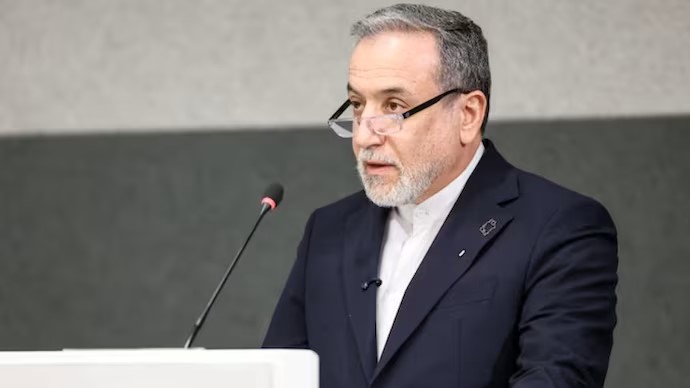
Pakistan is enhancing its diplomatic outreach to Iran, following the invitation from Foreign Minister Ishaq Dar to his Iranian counterpart, Abbas Araghchi. The proposal for Araghchi to visit Islamabad “at the earliest” comes at a time when discussions between Tehran and Washington are facing significant uncertainty. This situation arises after US President Donald Trump announced the cancellation of planned military operations against Iran, influenced by requests from regional allies.

Officials have indicated that Pakistan aims to position itself as a crucial diplomatic intermediary between Iran and the United States, albeit maintaining a “relatively low profile” in the process. The response from Iran regarding the invitation has yet to be revealed.

In a statement on X, Pakistan’s Foreign Office disclosed that Deputy Prime Minister and Foreign Minister Senator Mohammad Ishaq Dar had a conversation with the Iranian Foreign Minister. They discussed various regional and international issues, including the troubling situation in Occupied East Jerusalem, and Dar extended an invitation for Araghchi to visit Pakistan soon.

Broader Diplomatic Developments

In addition to the discussions between the foreign ministers, National Assembly Speaker Ayaz Sadiq has also invited Iranian Parliament Speaker Mohammad Bagher Ghalibaf to Islamabad. Both Araghchi and Ghalibaf have played significant roles in the ongoing negotiations between the US and Iran.

This recent outreach signifies Pakistan’s intention to reinforce its image as a reliable mediator, especially when diplomatic efforts are fraught with challenges and the threat of military confrontation hangs over the Gulf region. A senior official from the Pakistani government noted that while Islamabad is adopting a low-profile approach to de-escalate tensions, diplomatic conversations have persisted behind the scenes.

In June, the US and Iran formalised a Memorandum of Understanding (MoU) aimed at promoting peace in West Asia, a process in which Pakistan also acted as a guarantor. Pakistan organised peace talks in April and later participated in technical-level discussions in Switzerland shortly after the MoU was signed. However, negotiations broke down in early July due to renewed military actions, with both sides accusing each other of breaching the terms of the agreement, particularly concerning the strategic Strait of Hormuz.

Ongoing Tensions and Future Prospects

The latest diplomatic overtures from Pakistan arrive amidst escalating doubts about the future of US-Iran negotiations. Recently, President Trump accused Iran’s leadership of being “unbelievably duplicitous” following Tehran’s denial of any active negotiations with Washington. While Trump asserted that discussions were still ongoing, Iranian officials maintained there were no scheduled talks with the US.

On the previous day, Trump announced he had suspended military operations against Iran following requests from Saudi Crown Prince Mohammed bin Salman and the leaders of Qatar and the UAE, who urged him to allow further time for negotiation efforts. Although Pakistan was not named as a mediator in Trump’s statements, Iran has acknowledged Islamabad’s significant role in facilitating discussions.

Iranian Foreign Ministry spokesman Esmail Baghei remarked that Pakistan remains a central mediator in the talks involving the US, while Qatar also plays a facilitatory role. He clarified that describing the situation as introducing a new mediator would be misleading, as Pakistan continues to hold an important place in the ongoing dialogues.

Long or Short, get news the way you like. No ads. No redirections. Download Newspin and Stay Alert, The CSR Journal Mobile app, for fast, crisp, clean updates!

App Store –  https://apps.apple.com/in/app/newspin/id6746449540 

Google Play Store – https://play.google.com/store/apps/details?id=com.inventifweb.newspin&pcampaignid=web_share

Latest News

Popular Videos
