


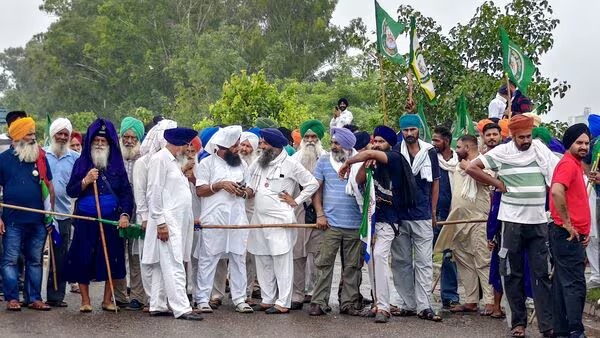

The Haryana government has officially recognised the demands put forth by farmers’ unions and has committed to organising a meeting with Union Agriculture Minister Shivraj Singh Chouhan or relevant officials from the central government within a span of ten days. This development was confirmed following protests held by farmers at the Shambhu Border as part of a larger campaign against the proposed India-US trade deal.
During the protests, which were branded a “Chalo Delhi” movement, farmers faced police resistance at the border. Haryana Minister Shyam Singh Rana stated that he would consult with Chief Minister Nayab Singh Saini regarding the situation involving BKU Charuni leader Gurnam Singh Charuni, who was reportedly arrested. Rana assured the farmers that their letters of demands would be forwarded to pertinent authorities for timely resolution.
Concerns Over Arrests and Future Actions
Farmer leader Sarwan Singh Pandher affirmed that further actions would be determined after the release of Gurnam Singh Charuni and BM Singh. Pandher indicated that the Haryana Agriculture Minister had accepted their memorandum, and discussions regarding a meeting with Union Minister Shivraj Chouhan would commence once the necessary arrangements were made. The minister assured farmers that a formal confirmation regarding the meeting would reach them within eight to ten days.
Furthermore, the farmers demanded the release of all detained farmer leaders. Officials indicated that they would consider the release of Charuni and BM Singh following discussions with the Chief Minister. Pandher expressed the importance of these meetings in deciding whether to continue with their sit-in protests or to adjust their strategies based on the outcomes of future dialogues.
The farmers have voiced significant concerns over the recent India-US trade deal, which involves reductions or eliminations of tariffs on various food and agricultural commodities. These products include dried distillers’ grains (DDGs), red sorghum, tree nuts, and various fruits, which understandably raised alarms among the agricultural community regarding potential impacts on local farming.
Opposition Voices Concern over Trade Deal
In reaction to the farmers’ protests and the trade deal, opposition leaders have publicly condemned the government’s approach. Senior Congress leader Bhupesh Baghel emphasised that prior warnings regarding the detrimental effects of the trade deal on farmers by Rahul Gandhi were being realised. He accused the government of being overly compliant to external pressures from the United States.
Congress MP Sukhdeo Bhagat articulated concerns over the government’s history with farmers, referencing previous protests against farm legislation and emphasizing the agrarian nature of India. He described the current trade negotiations as unfavourable to farmers, labelling them as anti-farmer due to new tax implications that he claimed would disadvantage local producers.
Additionally, Congress MP Pramod Tiwari accused Prime Minister Narendra Modi of accepting a “one-sided deal” that prioritises US interests over Indian farmers. He stressed that the existing trade agreement could lead to an unfair playing field, subjecting Indian farmers to taxes while US farmers remain exempt. AAP MP Malvinder Singh Kang echoed similar sentiments, declaring that the trade deal would severely impact India’s agricultural sector and expressing fears of widespread unrest among farmers nationwide.