


Delhi’s Temperature Breakdown: Understanding the Heat Index
The CSR Journal Magazine

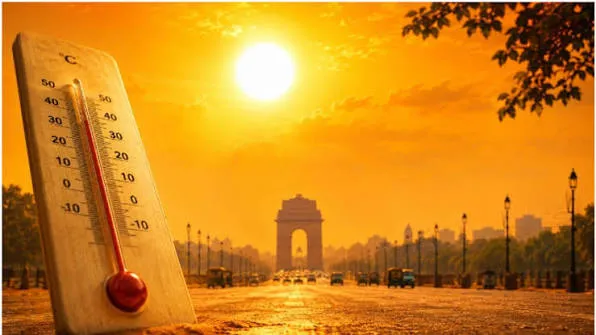
Delhi’s weather this week has been marked by unusual heat and humidity. On June 28, the India Meteorological Department (IMD) reported that the capital’s heat index reached a staggering 51.3 degrees Celsius. This figure, often referred to as the “feels like” temperature, significantly differs from the actual air temperature, which was recorded at 41.3 degrees Celsius, approximately 4 degrees above the seasonal norm.

The disparity between these two measurements highlights a critical concept in climate science. The heat index takes into account both temperature and humidity, illustrating how the human body perceives heat rather than simply providing a raw temperature reading.

Understanding Wet-Bulb Temperature

To grasp the implications of this weather phenomenon, it is important to consider the concept of wet-bulb temperature. This measure reflects the cooling capacity of the air, determined by the process of evaporation. When sweat evaporates from the skin, it cools the body, but this process relies heavily on the surrounding air’s ability to absorb moisture.

The wet-bulb temperature is assessed using a thermometer that has a wet cloth wrapped around it. As air passes over the cloth, the water’s evaporation cools the thermometer. In conditions of low humidity, the temperature drops significantly, while high humidity limits the cooling effect. On June 28, Delhi’s wet-bulb temperature peaked at 29.77 degrees Celsius. Although this may seem moderate, it is a concerning indicator of the conditions faced by residents.

At a wet-bulb temperature of 32 degrees Celsius, even a physically fit individual may struggle to endure outdoor activities for long periods. The critical threshold is 35 degrees Celsius, where the body’s mechanisms for cooling cease to function effectively. This indicates that Delhi is nearing a perilous point concerning outdoor endurance and safety.

The Source of Increased Humidity in Delhi

The heightened humidity currently experienced in Delhi can be attributed to unusual weather patterns. According to Mahesh Palawat, vice president of Skymet Weather, southwesterly winds from the Arabian Sea are transporting moisture into northwestern India. Meanwhile, the monsoon, which typically mitigates summer heat by bringing rainfall from the Bay of Bengal, has not yet arrived.

Traditionally, summers in Delhi are characterised by dry heat, making the current humid conditions particularly notable. The combination of high temperatures and humidity creates a potentially hazardous situation for the population, as wet heat is often associated with increased health risks.

Residents of Delhi may welcome the news that relief is on the horizon. The IMD forecasts a decrease in temperatures following Monday, with predicted rain, thunderstorms, and strong winds throughout the week. Additionally, a yellow alert has been issued for Tuesday and Wednesday. By Friday, night temperatures may drop to around 22 degrees Celsius, signalling the anticipated arrival of the monsoon after July 4.

Long or Short, get news the way you like. No ads. No redirections. Download Newspin and Stay Alert, The CSR Journal Mobile app, for fast, crisp, clean updates!

App Store –  https://apps.apple.com/in/app/newspin/id6746449540 

Google Play Store – https://play.google.com/store/apps/details?id=com.inventifweb.newspin&pcampaignid=web_share

Latest News

Popular Videos
