


What Is Black Rain? Explaining the Dark Fallout After Moscow’s Largest Drone Strike on the Kapotnya Oil Refinery

The CSR Journal Magazine

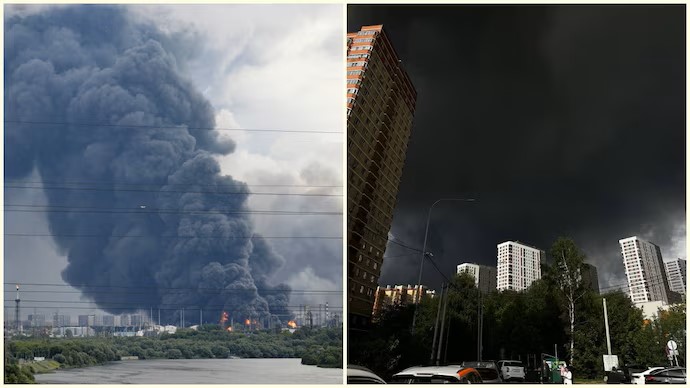
Following a Ukrainian drone strike on June 19, 2026, residents in various areas of Moscow have observed black marks on vehicles, roads, and clothing. This incident occurred after drones targeted the Kapotnya oil refinery, one of the city’s key fuel facilities, igniting significant fires and raising alarms regarding a phenomenon known as black rain. The assault has been described as the largest drone attack on Moscow since the onset of the ongoing conflict.

The strike at the refinery resulted in substantial flames and large clouds of thick black smoke that drifted across the city. In suburban regions such as Balashikha and Lyubertsy, residents reported experiencing a light drizzle that carried dark, oily particles. Many individuals recounted finding black spots on their clothing and vehicles, with social media platforms flooded with images showing a soot-like residue blanketing various surfaces.

Understanding the Phenomenon of Black Rain

Black rain occurs when airborne pollutants consisting of smoke, soot, and ash mix with moisture in the atmosphere, ultimately falling back to the earth as precipitation. Unlike typical rain, this type contains small particles of carbon and unburnt hydrocarbons, resulting in its darkened appearance and potential for leaving black stains following evaporation.

This environmental phenomenon is frequently linked to large-scale industrial fires, volcanic eruptions, wildfires, and military bombardment events. One of the historical instances of black rain happened after the atomic bombing of Hiroshima in 1945, where radioactive ash, soot, and rain combined to produce dark precipitation.

In the context of the recent incident in Moscow, the significant smoke generated from the burning petroleum products at Kapotnya is believed to be the primary contributor to the black rain. The combustion of oil, diesel, and fuel storage tanks releases high volumes of soot, carbon particles, and oily aerosols into the atmosphere. When these particles encounter humid conditions or light rainfall, they can be pulled back down to the ground, contaminating the precipitation.

Health and Safety Concerns for Residents

Experts have clarified that this phenomenon does not mean “oil is raining from the sky.” Instead, it represents precipitation that is contaminated with pollutants from the fire. Exposure to these substances can cause irritation to the eyes, skin, and respiratory system, particularly affecting vulnerable populations such as children, elderly individuals, and those with existing lung conditions like asthma.

Though Moscow authorities have dismissed claims of “oil rain,” they have advised residents of the affected areas to keep their windows closed and recommended that susceptible individuals temporarily evacuate the district. This caution demonstrates concerns about the potential for harmful smoke particles and petroleum-related pollutants to linger in the air long after the visible flames have extinguished.

With the Kapotnya refinery reportedly supplying approximately 40 per cent of Moscow’s petrol and half of its diesel fuel, the drone strike has not only disrupted vital energy infrastructure but has also presented a noteworthy example of how large industrial fires can impact the local environment, sometimes resulting in striking scenarios like precipitation turning dark in appearance.

Long or Short, get news the way you like. No ads. No redirections. Download Newspin and Stay Alert, The CSR Journal Mobile app, for fast, crisp, clean updates!

App Store –  https://apps.apple.com/in/app/newspin/id6746449540 

Google Play Store – https://play.google.com/store/apps/details?id=com.inventifweb.newspin&pcampaignid=web_share

Latest News

Popular Videos