


Venezuela’s Twin Earthquakes Claim 235 Lives As Rescuers Search For Survivors
The CSR Journal Magazine

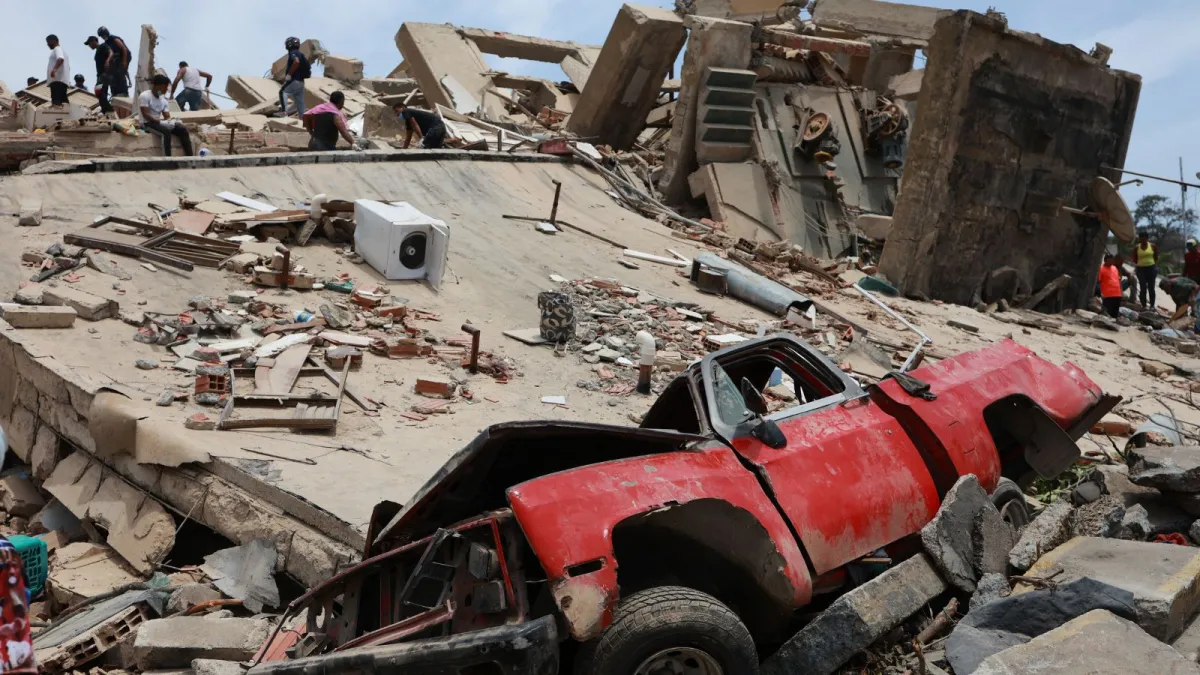
Rescue workers and volunteers continued searching through collapsed buildings across Venezuela on Friday as authorities confirmed that at least 235 people had been killed and more than 1,500 injured following two powerful earthquakes that struck the country a day earlier.

With hundreds believed to remain trapped beneath rubble and tens of thousands still unaccounted for, emergency teams faced a race against time as aftershocks continued to shake affected regions. The disaster has triggered a major international relief effort, with countries and aid organisations mobilising support for the quake-hit nation.

Death Toll Continues To Climb

A magnitude 7.2 earthquake struck approximately 160 kilometres west of Caracas in the early hours of Thursday, followed less than a minute later by a stronger magnitude 7.5 tremor.

According to the United States Geological Survey (USGS), the second earthquake was the most powerful to hit Venezuela since 1900.

Venezuela’s Health Minister Carlos Alvarado said medical facilities had received around 235 bodies by Friday morning, while more than 1,500 people had been treated for injuries.

Interim President Delcy Rodriguez said at least 30 aftershocks had been recorded since the twin earthquakes struck.

USGS predictive modelling suggested the final death toll could rise significantly, with a substantial probability that fatalities may eventually exceed 10,000.

Several key facilities suffered major damage, including at least eight hospitals, the headquarters of the Venezuelan Red Cross and the French embassy.

Jorge Rodriguez, head of the National Assembly and brother of interim President Delcy Rodriguez, said around 200 people remained trapped beneath collapsed structures and that approximately 250 buildings had been damaged or destroyed.

La Guaira Declared Disaster Zone

La Guaira, the coastal state adjoining Caracas and home to Venezuela’s principal international airport, emerged as one of the worst-affected regions.

Interior Minister Diosdado Cabello said the disaster had impacted roughly 70,000 families in the state.

Delcy Rodriguez described La Guaira as a “disaster zone” and said authorities were working with private-sector partners to deploy heavy machinery and accelerate rescue operations.

Electricity remained unavailable in parts of the region, while Caracas’ main airport was forced to shut down after sustaining structural damage.

Videos shared online showed passengers fleeing the terminal as ceiling panels collapsed during the earthquakes.

Residents in several affected areas complained that official assistance had been slow to arrive, prompting volunteers to begin rescue efforts independently.

Many residents used their bare hands to dig through rubble in search of survivors while relatives waited anxiously for information about missing family members.

Thousands Unaccounted For As Aid Efforts Expand

Along the Caracas-La Guaira highway, volunteers carrying food, water and medicines travelled towards affected communities to assist rescue and relief operations.

According to Reuters, an online database established by opposition groups to track missing persons listed more than 46,000 people as unaccounted for by Thursday evening, although those figures could not be independently verified.

The earthquakes struck Venezuela at a time when years of economic difficulties had already weakened public infrastructure and emergency response capabilities.

Scientists believe the earthquakes were triggered by the sudden release of accumulated pressure between tectonic plates beneath Venezuela.

International Support Begins Arriving

Governments around the world pledged assistance following the disaster, including countries that have traditionally maintained strained relations with Venezuela.

Delcy Rodriguez thanked several international leaders, including US President Donald Trump and Russian President Vladimir Putin, for offering support.

The United States eased sanctions to facilitate earthquake relief operations, with Trump stating that America stood “ready, willing and able to help”.

US Secretary of State Marco Rubio announced that American rescue teams would be deployed and that the Pentagon would assist with logistics and operations at Caracas’ damaged airport.

United Nations humanitarian chief Tom Fletcher said the organisation was coordinating international assistance and warned that a “massive collective effort” would be required.

The UN human rights mission for Venezuela also urged authorities to ease restrictions on certain social media platforms, arguing that internet access had become a “matter of life and death” during emergency response efforts.

Children Among Most Vulnerable

Many Venezuelans were at home observing a public holiday when the earthquakes struck, sending residents rushing into streets as buildings swayed and collapsed.

Near the epicentre in Moron, located in Carabobo state, homes were reduced to rubble and entire communities were left without electricity and running water.

Approximately 200 families living in a damaged residential complex were seen recovering personal belongings, including mattresses, household appliances and furniture, from damaged homes.

Some displaced residents planned to stay with relatives, while others waited for authorities to establish temporary shelters.

Communications company Starlink announced that it would provide free services in affected regions until July 25 and was deploying satellite terminals to help restore connectivity.

In a statement on X, the company said it was working to “rapidly deploy Starlink terminals and restore connectivity to the hardest-hit areas.”

Meanwhile, foreign energy companies operating in Venezuela reported that oil production infrastructure had largely escaped significant damage.

UNICEF warned that nearly 3.9 million children live in areas affected by the earthquakes and may face heightened risks in the coming weeks.

The agency said children could be exposed to injury, displacement, family separation, psychological trauma and disruptions to essential services including healthcare, education, safe drinking water and protection systems.

“The images we are seeing from Venezuela and the stories we hear from colleagues on the ground are heartbreaking,” UNICEF Executive Director Catherine Russell said, adding that the safety and well-being of children must remain central to all relief and recovery efforts.

Long or Short, get news the way you like. No ads. No redirections. Download Newspin and Stay Alert, The CSR Journal Mobile app, for fast, crisp, clean updates!

App Store –  https://apps.apple.com/in/app/newspin/id6746449540 

Google Play Store – https://play.google.com/store/apps/details?id=com.inventifweb.newspin&pcampaignid=web_share

Latest News

Popular Videos
