


US Moves to Lift Long-Standing Ban on Overland Supersonic Flights
The CSR Journal Magazine

The United States has announced plans to reverse a ban that has been in place for over 50 years on overland supersonic flights. This decision comes with a proposed rule from the Federal Aviation Administration (FAA) aimed at allowing such aircraft to operate as long as they adhere to specific noise regulations. This shift follows NASA’s successful tests of its experimental X-59 aircraft, which reportedly achieved speeds surpassing that of sound without generating the disruptive sonic booms typically associated with supersonic travel.

The FAA’s new rule would replace the existing prohibition established in 1973, substituting it with a standard focused on noise levels. Aircraft would be permitted to fly at speeds greater than Mach 1, equivalent to 767 miles per hour, over land, provided they stay within established noise parameters.

A separate regulation concerning landing and take-off noise for supersonic aircraft is anticipated to be released later this year, with both sets of rules expected to be finalised by mid-2027. This marks a significant potential shift in air travel regulations.

Concerns About Sonic Booms and Noise Levels

Sonic booms are known to cause disturbances, including shaking windows and potentially damaging buildings. Currently, airline operators require special authorisation from the FAA to exceed Mach 1 speeds, a privilege reserved mostly for research purposes conducted in remote areas. FAA chief Bryan Bedford expressed confidence that advancements in aerospace technology and materials would mitigate the issue of sonic booms, allowing for greater supersonic operations in populated areas.

Bedford indicated that technological progress would enable the repealing of the 1970s ban on supersonic travel across the US, while simultaneously reducing noise disturbances for communities situated along flight paths and near airports. The encouraging developments in aviation have prompted optimism for an era where supersonic flights could resume over land without significant disruption.

Historic Context and Future Prospects for Supersonic Travel

Supersonic passenger travel is not a new concept, as evidenced by the operations of Air France and British Airways with their Concorde aircraft, which flew at speeds of Mach 2 and could traverse the Atlantic in approximately three and a half hours. However, the Concorde was restricted to subsonic speeds over land due to existing noise concerns, and services ended in 2003 primarily due to high operational expenses.

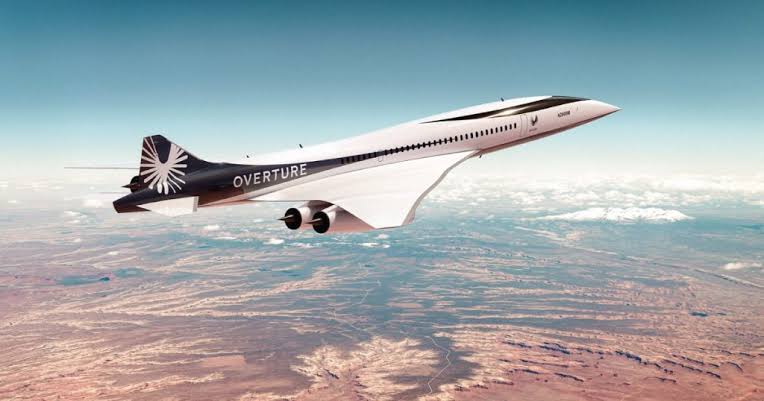
In conjunction with NASA, several US firms, including Boom Supersonic and Spike Aerospace, are actively developing modern supersonic aircraft. These companies have outlined plans to conduct transatlantic flights in less than four hours. The latest FAA proposal aims to revive overland supersonic travel by implementing contemporary noise regulations, representing a significant evolution in air transport laws.

US Transportation Secretary Sean P. Duffy highlighted that the return of supersonic flight over land transcends speed alone; it signifies unlocking American innovation and paving the way for a new phase of travel. The developments signal a potential renaissance in aviation, fostering enhanced connectivity and innovation in air transport, and demonstrating the nation’s commitment to advancing technological frontiers in aviation.

Long or Short, get news the way you like. No ads. No redirections. Download Newspin and Stay Alert, The CSR Journal Mobile app, for fast, crisp, clean updates!

App Store –  https://apps.apple.com/in/app/newspin/id6746449540 

Google Play Store – https://play.google.com/store/apps/details?id=com.inventifweb.newspin&pcampaignid=web_share

Latest News

Popular Videos
