


US Military Disables Oil Tanker Headed Towards Iran’s Kharg Island
The CSR Journal Magazine

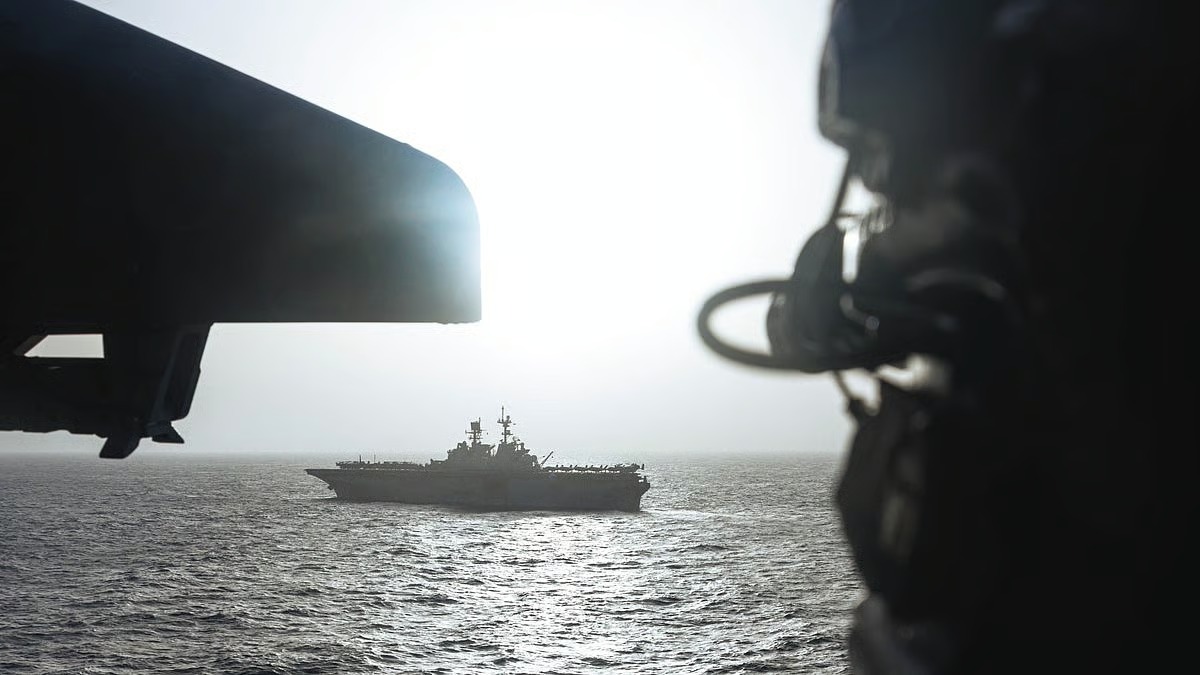
The United States military has neutralised a commercial oil tanker that was reportedly heading towards Iran, amidst ongoing tensions surrounding maritime traffic linked to Iranian ports. This intervention is part of the US’s strict naval blockade designed to enforce sanctions against Iran. The Botswana-flagged vessel, identified as M/T Lexie, was halted after allegedly ignoring multiple warnings to change its course over a 24-hour period.

The US Central Command (CENTCOM) confirmed that an American aircraft struck the ship’s engine room using a Hellfire missile, effectively disabling the tanker. This operation is part of a broader enforcement campaign that commenced on 13 April, during which US forces have reportedly disabled six commercial vessels and redirected 122 others attempting to access Iranian maritime facilities.

M/T Lexie, notable for not carrying any cargo at the time, engaged in a significant maritime incident, illustrating the heightened vigilance of US military operations in the region.

Escalation in Maritime Conflicts

MSC has firmly rejected the IRGC’s assertion, asserting that it operates as a neutral commercial entity entirely independent of the United States or Israel. The company noted its Swiss registration and ownership by Italian nationals, further distancing itself from the political claims made by the Iranian authorities.

The attacks on MSC vessels reflect the increasing maritime tensions and indicate broader geopolitical implications concerning Iranian interests in the region. These incidents coincide with rising hostilities between Israel and Hezbollah, even as officials participate in high-stakes diplomatic discussions in Washington.

Diplomatic Efforts Amidst Ongoing Conflict

In the backdrop of these maritime incidents, there are ongoing direct negotiations between Lebanese and Israeli representatives in the United States. The discussions are taking place at the US State Department, with participation from US Secretary of State Marco Rubio, who has expressed cautious optimism regarding potential resolutions. Rubio suggested that a peace agreement could be reached quickly, attributing the current stalemate to Hezbollah’s influence.

Simultaneously, the diplomatic efforts are reported to be independent of any negotiations involving Iran. On 3 June, President Donald Trump stated that an agreement had been reached to cease hostilities, outlining a diplomatic framework intended to address the escalation of violence. Lebanon’s embassy in Washington further clarified that discussions would initially focus on addressing violence between the two parties.

Despite ongoing mediation by US authorities, an endorsement of this proposal from either side has yet to materialise, underscoring the complexities of the existing tensions. In light of the prolonged conflict, Lebanese Prime Minister Nawaf Salam noted the urgency for a diplomatic resolution, characterising it as the “least costly choice for Lebanon,” although facing strong opposition from Hezbollah.

The impact of this conflict is significant, with statists from Lebanon’s Health Ministry indicating that Israeli airstrikes have resulted in the deaths of at least 3,468 individuals since 2 March, including 35 fatalities recorded recently. Meanwhile, Israeli casualties in the same period include at least 26 military personnel and one civilian contractor, highlighting the severe human toll of the ongoing unrest.

Long or Short, get news the way you like. No ads. No redirections. Download Newspin and Stay Alert, The CSR Journal Mobile app, for fast, crisp, clean updates!

App Store –  https://apps.apple.com/in/app/newspin/id6746449540 

Google Play Store – https://play.google.com/store/apps/details?id=com.inventifweb.newspin&pcampaignid=web_share

Latest News

Popular Videos
