


Union Education Minister Pralhad Joshi Outlines Future Initiatives After BRICS Meeting
The CSR Journal Magazine

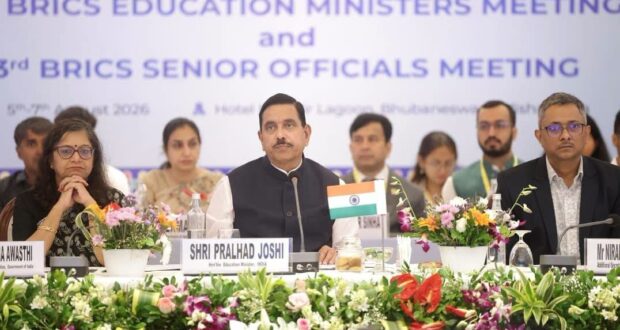
The Union Education Minister Pralhad Joshi has outlined the future direction of the Education Ministry following the 13th BRICS Education Ministers’ Meeting. This meeting, held in Bhubaneswar, Odisha, on August 4, resulted in the adoption of the 13th BRICS Education Ministers’ Declaration.

Joshi, who recently took on the role of Education Minister after Dharmendra Pradhan’s resignation amid a controversy surrounding the NEET-UG exam, convened discussions with senior officials of the ministry. In a post on X, he confirmed that these discussions centred on next steps and key issues requiring urgent attention, reaffirming the ministry’s dedication to enhancing the country’s educational framework.

During the discussions, Joshi highlighted various ongoing initiatives and stressed the importance of prioritising timely and effective implementation of educational programmes. His comments underline a focus on ensuring that reforms align with the vision of creating a competitive and inclusive education system.

Commitment to BRICS Educational Cooperation

In the context of the BRICS meeting, Joshi reiterated India’s commitment to fostering collaboration with the other BRICS nations. He expressed optimism that the discussions held would lead to actionable results that contribute meaningfully to the educational landscape.

The minister referred to the overarching theme of India’s BRICS Chairship in 2026, which revolves around “Building for Resilience, Innovation, Cooperation and Sustainability”. He underscored the necessity for educational systems to not only equip youth for future opportunities but also to maintain a strong foundation in human values.

Furthermore, Joshi articulated the importance of placing learners, educators, researchers, and young individuals at the forefront of policy-making and international cooperation. He emphasised that these stakeholders must be central to shaping future educational strategies.

Key Outcomes from the BRICS Education Ministers’ Declaration

The 13th BRICS Education Ministers’ Declaration yields several critical outcomes focusing on significant educational areas. One of the key focuses is on strengthening Early Childhood Care and Education (ECCE) alongside Foundational Literacy and Numeracy (FLN). This initiative aims to enhance early educational frameworks for children.

Another outlined priority area involves cooperation in skill development and Technical and Vocational Education and Training (TVET). These efforts aim to enrich the educational experience and better prepare students for the evolving job market.

The declaration also sets a path towards advancing Mutual Recognition of Qualifications (MRQ) and enhancing research, innovation, and startup ecosystems within BRICS nations. Joshi pointed out that these declarations are vital for fostering an environment that encourages academic excellence and leadership capacity within educational institutions.

Additionally, the meeting acknowledged India’s proposal regarding the BRICS Guiding Principles on Strengthening Academic Collaboration on Traditional and Indigenous Knowledge Systems. The suggestion has been made for the BRICS Network University to potentially incorporate traditional and indigenous knowledge into its International Thematic Group offerings.

Long or Short, get news the way you like. No ads. No redirections. Download Newspin and Stay Alert, The CSR Journal Mobile app, for fast, crisp, clean updates!

App Store –  https://apps.apple.com/in/app/newspin/id6746449540 

Google Play Store – https://play.google.com/store/apps/details?id=com.inventifweb.newspin&pcampaignid=web_share

Latest News

Popular Videos
