


Turkiye, Pakistan, and Saudi Arabia Form Mutual Defence Pact
The CSR Journal Magazine

The newly announced mutual defence pact among Turkiye, Pakistan, and Saudi Arabia states that an armed attack on any one of the member nations will be viewed as an attack on all three. This agreement, signed on August 7, 2026, aims to enhance military cooperation and establish joint defence strategies among these major Muslim-majority economies. The Turkish defence ministry unveiled specifics of the pact, which include plans for joint military drills and deeper collaboration in their defence industries.

This initiative comes at a time of escalating tensions in the Middle East, particularly following recent conflicts involving Iran and the United States. Saudi Arabia has reportedly faced repeated strikes from Iranian forces, which claim to be targeting American military assets in the region.

Pakistan’s foreign ministry has indicated that the pact mirrors NATO’s Article 5, a collective defence clause that obliges member nations to mutual assistance in the event of armed aggression. The Turkish authorities expressed that the primary objective of the partnership is to solidify defence and military relations on a more structural and sustainable basis.

Framework for Cooperation

At a press conference in Ankara, officials outlined plans to create strategic political and military mechanisms that involve the highest-ranking leaders of the three countries. This includes coordination among defence ministers, foreign ministers, and military commanders to ensure effective collaboration at all levels.

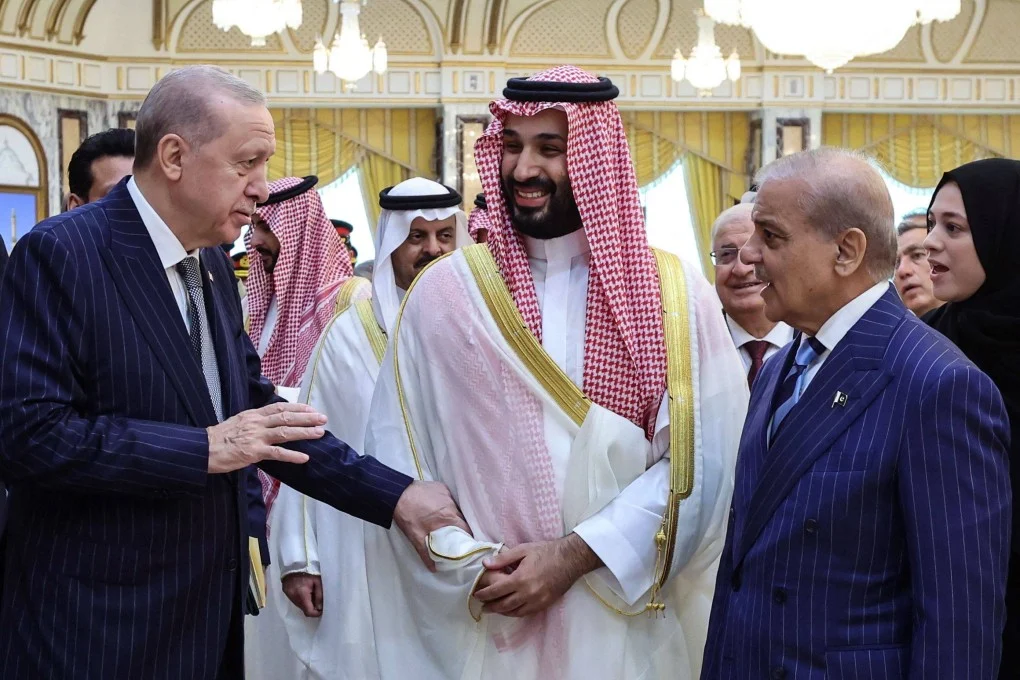
The mutual defence agreement follows a recent visit by Pakistan’s Prime Minister, Shehbaz Sharif, who was accompanied by Chief of Army Staff Asim Munir for the Umrah pilgrimage in Mecca. Turkish President Recep Tayyip Erdogan also made a trip to Saudi Arabia to meet Crown Prince Mohammed bin Salman, marking a significant moment in strengthening ties among these nations.

With Turkiye possessing NATO’s second-largest army, the pact presents an opportunity for further expansion, potentially including Egypt as a future member. Officials clarified that this new alliance is not intended to replace existing partnerships but aims to enhance regional security.

Historical Context of Mutual Defence Alliances

Mutual defence pacts have been established globally, often with varying degrees of success. The North Atlantic Treaty Organization (NATO), formed in April 1949, serves as a historic example where member states pledged mutual defence, particularly in response to threats from the Soviet Union. Although the alliance has invoked its Article 5 only once—after the September 11 attacks—analysts consider it a critical deterrent against major interstate conflicts.

Similarly, the Arab League established a mutual defence treaty in 1950, stating that an attack on one member would be treated as an attack on all. Yet, like many such agreements, its practical application has been limited. The Rio Treaty, signed in 1947, provided mutual defence assurances to countries in the Americas and was invoked during significant crises, such as the Cuban missile crisis.

In the Pacific, the ANZUS treaty, created in 1951, continues to ensure cooperative security among Australia, New Zealand, and the United States, although it faced challenges with New Zealand’s anti-nuclear policy. Bilateral agreements, such as those between the US and Japan, and the US and South Korea, further illustrate the diverse nature of mutual defence arrangements observed worldwide.

The Gulf Cooperation Council (GCC), established in 1981 to foster security among six Arabian Peninsula countries, has also experienced challenges in achieving collective defence goals, despite the establishment of military forces for joint protection during conflicts.

Long or Short, get news the way you like. No ads. No redirections. Download Newspin and Stay Alert, The CSR Journal Mobile app, for fast, crisp, clean updates!

App Store –  https://apps.apple.com/in/app/newspin/id6746449540 

Google Play Store – https://play.google.com/store/apps/details?id=com.inventifweb.newspin&pcampaignid=web_share

Latest News

Popular Videos
