


Rubio Defends US Military Strategy Against Iran During Senate Hearing
The CSR Journal Magazine

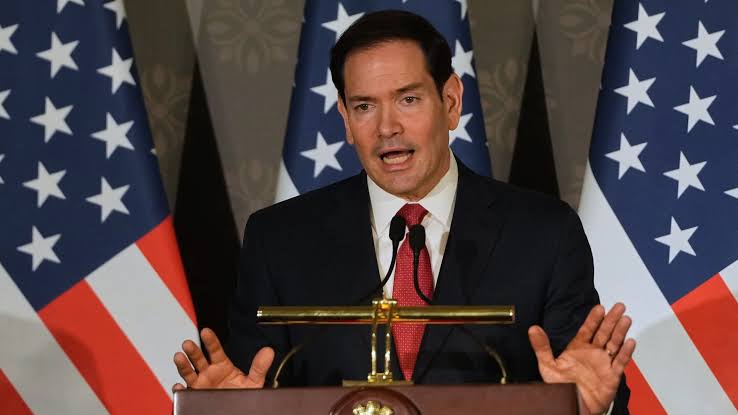
Marco Rubio, the US Secretary of State, has forcefully defended Washington’s military strategy concerning Iran, asserting that Tehran aimed to create a conventional arms infrastructure as a protective measure for its nuclear ambitions. While addressing the US Senate Foreign Relations Committee on 3 June, he stated that recent military actions by the United States have significantly weakened Iran’s military capabilities, rendering its conventional forces ineffective as a deterrent.

Rubio specifically pointed out the catastrophic effects on Iran’s naval forces, declaring that what remains of Iran’s navy consists of limited, outdated vessels. He remarked, “What’s left of Iran’s navy is a ‘bunch of Boston Whalers with machine guns on them,'” clearly indicating a substantial degradation of Iran’s naval strength.

The Secretary of State elaborated that US military operations had also severely impacted Iran’s wider defence infrastructure, affecting its production lines for unmanned aerial vehicles. He acknowledged the global threat posed by inexpensive drone technology, but noted a significant erosion in Iran’s capacity to produce these systems.

Challenges in Diplomatic Resolution with Iran

Rubio discussed the possibility of diplomatic negotiations concerning Iran’s nuclear programme. He described these discussions as “highly technical” and suggested that they could extend over several months. He emphasised that any progress hinges on Iran fulfilling specific conditions, such as allowing the reopening of the strategically vital Strait of Hormuz and addressing the situation regarding its stockpile of highly enriched uranium.

According to Rubio, the next phase of diplomacy involves Iran committing to negotiate substantial limits on its uranium enrichment activities. He clarified that expert discussions would be necessary, involving teams over an extended timeframe to work through intricate security and scientific matters. The expectation for swift results was cautioned against, highlighting the complexity of the issues involved.

Rubio also underscored the necessity for Iran to guarantee safe passage for international shipping through the Strait of Hormuz, including the removal of naval mines and cessation of aggression towards merchant vessels. He firmly stated that the US will not consider lifting sanctions until Iran meets these conditions and adheres to the requirements established due to its nuclear programme.

Internal Dynamics and Global Security Concerns

The Secretary of State provided insights into the internal dynamics within Iran, suggesting that Supreme Leader Ayatollah Mojtaba Khamenei is becoming increasingly influential in decision-making processes. Notably absent from public appearances since sustaining injuries earlier in the conflict, Khamenei’s physical state has led to speculation regarding the stability of Iran’s leadership structure.

Rubio noted that while Khamenei has been operating primarily through written communications and intermediaries, there are indicators suggesting an uptick in his involvement with key decisions. This development has drawn significant international attention, particularly given the Supreme Leader’s prolonged absence from the public eye since his injury on 28 February.

Additionally, Rubio reaffirmed the US’s commitment to maintaining its longstanding policy regarding Taiwan, despite new diplomatic engagements with China. He explained that the US seeks to uphold the current status quo in the region and clarified that the US stance on Taiwan remains unchanged, emphasizing the delicate nature of US-China relations.

Long or Short, get news the way you like. No ads. No redirections. Download Newspin and Stay Alert, The CSR Journal Mobile app, for fast, crisp, clean updates!

App Store –  https://apps.apple.com/in/app/newspin/id6746449540 

Google Play Store – https://play.google.com/store/apps/details?id=com.inventifweb.newspin&pcampaignid=web_share

Latest News

Popular Videos
