


PM Modi Visits Belur Math in West Bengal to Honour Swami Vivekananda’s Teachings
The CSR Journal Magazine

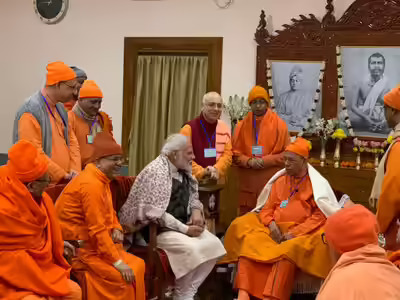
Prime Minister Narendra Modi visited Belur Math, the headquarters of the Ramakrishna Math and Ramakrishna Mission, on April 23. This site, located in Howrah, West Bengal, was established by Swami Vivekananda, a prominent disciple of Sri Ramakrishna Paramhansa. During his visit, PM Modi emphasised the significance of the teachings of Swami Vivekananda and their relevance to contemporary society.

Cultural Significance of the Visit

During his address, Prime Minister Modi highlighted the rich spiritual and cultural heritage of Bengal. He noted the reverence for Maa Kali and the celebration of the Durga Puja festival, which showcase themes of empowerment, service, and transformation within the community. The Prime Minister’s remarks aimed to resonate with the cultural sentiments of the region.

Moreover, he stressed the importance of youth empowerment, spiritual nationalism, and nation-building, reflecting his long-standing relationship with the values promoted by the Ramakrishna Mission. His speech also connected these themes to the current political climate in West Bengal.

This visit occurred against the backdrop of the ongoing Phase 1 polling for the West Bengal Assembly elections, underlining the political landscape during this crucial period.

Voter Turnout and Election Context

As of 5 PM on the day of the visit, West Bengal recorded a significant voter turnout of 89.93%. This statistic marks the state as a leader in electoral participation, with numerous districts surpassing the 90 per cent turnout threshold. Notably, Dakshin Dinajpur led the state with a turnout of 93.12%, followed by Cooch Behar at 92.07% and Birbhum at 91.55%.

Other districts, including Murshidabad at 91.36% and Jalpaiguri at 91.20%, also demonstrated high levels of voter engagement. Additionally, Jhargram and Paschim Medinipur saw turnout above 90 per cent, while Bankura recorded 89.91% and Malda 89.56%. Darjeeling, although lower, still achieved a commendable turnout of 86.49%.

The data indicates a strong civic participation rate across West Bengal, consistent with the state’s historical trend of active electoral engagement. Political parties are vying for dominance over 294 Assembly seats, with the first phase of the elections covering 152 constituencies.

Political Landscape in West Bengal

The electoral competition in West Bengal is notably fierce as Chief Minister Mamata Banerjee seeks a fourth consecutive term. Meanwhile, the Bharatiya Janata Party (BJP) aims to improve on its previous performance, having won 77 seats in the last election and is focused on establishing the government in the state.

According to the Election Commission of India, the current phase includes 1,478 candidates contesting for the Assembly seats. This heightened competition illustrates the dynamic political landscape in West Bengal, which plays a crucial role in the state’s governance and development.

The Prime Minister’s visit, coupled with the significant voter turnout, reflects the intersecting themes of culture, spirituality, and politics in West Bengal during this pivotal electoral season.

Long or Short, get news the way you like. No ads. No redirections. Download Newspin and Stay Alert, The CSR Journal Mobile app, for fast, crisp, clean updates!

App Store –  https://apps.apple.com/in/app/newspin/id6746449540 

Google Play Store – https://play.google.com/store/apps/details?id=com.inventifweb.newspin&pcampaignid=web_share

Latest News

Popular Videos
