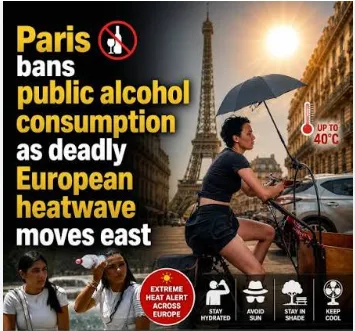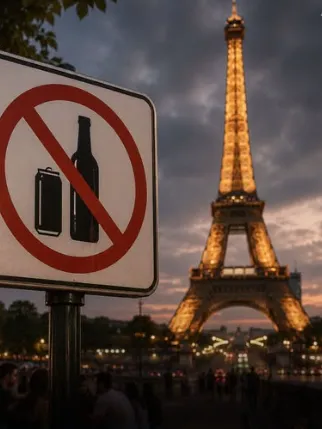

Paris has implemented a restriction on public drinking as the city faces extreme heat conditions. On June 26, during an intensely hot afternoon by the Seine, police announced that consuming alcohol in public places such as streets and parks would be prohibited. The city’s hospitals were reportedly overwhelmed, prompting this decision.
Paris’s police chief, Patrice Faure, revealed that hospitals had reached their maximum capacity. Ambulance services were reportedly responding to approximately 2,500 calls daily, which is about double the standard rate. Furthermore, the health minister, Stéphanie Rist, noted a significant increase in cardiac arrests, with four times the normal incidents registered in a single day, affecting even young individuals.
This prohibition is expected to last throughout the weekend and coincides with the delay of several major outdoor events, including sports activities, the Pride march, and a music festival. The alarming situation has been attributed to the dangerously high temperatures influencing not just health systems, but also the daily lives of residents.
Health Risks Associated with Alcohol Consumption During Heatwaves
The consumption of alcohol under direct sunlight poses significant health risks. Chief Faure specifically warned about the hazardous effects of alcohol during high-temperature conditions. Alcohol acts as a diuretic, increasing urine production and contributing to a more rapid loss of bodily fluids, already depleted due to excessive sweating in extreme heat.
Additionally, the process known as vasodilation occurs when alcohol widens blood vessels. This can lead to a decrease in blood pressure, causing dizziness and fainting among individuals in severe heat conditions. Alcohol can also impair a person’s judgment, making them less aware of the early signs of heat exhaustion, which can escalate into heat stroke, a serious medical emergency.
The physiological response to alcohol, combined with the ongoing heatwave, poses a significant threat to public health and safety. Authorities are emphasising the importance of staying hydrated with water rather than alcohol to mitigate risks during such extreme weather conditions.