


NITI Aayog Identifies 12 Sectors to Drive India’s Global Manufacturing Ambitions
The CSR Journal Magazine

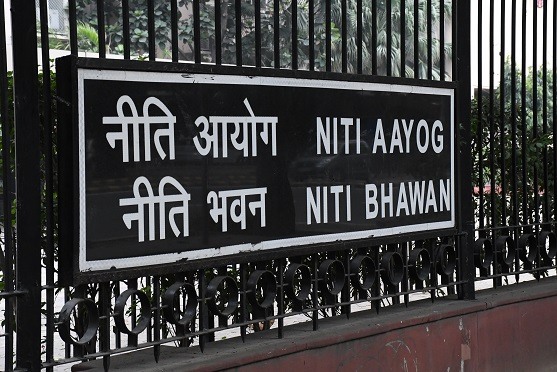
NITI Aayog has announced its aim for India to claim a significant portion of the global manufacturing market, pinpointing twelve key sectors that could facilitate this goal. The report, titled “Key Sectors to Position India as a Global Manufacturing Hub,” outlines areas with the potential to boost production, attract foreign investment, and enhance India’s integration into global supply chains.

The sectors identified include electronics, telecommunications equipment, solar photovoltaic (PV) systems, pharmaceuticals, chemicals, automobiles, and defence technology, such as drones. These sectors were selected from an initial pool of sixty-two based on criteria including market size, growth potential, employment generation, and their strategic importance to the country.

Ashok Kumar Lahiri, the Vice Chairman of NITI Aayog, emphasised that creating profitable investment avenues and achieving optimal economies of scale will be critical for India to establish itself as a major manufacturing hub. He indicated that much of the investment required would have to originate from the private sector.

In-Depth Analysis of Selected Sectors

NITI Aayog plays a crucial role in formulating long-term growth strategies for India. The recent report focused extensively on four sectors: chemicals, textiles, telecom, and solar PV, demonstrating their diverse opportunities within India’s manufacturing landscape. These sectors are integral not only for job creation but also for supplying essential industrial inputs and developing digital infrastructure, as well as advancing clean energy technologies.

India’s aspiration to evolve into a $30 trillion economy by 2047 is closely tied to these manufacturing efforts. Currently, manufacturing contributes only 17.5 per cent to the country’s gross value added (GVA) and accounted for approximately 1.85 crore jobs in the fiscal year 2022. The manufacturing sector’s ability to generate jobs across various skill levels holds considerable promise for stimulating economic growth in the coming years.

The chemicals industry is projected to experience robust growth, with annual consumption needing to rise by 10-11 per cent and production increasing by about 14 per cent over the next five fiscal years. This growth is expected to satisfy domestic demand while expanding India’s global market presence, with potential exports in specialised chemicals estimated at $45 billion by 2030.

Addressing Challenges and Future Opportunities

In textiles, the sector is a vital contributor to employment and economic output, representing 2 per cent of India’s GDP and 11 per cent of manufacturing GVA. In the fiscal year 2025, textile exports reached $37.7 billion, employing over 4.5 crore individuals. However, the sector must enhance its competitiveness in man-made fibres to meet shifting global demands. Recommendations include improving the cost competitiveness of raw materials, scaling up production, and fostering international trade relationships.

The telecommunications and network equipment sector presents significant potential, although India’s reliance on imports remains a concern. The domestic market, valued at nearly $25 billion in fiscal year 2025, is anticipated to double by 2032. In contrast, exports have been limited, revealing a heavy dependency on imports, particularly from China. More than 80 per cent of crucial components are imported from that country, highlighting the need for domestic production capabilities.

In solar PV manufacturing, despite advancements in module and cell production, challenges persist further along the supply chain, particularly with regard to imports of essential materials like polysilicon and wafers. The report suggests that strengthening local supply chains will be essential for reducing dependency on foreign imports.

For India to successfully transition into a global manufacturing leader by 2047, strategies must focus not only on increasing production capacity but also on advancing along the value chain. This entails producing critical components domestically, enhancing technology, attracting investments, and boosting exports.

Long or Short, get news the way you like. No ads. No redirections. Download Newspin and Stay Alert, The CSR Journal Mobile app, for fast, crisp, clean updates!

App Store –  https://apps.apple.com/in/app/newspin/id6746449540 

Google Play Store – https://play.google.com/store/apps/details?id=com.inventifweb.newspin&pcampaignid=web_share

Latest News

Popular Videos
