


Nibe Limited Successfully Tests Long-Range Suryastra Rocket Systems
The CSR Journal Magazine

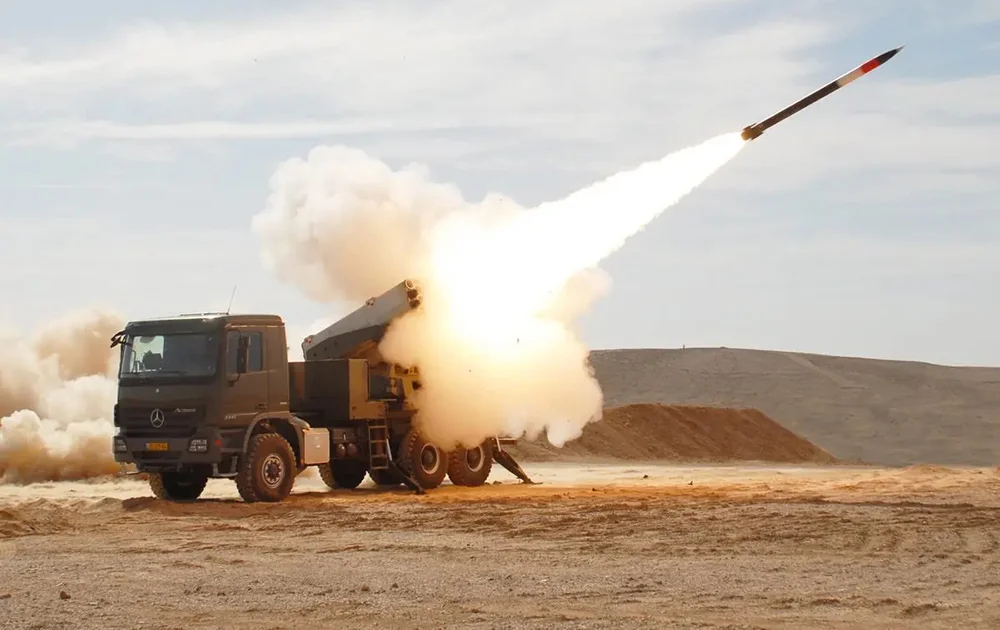
Nibe Limited has made significant strides in strengthening India’s indigenous defence capabilities with the successful testing of its long-range Suryastra rocket systems. This event took place on May 18, 2026, at the Integrated Test Range in Chandipur. The demonstration marks a crucial advancement in the country’s efforts to enhance its military arsenal, especially in the private sector, which has historically been overshadowed by state-run entities.

During the trials, two different variants of the Suryastra rocket system were evaluated, showcasing strike ranges of 150 kilometres and 300 kilometres, respectively. Officials from the company confirmed that both variants achieved exceptional accuracy, which is measured using the Circular Error Probable (CEP). The 150-km variant registered a CEP of 1.5 metres, while the 300-km version achieved a CEP of 2 metres.

This successful demonstration reflects a growing trust in domestic private firms to develop advanced military technologies, aligning with the Indian Army’s procurement requirements and broader strategic goals. Such technological advancements could influence future defence capabilities and operational strategies.

Overview of the Suryastra Rocket System

The Suryastra is a modern long-range guided rocket artillery system specifically engineered to carry out precise strikes against various enemy establishments, such as command centres, logistics hubs, and radar installations positioned deep within hostile territories. Unlike traditional artillery shells, guided rockets like the Suryastra employ sophisticated navigation and control systems, ensuring high accuracy over extended distances.

This system is being developed to empower the Indian armed forces with rapid-response capabilities that demand high precision while decreasing reliance on foreign missile technologies. The two variants tested cater to different operational roles; the 150-km model focuses on tactical battlefield support close to conflict zones, while the 300-km variant enhances India’s stand-off strike capability, enabling forces to engage high-value targets far beyond enemy lines without placing troops directly in danger.

Among the notable highlights of the trials were the remarkably low CEP values achieved. A CEP under two metres for a long-range system is widely recognised as a benchmark for exceptional accuracy, which is crucial in modern warfare to mitigate collateral damage and enhance target effectiveness.

Impact on India’s Defence Sector

The successful trials of the Suryastra rocket have significant implications for India’s defence landscape, particularly in light of the ongoing global trend towards the utilisation of rocket artillery systems. Such systems have become increasingly vital in contemporary conflicts, where the precision of strikes plays a crucial role in military success.

The trials underscore the expanding role of India’s private defence industry in contributing to the government’s “Aatmanirbhar Bharat” initiative. As defence manufacturing evolves, traditionally state-dominated sectors are experiencing increased involvement from private entities engaged in developing high-tech missiles, drones, and artillery systems.

With the successful demonstration phase now concluded, the Suryastra rocket could soon be integrated into India’s growing arsenal of indigenous long-range strike capabilities. As this transition accelerates, it is likely that the armed forces will benefit from enhanced operational efficiency and effectiveness in various military scenarios.

Long or Short, get news the way you like. No ads. No redirections. Download Newspin and Stay Alert, The CSR Journal Mobile app, for fast, crisp, clean updates!

App Store –  https://apps.apple.com/in/app/newspin/id6746449540 

Google Play Store – https://play.google.com/store/apps/details?id=com.inventifweb.newspin&pcampaignid=web_share

Latest News

Popular Videos
