


Blue Origin’s New Glenn Rocket Explodes During Florida Test, No Injuries Reported
The CSR Journal Magazine

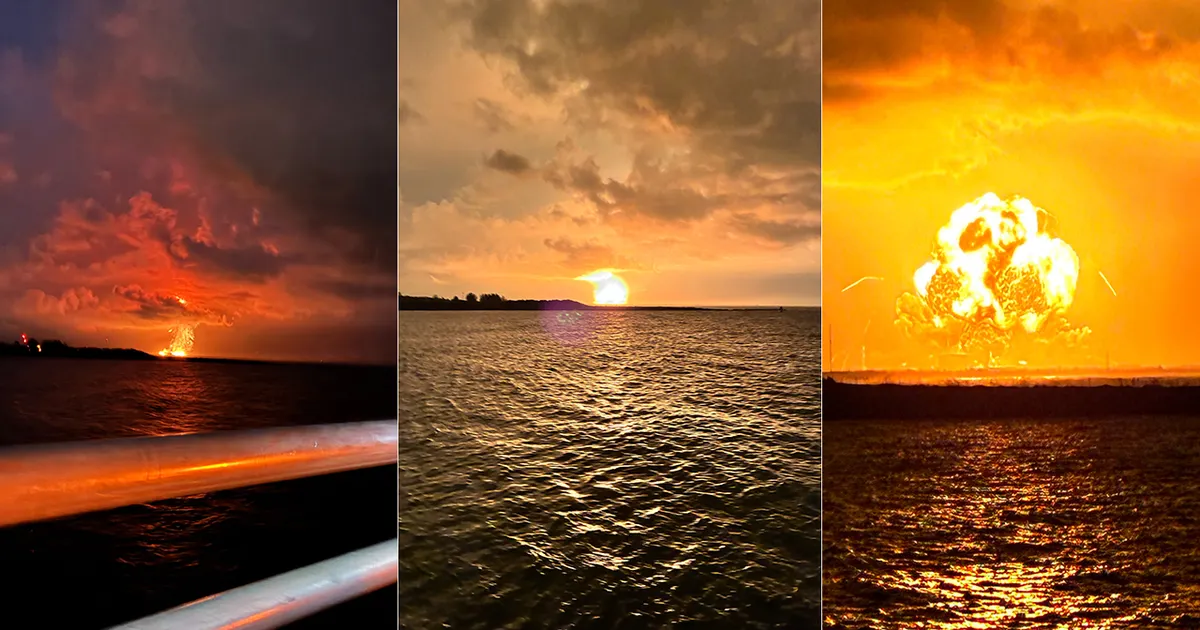
The Blue Origin New Glenn rocket exploded on May 29, 2026, during a hotfire test at Cape Canaveral in Florida. The explosion occurred around 9 pm ET at Space Launch Complex 36, where preparations for the static fire test of the rocket’s engines were underway. Fortunately, there were no reported injuries or casualties resulting from the incident.

In a statement shared on social media platform X, Blue Origin acknowledged the anomaly and assured that all personnel involved in the test were safe. The company posted, “We experienced an anomaly during today’s hotfire test. All personnel have been accounted for. We will provide updates as we learn more.” Cape Canaveral Space Force Station also confirmed the safety of all personnel during this incident.

The New Glenn rocket was in the process of being fuelled prior to the engine test. It was scheduled for its fourth mission as early as June 4, with plans to launch 48 satellites for Amazon’s Project Kuiper, which aims to establish a low-Earth orbit internet constellation. Notably, the satellites were not installed on the rocket at the time of the explosion.

Damage Assessment and Future Implications

The extent of damage to the launch pad and associated ground systems remains unclear, raising questions about the duration required for repairs. Space Launch Complex 36 is the only launch facility equipped to support New Glenn missions at this time.

According to multiple reports, the New Glenn rocket plays a vital role in both Blue Origin’s lunar lander programme, named Blue Moon, and NASA’s Artemis moon exploration initiatives. The next Blue Moon lander is slated for launch aboard a New Glenn rocket in the upcoming year, aligned with the Artemis III mission.

The incident comes on the heels of the rocket being cleared to resume operations after a previous anomaly caused the Federal Aviation Administration (FAA) to ground the vehicle for examination following an April 19 launch. The FAA noted that it was aware of the anomaly during the static fire test at Cape Canaveral but clarified that this test fell outside FAA licensed activities. It also confirmed that there was no effect on air traffic from the explosion.

Reactions from Industry Stakeholders

The explosion prompted a response from various industry figures, including Elon Musk, who expressed his support via X, stating, “Sorry to see this, I hope you recover quickly.” Blue Origin’s founder, Jeff Bezos, also addressed the situation, confirming that all personnel were accounted for and expressing determination to discover the root cause of the explosion. In his comments, Bezos stated, “It’s too early to know the root cause, but we’re already working to find it. Very rough day, but we’ll rebuild whatever needs rebuilding and get back to flying.”

Additionally, NASA Administrator Jared Isaacman noted that the agency was closely monitoring the situation. He remarked on the challenges of developing new heavy-lift launch capabilities and assured support for a thorough investigation of the incident. Isaacman stated, “We will work with our partners to support a thorough investigation of this anomaly, assess near-term mission impacts, and get back to launching rockets.” He emphasized that further information regarding any impacts to the Artemis and Moon Base programmes would be made available as it arises.

This incident underscores the inherent challenges in the field of space exploration, as organisations strive to innovate and expand the capabilities of their launch systems.

Long or Short, get news the way you like. No ads. No redirections. Download Newspin and Stay Alert, The CSR Journal Mobile app, for fast, crisp, clean updates!

App Store –  https://apps.apple.com/in/app/newspin/id6746449540 

Google Play Store – https://play.google.com/store/apps/details?id=com.inventifweb.newspin&pcampaignid=web_share

Latest News

Popular Videos
