


NASA’s Parker Solar Probe Hits Record 6.87 Lakh km/h During Sun Flyby
The CSR Journal Magazine

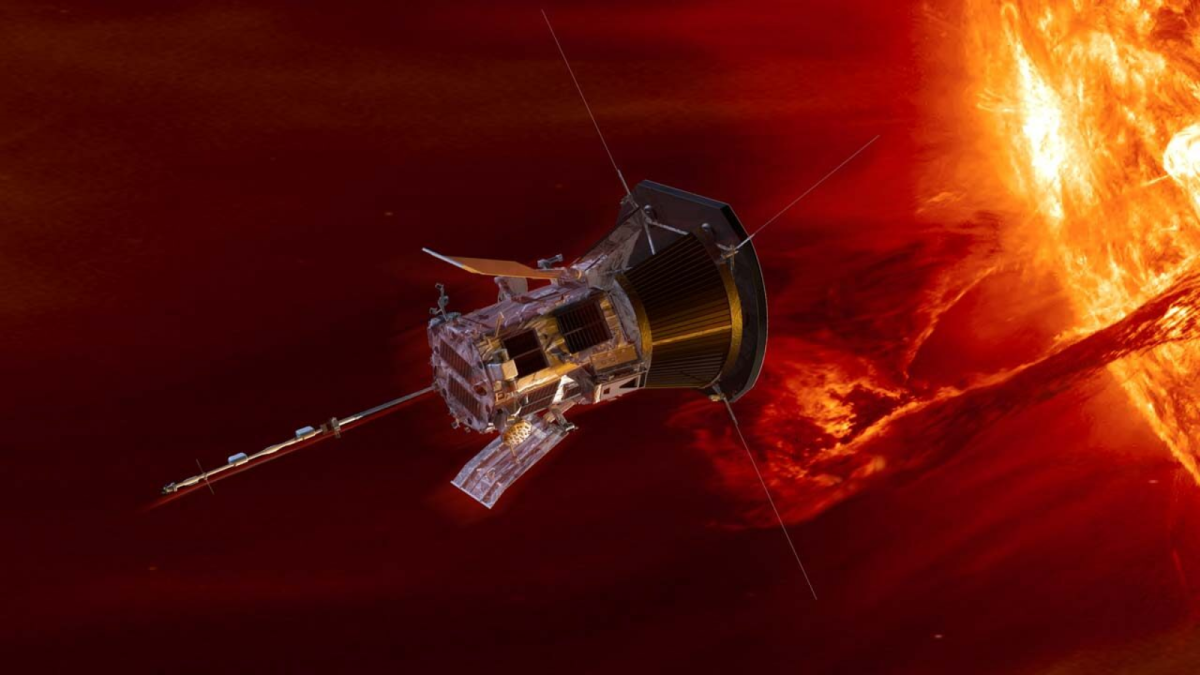
NASA’s Parker Solar Probe has successfully executed its 28th close approach to the Sun, reinforcing its mission goals. This spacecraft, which was launched in 2018, is the first of its kind engineered to traverse the Sun’s outer atmosphere, known as the corona. It gathers data closer to the Sun than any previous missions, contributing to our understanding of this vital celestial body.

During this recent flyby, the Parker Solar Probe matched its previous speed record, reaching approximately 6,87,000 km/h. This velocity secures its position as the fastest human-made object in existence. After completing the flyby, the spacecraft communicated with mission controllers, verifying that all systems were functioning normally, which is crucial for ongoing data collection.

Insights into Solar Mysteries

The latest close pass allowed Parker Solar Probe to acquire new data on solar wind and solar activities occurring deep within the corona. Scientists have long been intrigued by various solar phenomena, particularly why the corona is significantly hotter than the visible surface of the Sun. Additionally, the process that accelerates the solar wind, a continuous stream of charged particles emanating from the Sun, remains a subject of investigation.

NASA indicates that the spacecraft’s measurements are particularly timely, as they coincide with an active phase of the Sun’s 11-year solar cycle. This period is characterised by heightened solar eruptions, flares, and other energetic activities. The data gathered during this time is essential for advancing scientific understanding of these elusive solar processes.

Parker Solar Probe was explicitly designed to delve into these questions, and its findings could contribute to the broader understanding of solar dynamics. By providing unparalleled insights, the mission aims to help explain fundamental characteristics of solar activity that have puzzled scientists for decades.

The Importance of the Parker Solar Probe Mission

While Parker Solar Probe primarily focuses on solar studies, its research carries significant implications for life on Earth. Intense solar storms can disrupt a variety of technologies, including satellites, radio communications, GPS systems, and electrical grids. Hence, understanding the mechanisms behind solar activity is vital for improving forecasts of space weather and providing early warnings against potential disruption.

In 2021, Parker made history by becoming the first spacecraft to enter the Sun’s corona, marking a transformative moment in solar research. Since that milestone, the probe has consistently set records for both speed and proximity, enhancing our comprehension of the solar environment.

Nasa has confirmed that Parker Solar Probe remains in optimal health and will continue its orbit around the Sun. It is set to collect further data during upcoming flybys. Each of these encounters is expected to furnish scientists with an unprecedented perspective on solar operations, thus improving our overall understanding of how solar activity influences space weather across the entire solar system and impacts planets, spacecraft, and future human missions deeper into space.

Long or Short, get news the way you like. No ads. No redirections. Download Newspin and Stay Alert, The CSR Journal Mobile app, for fast, crisp, clean updates!

App Store –  https://apps.apple.com/in/app/newspin/id6746449540 

Google Play Store – https://play.google.com/store/apps/details?id=com.inventifweb.newspin&pcampaignid=web_share

Latest News

Popular Videos
