


Monsoon Vanishes as India Faces 64 Per Cent Rain Deficit
The CSR Journal Magazine

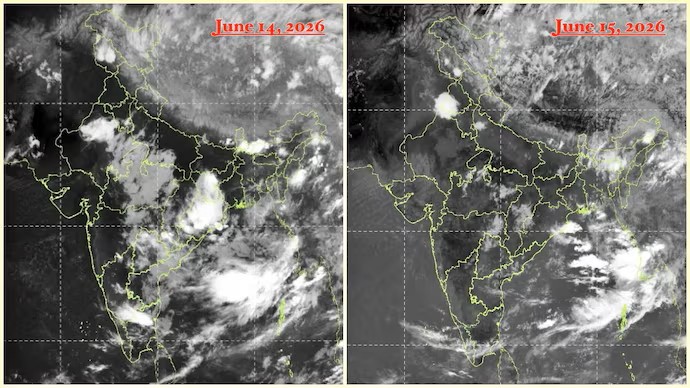
The southwest monsoon in India has seemingly diminished according to recent satellite imagery, which shows significant drops in rainfall activity across the country. This decline in precipitation follows an initial surge into southern and central regions. Data from the India Meteorological Department (IMD) indicates that between June 4 and June 15, India received merely 19.2 mm of rainfall, while the expected average is 53.7 mm, resulting in a nationwide rainfall deficiency of 64 per cent.

Analysis of the rainfall departure map paints a concerning picture, as extensive regions in central, southern, and eastern India are depicted in shades of yellow and red, signifying deficient and critically low rainfall. Satellite images from INSAT-3DS, taken on June 15, highlight this situation; large areas of peninsular and central India appear surprisingly clear, diverging from the typical expansive cloud cover associated with an active monsoon season.

Notably, the majority of cloud activity is confined to the Himalayas, northeastern India, and regions north of the Indo-Gangetic plains. The Arabian Sea portion of the monsoon is reported to be weak and scattered, exacerbating the rainfall situation.

Reasons for Monsoon Struggles in 2026

The current downturn in monsoon activity persists despite recent advancements into several states, such as Karnataka, Telangana, Andhra Pradesh, and Maharashtra. Meteorological specialists are pinpointing atmospheric phenomena occurring several kilometres above ground as the root cause rather than a lack of moisture in adjacent seas.

The primary factor disrupting monsoon circulation is the position of the westerly jet stream. This fast-moving air current in the upper atmosphere has shifted unusually far south, conflict with the upper-level easterly jet, which is crucial for sustaining monsoon circulation over the Indian subcontinent. In standard conditions, the easterly jet fosters upward air movement and widespread thunderstorm activity.

However, the intensified westerly winds are reportedly suppressing these processes, leading to an environment that discourages rainfall despite the presence of sufficient moisture in the Arabian Sea and Bay of Bengal. As a result, while the monsoon has seen advancement on maps, it has failed to produce substantial rainfall in numerous areas.

Future Weather Outlook

Weather experts describe the current phenomenon as a temporary yet significant “monsoon pause,” attributed more to upper-atmospheric dynamics than oceanic influences. Forecast models suggest a potential improvement in rainfall activity is expected later this week as the jet stream pattern is predicted to weaken, allowing for a reorganisation of monsoon circulation.

Until this anticipated change occurs, large parts of India are likely to experience prolonged dry conditions that are atypical for the early stage of the southwest monsoon season. The overall situation raises concerns as significant rainfall is essential for agriculture and water resources across the nation.

As conditions develop, meteorologists will continue to monitor the situation closely, providing necessary updates. The coming days may reveal whether the monsoon can regain its strength and deliver the essential rainfall that is critical during this season.

Long or Short, get news the way you like. No ads. No redirections. Download Newspin and Stay Alert, The CSR Journal Mobile app, for fast, crisp, clean updates!

App Store –  https://apps.apple.com/in/app/newspin/id6746449540 

Google Play Store – https://play.google.com/store/apps/details?id=com.inventifweb.newspin&pcampaignid=web_share

Latest News

Popular Videos
