


World’s First Nuclear-Powered Icebreaker Lenin Symbolises Russia’s Arctic Aspirations and Strengthening India-Russia NSR Collaboration

The CSR Journal Magazine

The Lenin, recognised as the world’s first nuclear-powered surface vessel, epitomises Russia’s advancements in Arctic exploration. Located in Murmansk, this historic icebreaker has been preserved as a museum after serving for three decades along the Northern Sea Route (NSR). The vessel’s keel was laid on July 17, 1956, at the Admiralty Shipyard in St. Petersburg, and it entered service on December 3, 1959. It introduced nuclear propulsion to civilian maritime operations.

The Operational Achievements of the Lenin

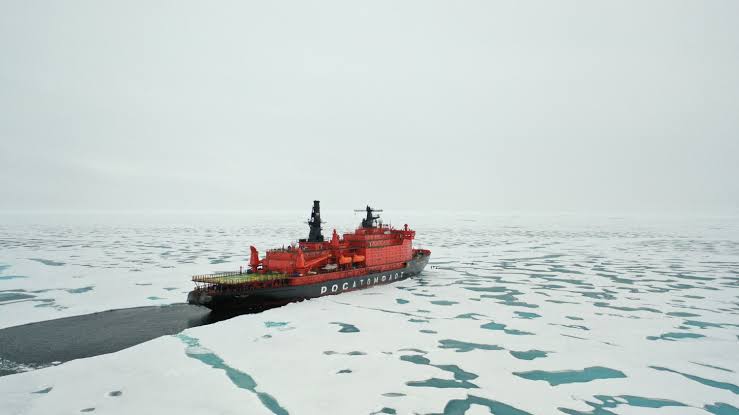
As of today, Russia possesses the largest icebreaker fleet globally, comprising over 40 icebreakers, including eight nuclear-powered vessels. The fleet, managed by Rosatom’s subsidiary, Atomflot, is crucial for ensuring year-round navigation along the Northern Sea Route. This route, which parallels Russia’s Arctic coastline, serves as a vital shipping corridor that connects Europe and Asia.

The effective operation of these icebreakers is vital not only for regional shipping but also for supporting Russia’s strategic interests in Arctic territories.

India-Russia Cooperation on the Northern Sea Route

Cooperation between India and Russia has been gaining momentum concerning the Northern Sea Route. In 2024, a Russian-Indian Working Group was established under the Inter-Governmental Committee to enhance collaboration on the NSR. This initiative aims to optimise transportation corridors and boost logistics connectivity between the two nations.

The working group, co-chaired by Rosatom’s Special Representative for Arctic Development, Vladimir Panov, and Rajesh Kumar Sinha from India’s Ministry of Ports, Shipping and Waterways, convened for its first meeting in New Delhi in October 2024. A subsequent meeting took place in 2025, reinforcing the commitment of both nations to improve maritime cooperation.

Both parties have agreed to work towards developing efficient transport mechanisms that leverage the potential of the Northern Sea Route, thereby assisting in greater trade facilitation between India and Russia.

The Future of Arctic Navigation and Technology

The preservation of the Lenin as a museum in Murmansk serves not only as a tribute to its pioneering role but also as a testament to the technological advancements in Arctic navigation. The icebreaker’s legacy continues to influence contemporary shipping practices and strategies within the Arctic region.

As global interest in Arctic navigation increases, particularly given climate change and its impact on sea routes, the performance and innovation associated with vessels like the Lenin will remain crucial. The ongoing collaboration between nations, particularly between India and Russia, is likely to influence future developments in Arctic maritime logistics.

The Lenin embodies not only a historic technological achievement but also reflects the broader ambitions of Russia in the Arctic. It stands as a reminder of the capabilities that nuclear-powered vessels offer, particularly as nations seek to navigate and exploit the changing dynamics of Arctic waters.

Long or Short, get news the way you like. No ads. No redirections. Download Newspin and Stay Alert, The CSR Journal Mobile app, for fast, crisp, clean updates!

App Store –  https://apps.apple.com/in/app/newspin/id6746449540 

Google Play Store – https://play.google.com/store/apps/details?id=com.inventifweb.newspin&pcampaignid=web_share

Latest News

Popular Videos