


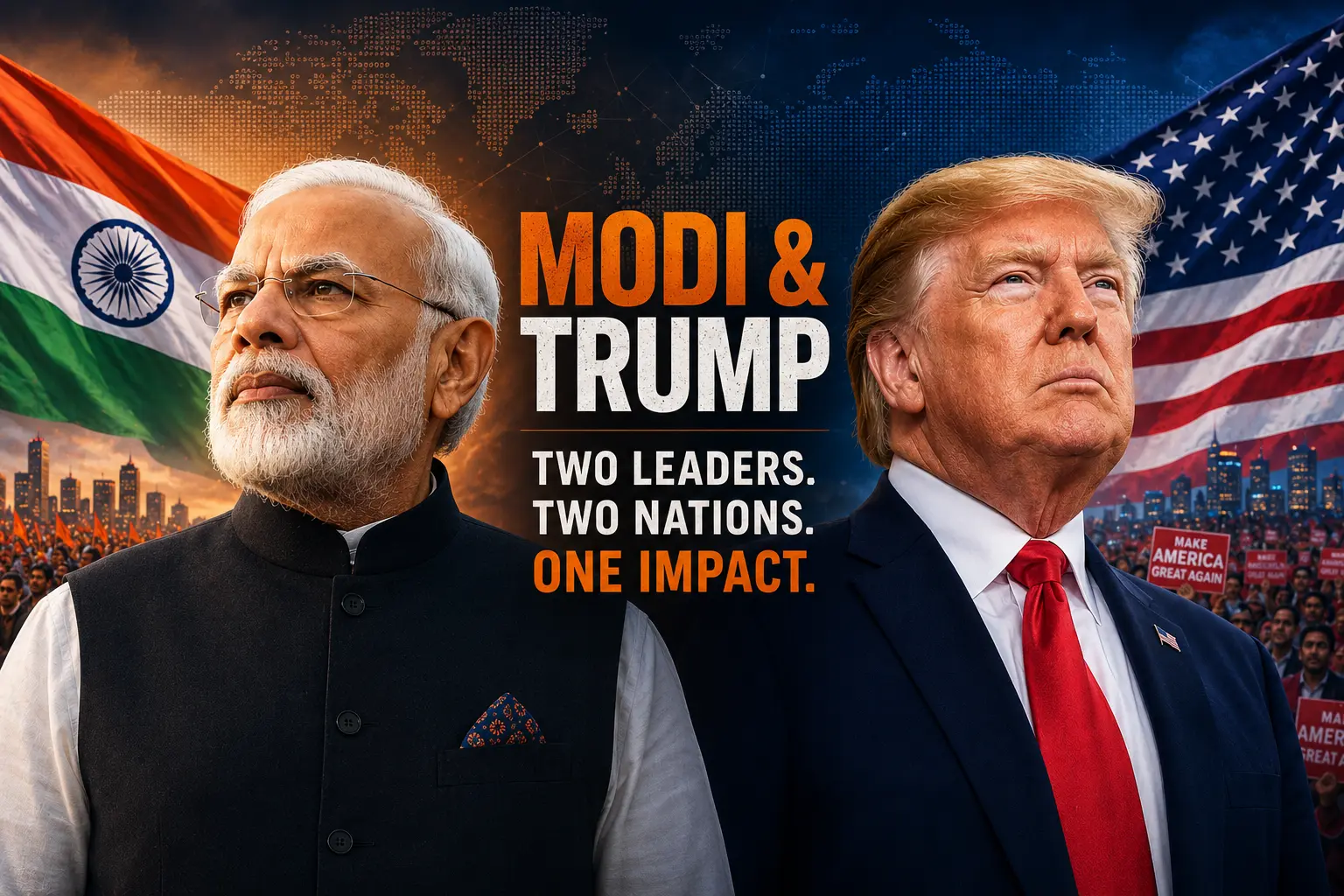

In the world of modern politics, few leaders have reshaped their respective nations’ political landscapes as dramatically as Narendra Modi and Donald Trump. Despite emerging from vastly different political systems, cultures, and economic realities, the similarities between the two men are striking enough to have fascinated supporters, critics, and political analysts across the globe. Both leaders built powerful personal brands that often overshadowed their parties, transformed elections into personality-driven contests, and positioned themselves as outsiders challenging what they portrayed as entrenched political establishments.
At the heart of both Modi’s and Trump’s political success lies a deep understanding of public sentiment. Trump capitalized on concerns over globalization, immigration, and the decline of American manufacturing, while Modi tapped into aspirations for national revival, economic development, stronger governance, and a renewed sense of Indian pride. In both cases, nationalism became a powerful political force that helped forge emotional connections with millions of voters.
Perhaps the most fascinating similarity between Narendra Modi and Donald Trump is that both men transformed politics into a battle of narratives rather than merely a contest of policies. Both understood that in an age of social media, perception often travels faster than performance. They built political movements around the idea that they alone could challenge entrenched establishments and restore national greatness. In many ways, Modi’s “New India” and Trump’s “Make America Great Again” emerged from the same political instinct — convincing millions that their countries had underperformed and that a dramatic course correction was necessary.
Another striking similarity is their mastery of communication. Both leaders bypassed traditional media channels whenever possible and established direct relationships with supporters. Trump turned social media into his primary political battlefield, while Modi leveraged technology, digital platforms, radio outreach, and mass public engagement campaigns to communicate directly with citizens. Their supporters often view them not merely as politicians but as symbols of broader national movements.
The relationship between Modi and Trump has also experienced subtle shifts over the years. During Trump’s first presidency, the chemistry between the two leaders was unmistakable. Massive public events such as Howdy Modi in Houston and Namaste Trump in Ahmedabad reflected not just diplomatic engagement but mutual political admiration. Both leaders benefited from being seen together, projecting strength, confidence, and nationalist appeal. However, politics is ultimately driven by national interests rather than personal friendships. In recent years, especially after Trump’s return to the White House, occasional disagreements over trade, tariffs, immigration policies, and strategic priorities have highlighted that even strong personal relationships have limits when economic and geopolitical interests diverge.
Yet both leaders have also attracted significant criticism. Opponents argue that their political styles have contributed to increased polarization within their societies. Critics accuse both of encouraging a climate where political disagreements become increasingly personal and ideological divisions deepen. Supporters, however, counter that disruption was necessary because conventional politics had failed to address longstanding concerns. This divide itself reflects one of the most important similarities between Modi and Trump: neither leader generates indifference. People tend to either strongly support them or strongly oppose them.
Their political journeys, however, have not been identical. Modi’s rise was built through decades of organizational work and governance experience, culminating in repeated electoral victories and a long tenure at the national level. Trump’s ascent was more unconventional, emerging from the worlds of business and entertainment before capturing the American presidency. While Modi’s political foundation rests on a disciplined party structure and a long-term ideological movement, Trump’s influence has often been more closely tied to his personal appeal and political identity.
Looking ahead, both leaders are likely to remain defining figures in their respective countries for years to come. Modi continues to dominate Indian politics and remains the central figure around whom national political discourse revolves. Trump, having demonstrated remarkable political resilience, continues to shape the direction of American conservatism and remains one of the most influential figures in U.S. politics. Whether one admires or criticizes them, both have fundamentally altered the political rules of their nations.
The future of the Modi-Trump equation will depend not only on personalities but also on strategic realities. India and the United States increasingly share interests in trade, technology, defense cooperation, supply chain resilience, and balancing emerging geopolitical challenges. Even as governments change, these structural interests are likely to keep the two countries closely aligned. However, the personal connection between Modi and Trump has added a unique dimension that could further strengthen ties if both continue to occupy positions of influence.
History may ultimately remember Narendra Modi and Donald Trump as two of the most consequential political disruptors of the early twenty-first century. They emerged from different worlds but harnessed similar political instincts: strong nationalism, direct communication, populist appeal, and the ability to turn political campaigns into mass movements. Their supporters see them as transformational leaders who challenged stagnant systems. Their critics see them as symbols of growing political polarization. Either way, their impact on India, America, and global politics is likely to be debated long after they leave the political stage.
Perhaps the most fascinating similarity between Narendra Modi and Donald Trump is that both men transformed politics into a battle of narratives rather than merely a contest of policies. Both understood that in an age of social media, perception often travels faster than performance. They built political movements around the idea that they alone could challenge entrenched establishments and restore national greatness. In many ways, Modi’s “New India” and Trump’s “Make America Great Again” emerged from the same political instinct — convincing millions that their countries had underperformed and that a dramatic course correction was necessary.
Yet the larger story remains intact. Both Modi and Trump are survivors in an era where political careers often end quickly. Both have repeatedly defied predictions of their decline and have demonstrated an extraordinary ability to remain at the centre of national discourse. Their political journeys suggest that traditional political playbooks are losing relevance, replaced by leadership models driven by direct public connection, strong national identity, and relentless control over the political narrative.
Looking ahead, the Modi-Trump equation could become one of the most consequential personal relationships in global politics. If their partnership deepens, it could accelerate cooperation in defence, technology, manufacturing, and efforts to counterbalance China’s growing influence. If tensions emerge over trade or economic nationalism, it could also test the resilience of India-US ties. The real question may not be whether Modi and Trump like each other, but whether two leaders who both put their nations first can continue finding common ground when their national interests inevitably collide.