


Lucknow Fire Sparks Discussion on Smart Locks as Potential Hazards
The CSR Journal Magazine

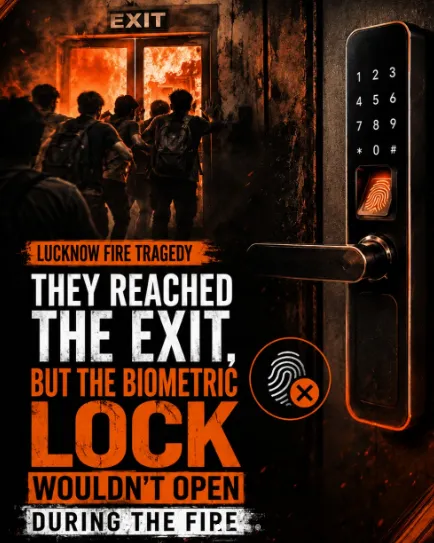
The recent fire incident in Lucknow has raised significant questions regarding the safety of modern building security systems. These events have left behind a trail of tragedy and the unanswered question of whether the very technologies designed to protect occupants inadvertently place them in danger. As urban areas increasingly adopt electronic locks, biometric systems, and automated security features, the necessity to balance convenience with effective evacuation strategies comes into question.

As incidents in Lucknow, Delhi, and Indore illustrate, the line between security and potential entrapment can quickly blur during emergencies. While advancements in technology have made entries tougher to breach, the ability to exit efficiently in a crisis often receives insufficient attention. Fire safety experts are calling for a reform in how buildings are designed, stressing the importance of planning for safe exits in addition to secure entries.

Challenges of Modern Security Features

In the quest to control unauthorised access, many urban residences have installed features such as automatic locking systems, access-controlled staircases, and restrictively designed terraces. These features, while beneficial under normal conditions, can pose serious hazards during emergencies. Emergency exits may be obstructed by locked doors or inaccessible staircases, turning measures intended for safety into obstacles during critical moments.

Fire officials indicate that the rapid spread of smoke and heat inside a burning structure can significantly impair visibility and personal safety within mere minutes. In these situations, rapid response to emerging threats is vital. A delay of even a few seconds in accessing an exit can lead to catastrophic results, highlighting the need for buildings to facilitate swift evacuation in the case of emergencies.

Recent tragedies emphasise this pressing issue. In the Lucknow incident, investigators are looking into whether auto-locking systems hindered attempts to evacuate victims. Similar complications arose during emergencies in Delhi and Indore, where locked exits and access-restricted areas created barriers for residents attempting to flee as smoke enveloped the buildings.

Technical Failures Under Extreme Conditions

While electronic locks are not inherently flawed, their performance can deteriorate under extreme heat and hazardous conditions. High temperatures can damage internal components, leading to system failures. Fire can disrupt the electrical connections that manage these locks, rendering them inoperative. Even systems designed with safeguards, such as battery backups, can succumb to prolonged exposure to heat or be disabled during firefighting efforts.

Moreover, occupants in distress may struggle to recall override codes or locate emergency keys, transforming vital exit doors into barriers at a pivotal moment. Thus, technology intended for security can paradoxically hinder safe passage during emergencies if not adequately supported with fail-safes and practical exit routes.

Expert opinions stress that reliance solely on advanced security models without integrating effective escape strategies can increase vulnerability. It is crucial that modern architecture incorporates precautionary measures to ensure safety does not compromise during unforeseen circumstances.

Necessity for a Comprehensive Fire Safety Culture

The fundamental issue appears to be a lack of emphasis on fire safety protocols within homes and buildings. While significant investments are made in securing premises against intrusion, it is essential for residents to practise evacuation drills and evaluate alternative escape routes regularly. Many remain unaware of whether emergency exits are functional or accessible when needed.

Fire safety professionals argue that assessing a building’s safety should involve considering escape routes in power failure scenarios, rather than depending solely on technological measures like fingerprint scanners. Everyone should ask: should an emergency occur, can occupants quickly find a trustworthy means of exit?

The current trend towards smart building security needs to be coupled with a commitment to ensuring that safety does not become secondary to convenience. Recent fire incidents remind us all that the ultimate goal is to protect lives and ensure that escape routes remain clear during times of crisis, as every second can be critical in saving lives.

Long or Short, get news the way you like. No ads. No redirections. Download Newspin and Stay Alert, The CSR Journal Mobile app, for fast, crisp, clean updates!

App Store –  https://apps.apple.com/in/app/newspin/id6746449540 

Google Play Store – https://play.google.com/store/apps/details?id=com.inventifweb.newspin&pcampaignid=web_share

Latest News

Popular Videos
