


Labour Compliance Issues Exposed in Noida’s Working Environment
The CSR Journal Magazine

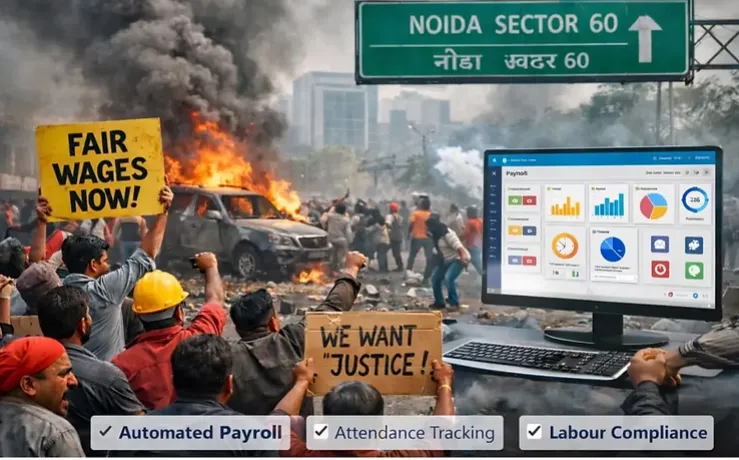
The situation concerning labour rights in Noida highlights significant issues regarding worker treatment, particularly related to inadequate wages, discrepancies in payments, and poor working conditions. Recent protests have underscored the necessity for a comprehensive regulatory framework to ensure worker protections. Although there are official records that suggest compliance, they often mask deeper issues, revealing a gap in enforcement practices.

Employers across various sectors, sometimes assisted by labour consultants, are reportedly employing tactics that effectively strip workers of their entitled rights. This raises concerns about the complicity of certain officials who fail to challenge these activities. In one notable case, a factory inspector’s report claimed full compliance, yet it overlooked several workers employed under contracts outside the factory that were not covered by the Employees’ State Insurance (ESI) Act.

Investigation Uncovers Misleading Compliance Reports

After an accidental incident led to further scrutiny, a local office manager, known for his integrity, visited the factory for an investigation. His initial inquiries revealed that at least ten workers were engaged within the factory premises but lacked ESI coverage, contradicting prior compliance claims. This prompted a more extensive inspection that unveiled alarming realities regarding worker conditions and employer practices.

The factory, which specialised in manufacturing agricultural implements and bus bodies, employed two contractors. While the employer presented their involvement as infrequent and limited to specific periods, a review of operational records indicated otherwise. Investigations showed that these contractors, along with 10 to 15 workers, were consistently engaged in the work process within the factory, yet none were registered under the ESI Act, indicating a systemic failure in compliance and protection.

Delving deeper into the factory’s financial practices revealed that payments were being disguised as business expenses, circumventing regulatory scrutiny. Instances of wage payments recorded as receipts effectively masked the actual expenses incurred for labour. Additionally, records from historical dates showed suspicious discrepancies between reported wages and operational expenditures, raising further questions about the legality of the employer’s accounting methods.

Employer’s Response and Ongoing Challenges

Upon confronting the employer with evidence of these malpractices, there was some acknowledgment, leading to a concession to cover workers under legal protections and to comply with ESI contributions. However, records concerning overtime pay remained elusive, with the employer insisting that no workers were required to work beyond their scheduled hours, a statement that appeared unrealistic given the evident irregularities.

Financial assessments also revealed that the costs attributed to worker sustenance, such as tea and meals, frequently exceeded recorded wages, providing further grounds for regulatory contributions. This was not merely a financial discrepancy but indicative of the employer’s attempt to evade obligations under existing labour laws. The failure to account for overtime reflectively suggests broader negligence in compliance standards.

Following the inspection, a local manager suggested immediate departure from the area due to concerns that the employer might aim to discredit the investigation. This caution was not unfounded in a climate where integrity could easily be questioned. Thus, leaving for headquarters became a necessary precaution.

Additionally, conversations with various individuals—including faculty at educational institutions—expose a lack of awareness regarding labour laws among many employees. Recent changes extending ESI Act coverage seemingly go largely unnoticed, raising concerns on the implications for worker wellbeing amidst diminishing regulatory oversight. This lack of understanding and enforcement echoes concerns from previous eras of strict inspection, illustrating an ongoing challenge for workers seeking fair treatment.

Long or Short, get news the way you like. No ads. No redirections. Download Newspin and Stay Alert, The CSR Journal Mobile app, for fast, crisp, clean updates!

App Store –  https://apps.apple.com/in/app/newspin/id6746449540 

Google Play Store – https://play.google.com/store/apps/details?id=com.inventifweb.newspin&pcampaignid=web_share

Latest News

Popular Videos
