


John Brittas Challenges Changes to National Honour Act in Rajya Sabha
The CSR Journal Magazine

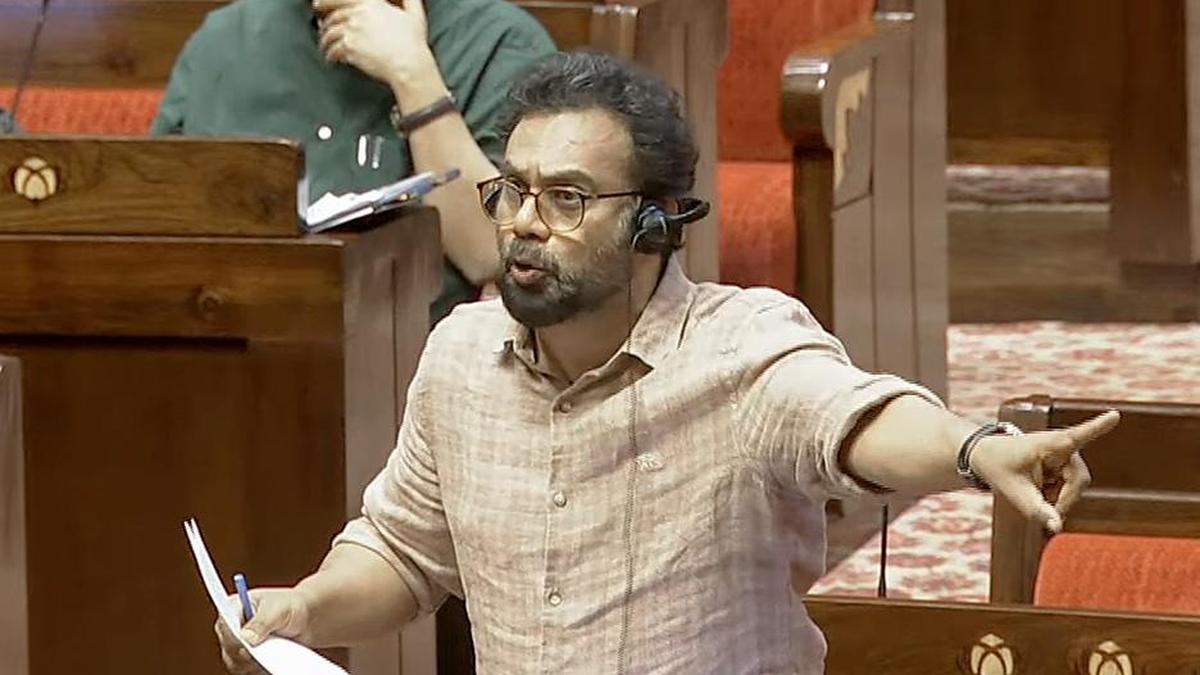
CPI(M) MP John Brittas has officially opposed the proposed ‘The Prevention of Insults to National Honour (Amendment) Bill, 2026’ by submitting a notice to the Chairman of the Rajya Sabha. His formal objection, presented on July 20, outlines significant concerns regarding the constitutionality of the proposed changes.

In his communication, Brittas labelled the legislation as “constitutionally untenable,” asserting that it seeks to assign a statutory significance to the National Song, a status that he argues was intentionally omitted by the Constitution’s framers. He argues that the proposed Bill contradicts the original intentions of Parliament and the constitutional context surrounding the National Song.

Arguments Against Legislative Changes

According to Brittas, the Bill selectively interprets historical statements made by Dr. Rajendra Prasad on January 24, 1950, while deliberately ignoring the broader constitutional discourse that led to the decision not to elevate the National Song to the same status as the National Anthem. He stated, “Consequently, the statement remained as a Presidential statement and never acquired the force of a constitutional provision,” which he believes undermines the foundation of the proposed amendments.

Further, Brittas emphasised the importance of the distinctions made by the Constituent Assembly following extensive deliberation over a period of three years. He claimed that the Assembly refrained from equating the National Anthem and the National Song in terms of legal frameworks, suggesting that if a uniform legal standing was intended, it would have been explicitly articulated in the Constitution.

In his letter, Brittas also raised concerns about the national consensus surrounding ‘Vande Mataram’, highlighting that the Bill does not take into account the agreements made by various societal factions regarding which portions of the song should be used in national events. He referred to this consensus as pivotal in upholding the pluralistic nature of the Republic.

Constitutional Duties and Legislative History

Brittas argued that the proposed amendment contradicts Article 51A(a) of the Indian Constitution, which outlines the Fundamental Duties of citizens. He noted that while the Constitution mandates respect for the Constitution, the National Flag, and the National Anthem, it does not impose similar obligations concerning the National Song. This raises questions about the appropriateness of Parliament intervening through ordinary legislation in a context where the Constitution has intentionally refrained from doing so.

In closing his objection, Brittas pointed to the historical legislative framework that has remained unchanged for over fifty years. He referenced the original Prevention of Insults to National Honour Act, enacted in 1971, which provided penal protection exclusively to the National Anthem, indicating that this decision was made with a clear understanding of the constitutional contexts surrounding Vande Mataram.

He contended that the current Bill seeks to revise a firmly established legislative position without sufficient constitutional justification, raising concerns over its implications for the balance created by the framers of the Constitution. Brittas’s objections have sparked a crucial dialogue surrounding the legislative treatment of national symbols in India.

Long or Short, get news the way you like. No ads. No redirections. Download Newspin and Stay Alert, The CSR Journal Mobile app, for fast, crisp, clean updates!

App Store –  https://apps.apple.com/in/app/newspin/id6746449540 

Google Play Store – https://play.google.com/store/apps/details?id=com.inventifweb.newspin&pcampaignid=web_share

Latest News

Popular Videos
