


Iran Accuses US of Obstructionism as UN Nuclear Talks End Without Agreement
The CSR Journal Magazine

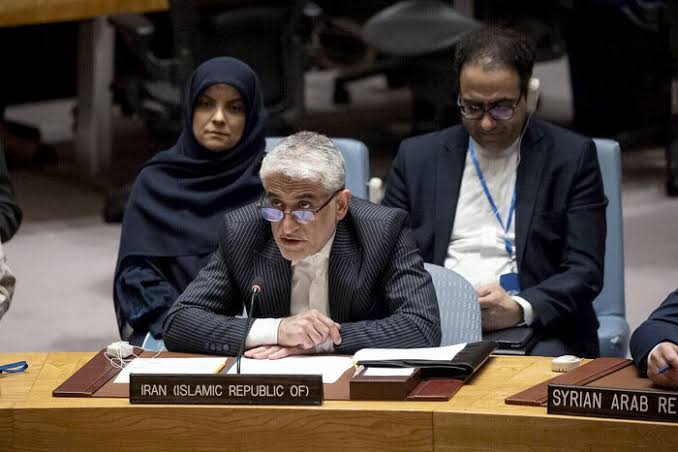
Iran has accused the United States and its allies of engaging in obstructionism following the conclusion of the third round of discussions regarding the nuclear proliferation treaty (NPT). The allegations emerged after negotiators failed to agree on a final document during the talks held at the United Nations. The Permanent Mission of Iran to the UN remarked that U.S. demands were exacerbating the situation, thereby hindering progress.

The official statement shared via social media platform X highlighted that “U.S. excessive demands push the NPT into free fall.” Iran conveyed its concern that without meaningful efforts towards nuclear disarmament, a viable future for the NPT is unlikely.

Details of the NPT Review Conference

The NPT Review Conference commenced on April 27 at the UN headquarters in New York and concluded recently amid unresolved tensions surrounding Iran’s nuclear ambitions. Notably, this marks the third consecutive instance that the conference has failed to produce a final consensus document, a situation described as regrettable by Do Hung Viet, the conference president.

Reports indicate that during this round, the draft of the final document was revised multiple times, with several contentious phrases being removed. Significant terms that were omitted related to nuclear activities in Ukraine and denuclearisation efforts in North Korea. Negotiations remained tense, particularly around the U.S. assertion that “Iran can never seek, develop or acquire any nuclear weapons.” Iran’s representatives have called for the removal of this phrase, insisting on revisions that allow for diplomatic dialogue.

The challenges faced during the NPT Review Conference underscore the complexities inherent in discussions about nuclear proliferation and disarmament, reflecting broader geopolitical tensions. The inability to reach an agreement suggests ongoing difficulties in reconciling differing perspectives on nuclear policy.

The Role of the NPT

The NPT, which was opened for signature in 1968 and entered into force in 1970, serves as a significant international treaty aimed at preventing the spread of nuclear weapons. It also strives to promote cooperation in the peaceful application of nuclear energy and to encourage the pursuit of comprehensive disarmament. Currently, the treaty has been joined by 191 states, including the five recognised nuclear-armed nations.

One of the crucial aspects of the NPT is its status as the only legally binding commitment in a multilateral treaty concerning disarmament by states possessing nuclear capabilities. It has been vital in shaping global discussions and policies concerning nuclear non-proliferation.

The treaty was indefinitely extended on May 11, 1995, marking a critical moment in international relations related to nuclear armament. However, the recent failures at the NPT Review Conference highlight the challenges and ongoing debates over its future, particularly amidst rising geopolitical tensions involving key players like the United States and Iran.

Long or Short, get news the way you like. No ads. No redirections. Download Newspin and Stay Alert, The CSR Journal Mobile app, for fast, crisp, clean updates!

App Store –  https://apps.apple.com/in/app/newspin/id6746449540 

Google Play Store – https://play.google.com/store/apps/details?id=com.inventifweb.newspin&pcampaignid=web_share

Latest News

Popular Videos
