


India Develops Indigenous Cooking Gas Alternative in Pune Laboratory
The CSR Journal Magazine

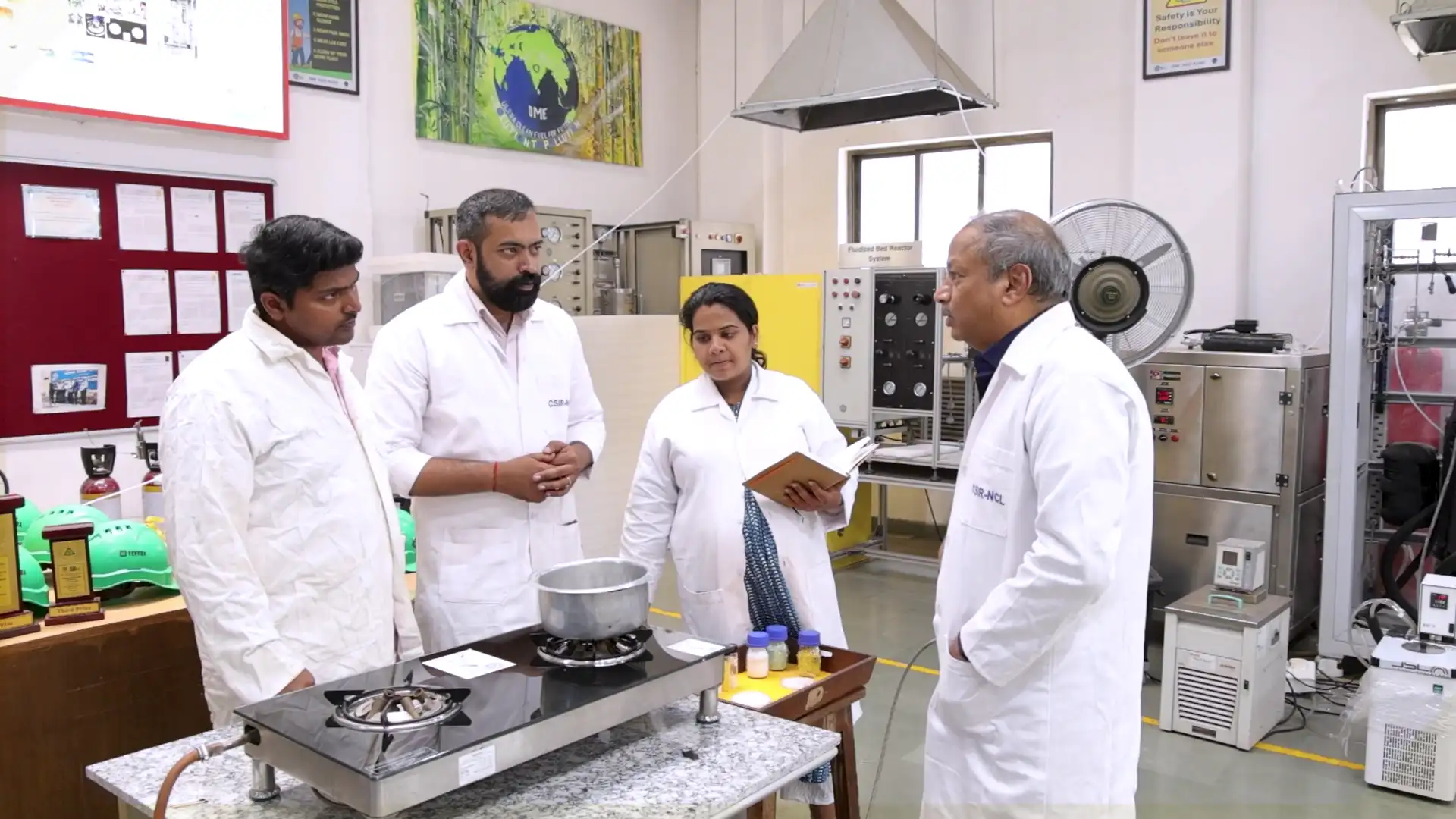
The effort to create a homegrown alternative to LPG has taken shape at the CSIR-National Chemical Laboratory in Pune, Maharashtra. Scientists are developing Dimethyl Ether (DME), which is expected to significantly impact India’s energy landscape, as millions of households in the country currently rely on liquefied petroleum gas (LPG) imported from abroad.

DME is being positioned as a viable substitute for LPG due to its potential for domestic production from local resources like coal, biomass, and methanol. This development aims to lessen India’s reliance on foreign fuel imports. According to researchers, the project is part of a larger movement toward deep technological innovation within the nation.

Dr T Raja, Chief Scientist at NCL, noted the similarities between DME and LPG, mentioning the potential for easy blending. He stated, “LPG and DME are almost equivalent. The calorific value is slightly different, but DME can be easily blended with LPG, propane and butane mixtures while maintaining its effectiveness for domestic and industrial fuel use.”

Wider Applications and Initial Blending Plans

Beyond household cooking, DME has the potential to be utilised in various applications including LPG-powered autorickshaws and as a replacement for diesel generators in specific cases. Project Scientist Samruddhi Mane emphasised the technology’s versatility, suggesting it could be integral to multiple energy sectors. She remarked, “DME can be used in household cooking fuel, in LPG-based autorickshaws, and it also has the potential to replace diesel generators.”

The transition from LPG to a DME blend will not occur immediately, as plans are in place to initially introduce a 20 per cent DME to 80 per cent LPG blend. Research teams have indicated that this blending could occur without necessitating alternative stoves or cylinders for consumers, making the shift more practical for households.

Scientists further asserted that even a modest blend of DME could lead to a notable reduction in India’s LPG imports, which would help alleviate the pressure on the country’s foreign exchange reserves. Project scientist Akash Bhatkar noted that substantial savings could be achieved if this blending is implemented.

National Pride and Future Prospects

This initiative is not only focused on technological advancement but also reflects a broader sense of national confidence in scientific research. Young researchers working on the DME project expressed feelings of pride in their contributions towards enhancing the country’s energy security. Project associate Sheetal Gawli remarked on the significance of this work, stating, “We feel proud because this work is not just a project for us; it is something important for the country.”

Aditi Kamble, another member of the research team, shared how their work has evolved, indicating a learning process that has contributed to the project’s larger scale. She explained, “Today, we are working on it at a larger scale as an energy-saving technology that can benefit society.”

As India continues its search for cleaner energy solutions with a focus on self-reliance, the developments at the Pune laboratory could become vital in establishing an indigenous fuel ecosystem. This significant research may pave the way for a future with reduced import dependence, establishing a more sustainable energy framework for the country.

Long or Short, get news the way you like. No ads. No redirections. Download Newspin and Stay Alert, The CSR Journal Mobile app, for fast, crisp, clean updates!

App Store –  https://apps.apple.com/in/app/newspin/id6746449540 

Google Play Store – https://play.google.com/store/apps/details?id=com.inventifweb.newspin&pcampaignid=web_share

Latest News

Popular Videos
